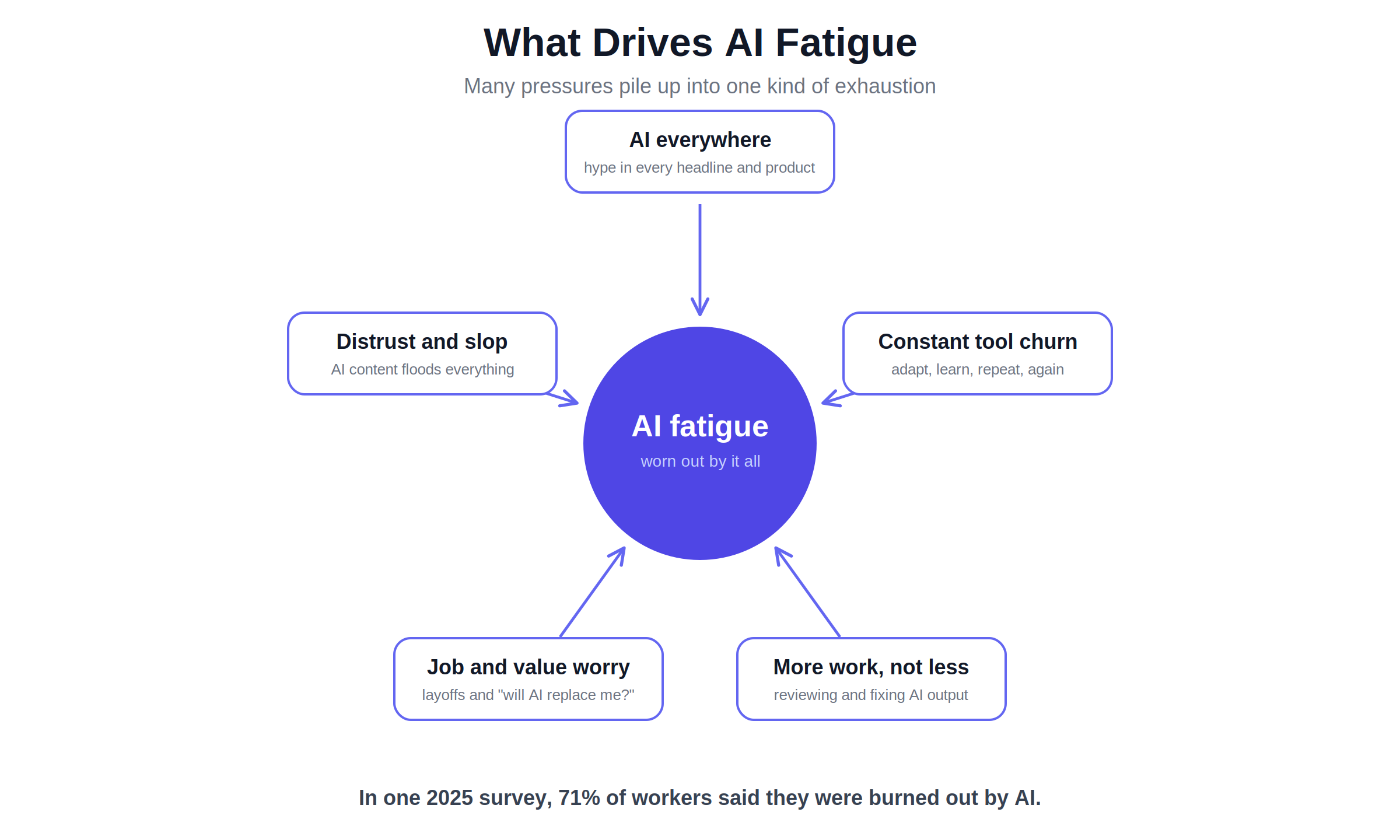
AI fatigue is the worn-down feeling you get from AI being absolutely everywhere. It is the slow drain that builds up from the tools themselves and the nonstop noise around them, the hype, the headlines, the daily nudge that you had better keep up or get left behind. The part that wears people out most is the reach. AI barges in without being asked. It is in your work apps and your search bar, your shopping cart, your customer chats, and the flood of low-effort AI content clogging your social feeds. Your toothpaste has it now. Your notes app too. After enough of that, plain curiosity quietly curdles into a tired little, oh no, not again.
Work is where it really bites. It is also where the strain is easiest to measure. You barely get the hang of one required tool, and then the next must-use rollout lands on your calendar, so the week turns into a treadmill of learn, adapt, repeat. The hours AI was supposed to give back almost never appear, because now you carry a second quiet job, babysitting the machine and cleaning up the parts it got wrong. It piles up. A lot of people feel genuinely run down by the whole thing, and here is the strange twist, the workers who lean on AI the most tend to report the worst burnout of anyone. The tool sold to lighten the load somehow made the day heavier.
The weight is not only about how many tabs you have open. A big chunk of it is mental. You wind up checking nearly everything the AI hands you, reading it line by line, fact-checking it, catching the slip-ups before any of them reach a customer. There is a name for the kind of oversight that actually works, where a real person can question, change, or toss out what the AI produced instead of rubber-stamping whatever it says. Do that all day, across a stack of tools that each act a little differently, and your head starts to buzz by the middle of the afternoon.
And the more AI you are handed to oversee, the foggier it gets. Juggle a handful of tools and agents at once, each one needing a prompt here and a review there, and the constant switching drains you on its own. Plenty of workers describe a whole afternoon spent flitting between half-finished AI tasks, never really locked into any of them. Researchers writing in Harvard Business Review even gave that feeling a name, calling it AI brain fry, the mental static that sets in from overseeing more AI than your brain can comfortably hold. Step away for a while and it eases, but the pile is right there waiting the next morning.
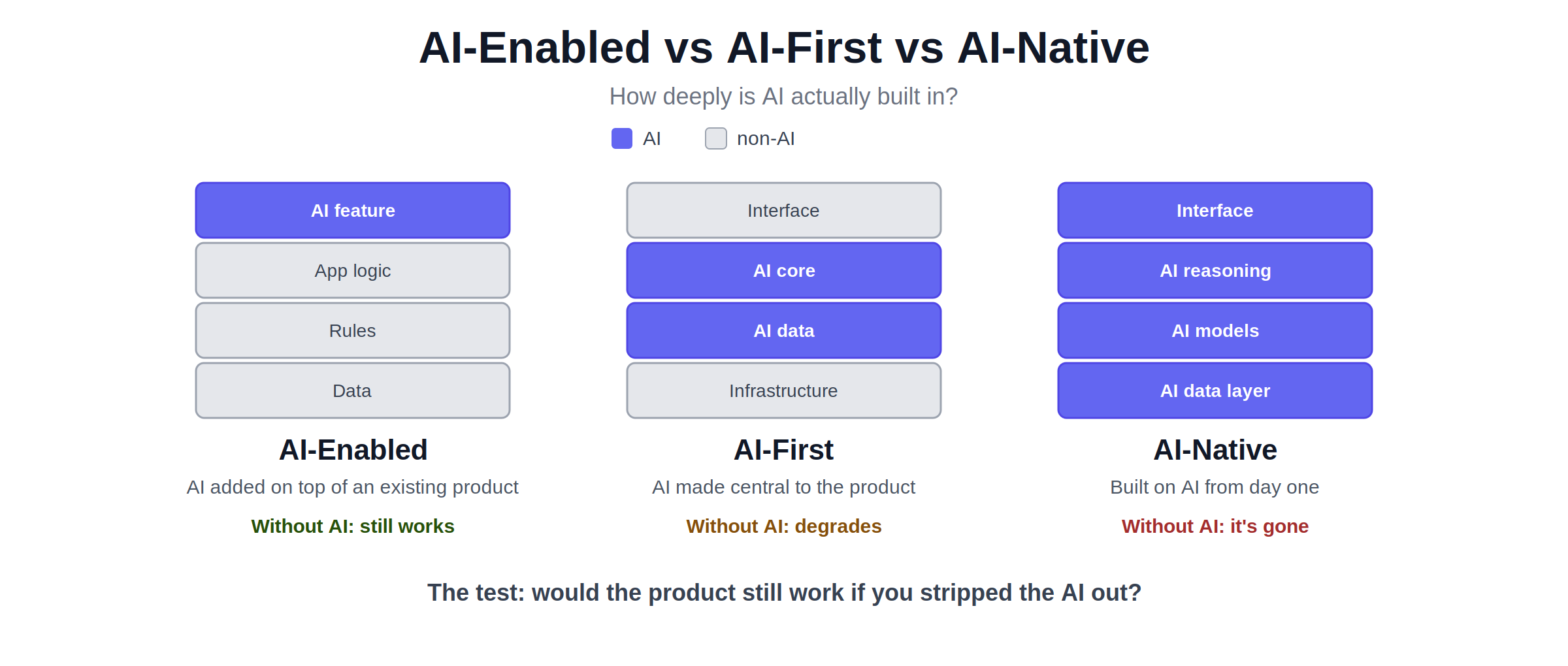
Then there is the hype, which grinds on you in a whole different way. Open any feed and every headline, pitch deck, and post has AI bolted onto it somewhere. Every startup is suddenly an AI startup. A ten-year-old product ships the same old box with a fresh AI-powered sticker slapped on the front and little new inside, because almost everything is racing to look AI-native whether it truly is or not. Stamp the word on everything and it slowly loses its meaning, so people start to scroll right past it. Under all of it runs a quieter pressure, the one whispering that you must keep up, made worse by layoff headlines and the question nobody says out loud about their own job.
Here is the more hopeful part. People are not rejecting the technology. What they are rejecting is the overdose of it. Put AI in the right spot and it earns its keep, like summarizing a long email thread or knocking out a rough first draft. The fatigue creeps in when AI gets crammed into every corner at the same time. Climbing out is mostly about drawing lines. Hang onto one or two tools you know well instead of fourteen you half use. When the next shiny one shows up, ask one plain question first, does this fix a real problem for me, or is it just the thing everyone is posting about. Pen your AI news into set times instead of sipping the firehose all day. Take real breaks from the screen. And if a tool saves you twenty minutes, spend those twenty minutes on your life, not on more work. Maybe even write the next thing yourself, in your own words, instead of leaning on that same flat AI voice everybody can spot now.
Signs of AI fatigue:
- Tool dread. A little sigh every time another new AI tool gets rolled out.
- Tuning out. AI headlines all blur together, so you stop reading them.
- Sticker skepticism. An eye-roll at every product suddenly labeled "AI-powered."
- The second job. Feeling like you spend more time checking AI's work than it saves you.
- Decision paralysis. So many tools promising the exact same thing that you just freeze.
AI Fatigue Explained:
If the constant churn of new tools and hype is wearing you down, this video essay digs into why AI fatigue keeps getting worse rather than better. Skymography takes a slower, calmer look at something a lot of people are quietly dealing with right now.
FAQs
It is the mental and emotional exhaustion that piles up from constant exposure to AI, the tools and the endless hype both. Not plain skepticism, more like overload. That drained, cannot-escape-it feeling of running into AI in your apps, your job, your feed, and nearly every conversation. At work it often hardens into real burnout.
Several forces piling up at once. AI sits in almost every product now, so you never really get a break from it. Tools at work keep changing faster than anyone can keep up, and the time they promise to save gets eaten by checking and fixing their output. Add the nonstop hype and the low hum of worry about job security, and the pressure barely lets up.
Set limits. Cap how much AI news you take in, and follow a few people who actually explain things over the ones chasing every hot take. Stick with one or two tools you know well rather than every new launch, and judge new ones by whether they solve a real problem for you. Step away from screens on purpose. At work, leaders help most by being straight with people, training them well, and using AI to back the team up rather than thin it out.