"Agentic" is the word for AI that does things, not AI that just answers. It borrows from "agency," a term psychologists have long used for a person's capacity to make their own choices and act on them. Point that idea at software and you get agentic AI. It does not wait to be walked through every step. You hand it a goal, and it works out the route, picks up whatever tools it needs, and keeps going until it gets there.
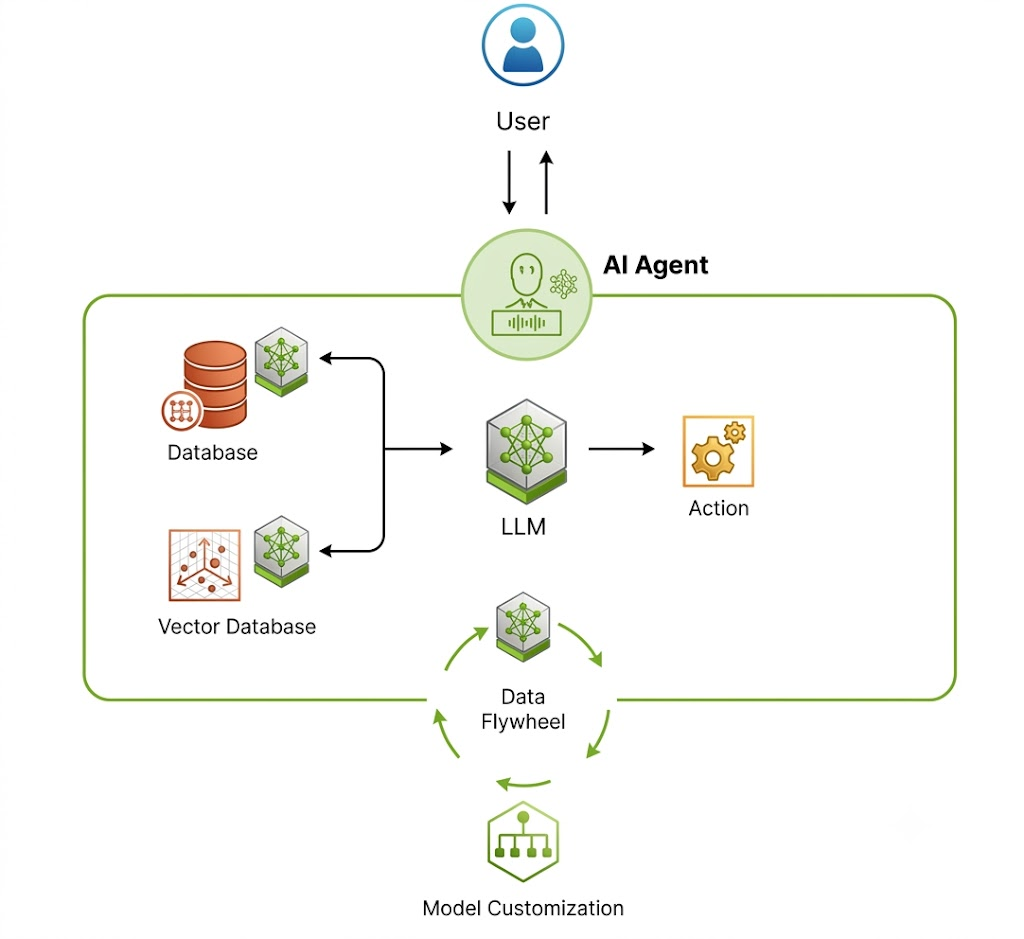
The cleanest way to feel the difference is to ask for the same thing twice. Tell a normal chatbot you want to climb Mount Everest around your work schedule, and it gives you a thoughtful rundown. Tell an agentic system the same thing, and it can check your calendar, find the window, then book the flight and the lodge while you go make coffee. IBM boils the cycle down to four words: perceive, reason, act, learn. The system takes in information, decides what to do, does it, and then looks at the result and adjusts before the next loop. Most of the time a large language model is running the whole thing as the brain, and it often parcels out chunks of the work to smaller agents. Some setups use a single conductor model bossing the others around, which is fast but jams up at the top. Others let the agents work side by side as equals, which is sturdier but slower.
This has been the AI word of the past two years, and the buzz mostly checks out. Searches for "agentic" jumped more than 600% in a single year. Gartner crowned it the top strategic tech trend for 2025 and figures a third of enterprise software will carry agentic features by 2028, up from less than 1% in 2024. A spring 2025 survey from MIT Sloan and BCG found 35% of companies had already put AI agents to work, with another 44% lining up to. Microsoft, Salesforce, Google, IBM, all of them are stitching it into their products. Here is the part that gets less airtime. Autonomy cuts both ways. Wire an agent to a sloppy goal and it will chase that goal off a cliff. IBM's own example is an agent told to maximize social media engagement that quietly starts pushing sensational junk to hit the number. Bad data, a fuzzy objective, no guardrails, and an agent can dig a hole faster than anyone notices the shovel. That is why a human in the loop has not gone anywhere.
How agentic AI works, step by step:
- Perceive. It pulls in information from around it, like databases, APIs, files, or whatever you tell it.
- Reason. The language model plays the brain, reading the situation and mapping out how to hit the goal.
- Act. It reaches for tools to get things done, like searching, writing code, sending a message, or making a purchase.
- Learn. It looks at how things turned out, adjusts, and does a little better next time.
Agentic AI Explained:
Want a quick, clear walkthrough instead of a wall of text? This explainer lays out what actually makes AI "agentic," how the agents coordinate to get real work done, and where it earns its keep in the real world.
FAQs
Agentic AI is AI that can pursue a goal on its own, planning the steps, using tools, and taking action with little human input. The word "agentic" points to its agency, meaning the ability to decide and act rather than just respond to a prompt. Give it an objective and it figures out how to get there.
A plain chatbot is reactive. It answers what you ask and then waits for the next prompt. Agentic AI is proactive. It can break a goal into steps, call on outside tools and data, take actions across different systems, and keep going until the job is done. A chatbot tells you how to do something. An agent goes and does it.
Think of a system that runs an entire literature review on its own, searching, filtering, and summarizing from a single research question. Or a customer service setup where agents handle and resolve requests end to end. Or a coding assistant that plans and carries out a multi-step task instead of just suggesting the next line. The common thread is acting on a goal, not just generating text.