Botsitting, sometimes written bot-sitting, is all the work people do to keep AI useful. You feed it the context it should already have, double-check what it spits out, fix the parts that are wrong, and run the prompt again when the first try misses. None of that shows up as finished work, but it eats real time. The term comes from Glean's Work AI Index 2026, a survey of 6,000 workers, which found people lose about 6.4 hours a week to it. That is almost a full workday, every week, spent keeping the tools in line.
It also explains why so many AI rollouts feel underwhelming. People feel faster, but their company often cannot point to much that got better. A good share of the saved time goes right back into botsitting, and most of that work is invisible. Nobody tracks it, budgets for it, or gives anyone credit for it. Some of it is fine, since checking important work is just good sense. The trouble is that it wears people down, and tired people start waving things through that they would never normally sign off on.
What counts as botsitting:
- Feeding context. Telling the AI things it should already know, like which document is the real one or what the project is even about.
- Checking outputs. Reading what it gave you to catch the stuff that looks right but isn't.
- Debugging. Poking at a bad answer to work out what went wrong, usually with no clear clue why.
- Rerunning prompts. Tweaking the wording and going again when the first answer is off.
- Cleaning up. Fixing and reformatting the output so you can use it.
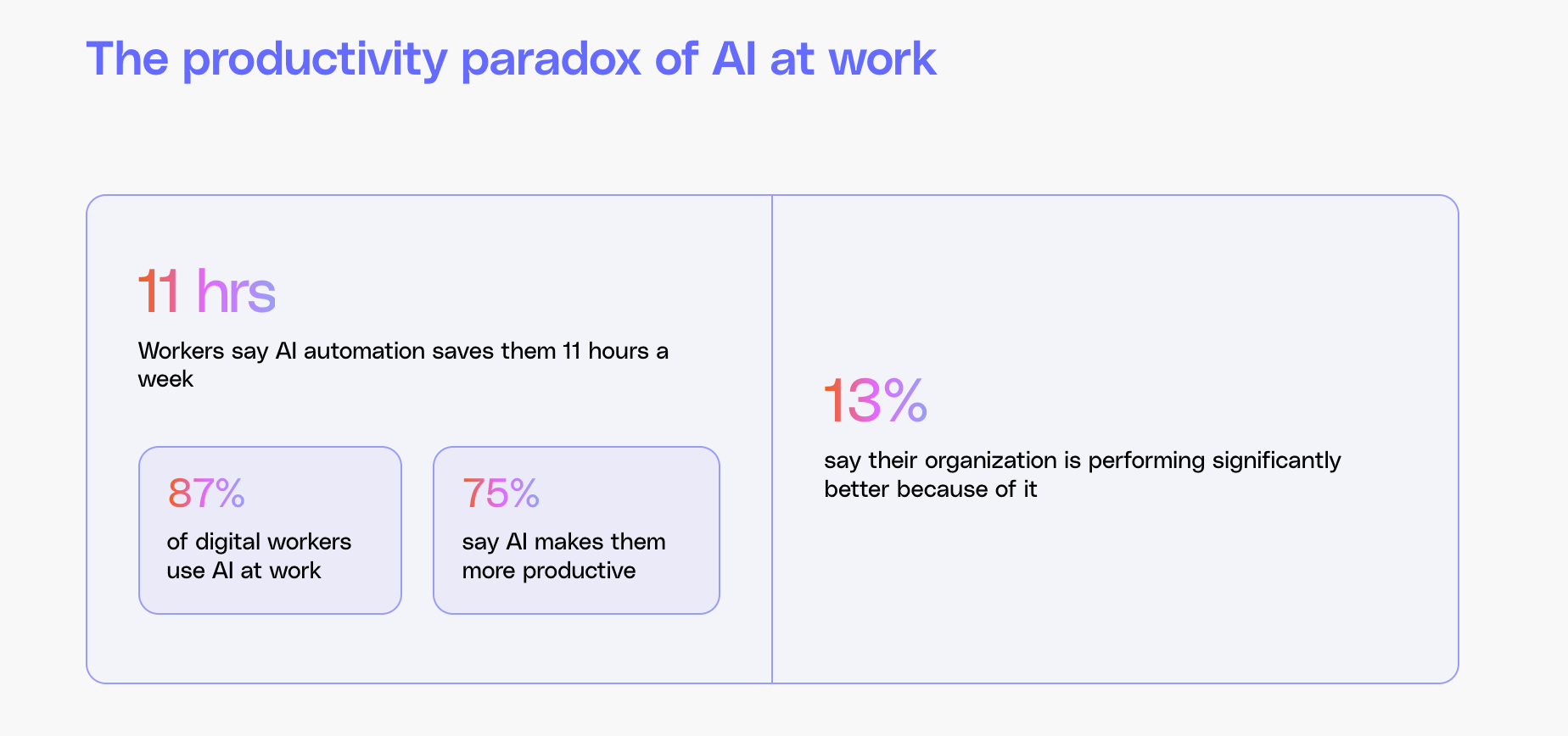
The numbers behind this are counterintuitive. Glean found that 87% of digital workers now use AI, 75% say it makes them more productive, and they report saving roughly 11 hours a week. So far so good. But only 13% say their company is really performing better because of it. People call that the productivity paradox, and botsitting is a big reason those saved hours never quite show up.
Botsitting Explained:
Want to hear it straight from the person who named it? Rebecca Hinds, who heads up Glean's Work AI Institute, sat down to talk through what botsitting actually looks like day to day, why it eats so much of the time AI was supposed to give back, and how it quietly tips into bigger problems. It is a good listen if you want the thinking behind the term rather than just the definition.
FAQs
Bot-sitting is all the unglamorous work that goes into making AI tools worth using. Think giving them context, checking what they produce, fixing errors, and cleaning up afterward. The term comes from Glean's Work AI Index 2026.
Glean's report puts it at about 6.4 hours a week, close to half the time AI is supposed to be saving them. It also found that the people doing the most bot-sitting tend to be more burned out, and more likely to be looking for a new job.
No, though they are related. Botsitting is the real work of checking and fixing AI. Botsh*tting is the report's word for shipping AI work you never really reviewed and could not explain if someone asked. The idea is that too much bot-sitting wears people down, and that is when it tips into botsh*tting.