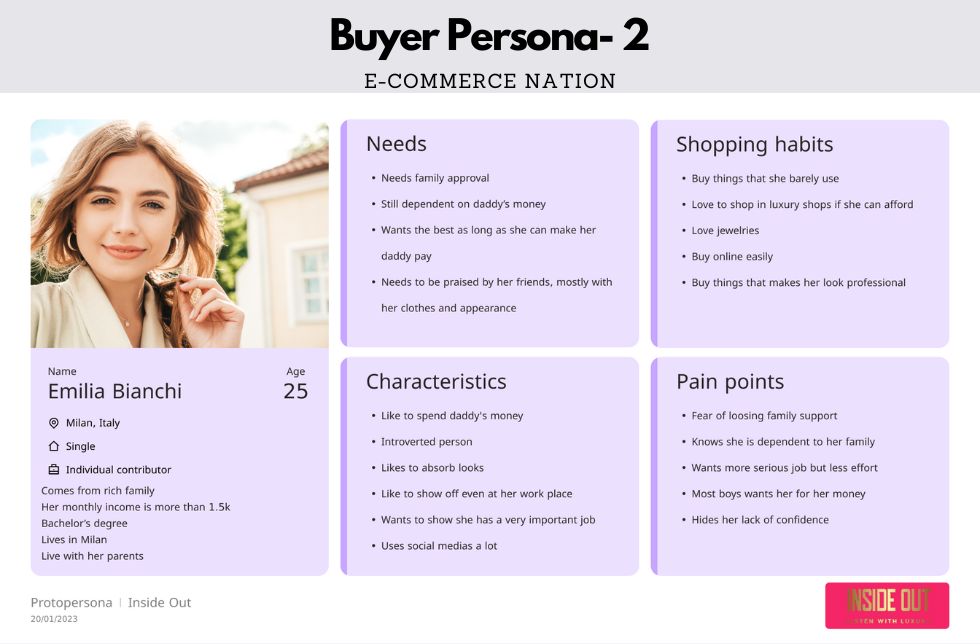
A buyer persona is a fictional representation of your ideal customer that represents the people you sell to within an organization. In other words, they’re the people who make buying decisions. It’s crucial that you take time to do your research and develop solid personas based on data and market research that your reps can rely on.
A buyer persona goes beyond basic demographics, including behaviors, motivations, goals, and pain points. Creating a buyer persona involves gathering insights through surveys, interviews, and analyzing patterns in customer behavior, which help businesses understand and empathize with their target audience.
To develop your buyer persona(s):
- Identify specific job roles and functions of influential individuals
- Understand their specific needs, challenges, and pain points
- Identify their professional objectives and drivers
- Understand how they make purchasing decisions
- Determine their preferred channels for receiving information and communication
- Outline the steps that they take from discovery to conversion
- Use insights from sales reps about their interactions with actual buyers
How to Create a Buyer Persona:
FAQs
You should review and update your buyer personas at least once a year. You might even want to review more frequently if you're entering new markets, launching new products, or seeing significant changes in customer behavior. Regular updates will help you make sure your sales and marketing strategies stay aligned with your real customer needs.
Buyer personas help your sales teams tailor their approach to the specific needs, motivations, and challenges of different customer types. When your sales reps understand who they're selling to, they'll be able to build more relevant pitches and anticipate objections. They can then create messaging that resonates. In the end, you'll increase your conversion rates.
The number of personas you create should depend on how complex your sales cycle is. You'll also want to consider the diversity of your customer base. Most companies start with 2 - 4 core personas. Each one should represent key decision-makers and influencers. Over time, you can expand or refine those personas based on the real-world data you collect and changes in the market.
A target audience is a broader group defined by general demographics. This could be industry, location, or company size. A buyer persona, in contrast, is a detailed, semi-fictional profile of a specific decision-maker within that audience. This includes their goals, challenges, behaviors, and decision-making processes.