A bottom-up sales strategy is a go-to-market approach. In it, a salesperson focuses on building relationships at the individual or department level. This is instead of targeting high-level decision makers. This approach is often used in B2B selling, particularly in Software-as-a-Service (SaaS), where multiple users and influencers are involved in the buying process.
This strategy typically involves a longer sales cycle, but it can be effective in building a strong and dedicated customer base. Furthermore, the many relationships and touch points allow for products to become “stickier” within an organization. Such products & services are less prone to customer churn.
This approach to sales often begins by identifying and prospecting to individual users or groups at a department level. Once these smaller groups are using the product or service, they can act as advocates and help drive adoption within the larger organization.
It can also help facilitate a product-led growth strategy. In this case, usage and satisfaction at the user level can generate momentum and expand at an organic level throughout a company. As usage grows, leadership often becomes more receptive to expanding their contract with you.
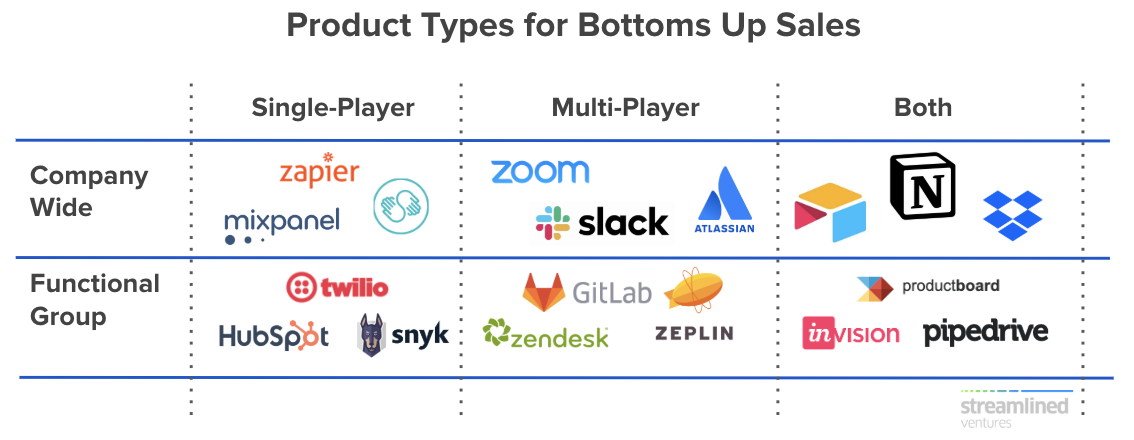
Famous examples of successful bottom-up GTM strategies include:
- Figma
- Okta
- Calendly
- Zoom
- Slack
FAQs
The difference lies in the starting point. In bottom-up, selling starts with end users or small teams to build product traction. With top-down, selling targets the decision-makers directly to secure large deals from the beginning. The first counts on organic expansion, and the second hinges on strategic authority.
The primary drawback of this selling approach is the high amount of time that's required on planning and coordinating it without the guarantee of ever moving up.
Faster sales cycles, overcoming organizational bureaucracy, capturing grassroots support for products or initiatives, and expanding influence within customer organizations are all potential advantages.
Bottom-up selling is a go-to-market approach that targets lower-level or individual decision-makers within an organization, such as department managers, to gain buy-in and build momentum upwards.