Most salespeople treat pricing questions like a chore. They give a number and move on.
But buyers are doing more than asking about cost. They are running a quiet test. They want to see if you are honest, predictable, and worth a long-term contract.
A clear answer builds trust. A vague response makes buyers nervous. We broke down the seven most common pricing questions, why buyers ask them, and how to give a great response.
We analyzed 10,000 sales questions from real B2B buyers. Here are the 5 categories that sales teams field questions from most often:
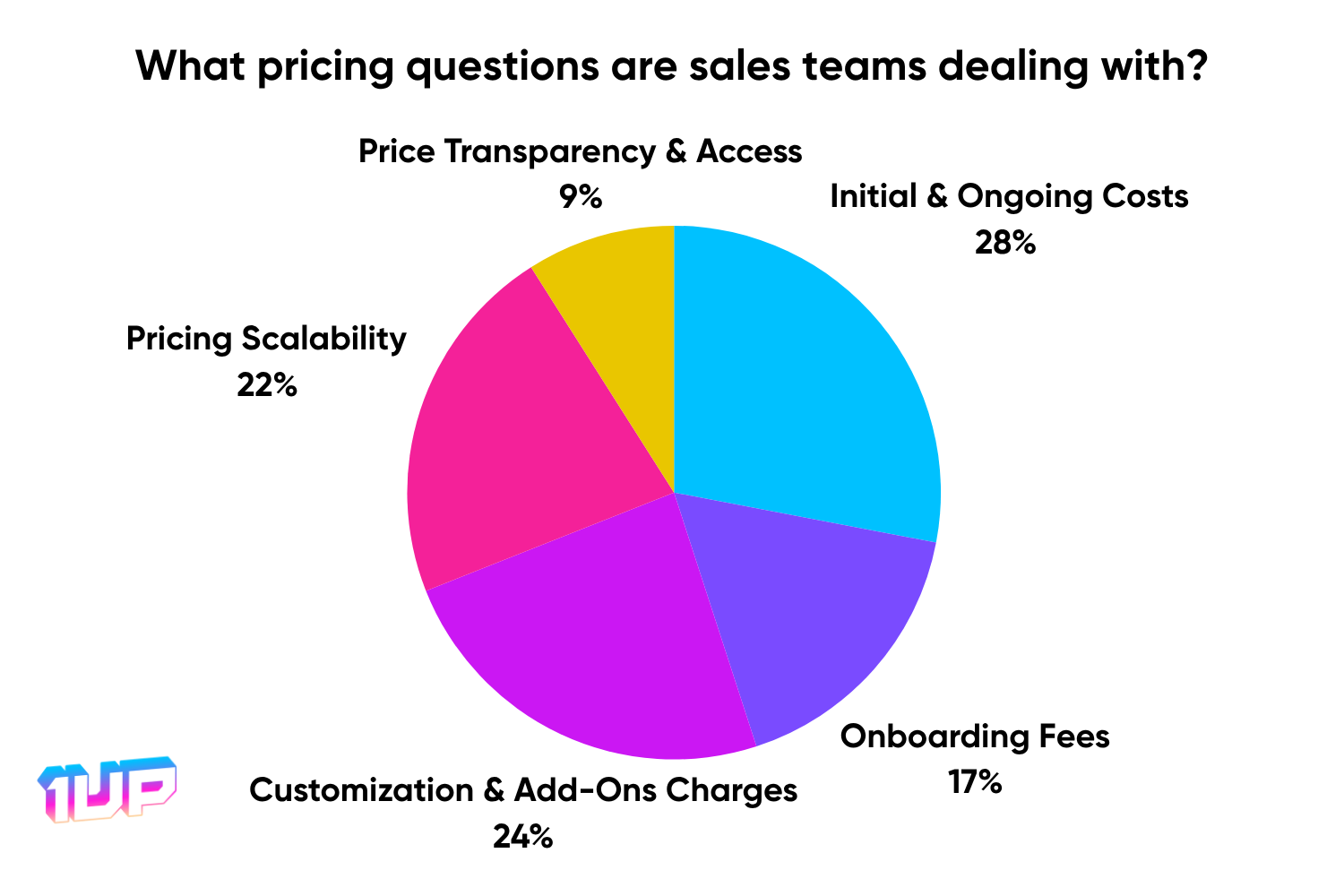
We looked closely at the seven most common questions that customers ask about pricing based on this. Every salesperson needs to understand the real reason why customers ask these questions and know how to give a great answer.
These seven questions cover everything, from the first costs and setup fees to how you pay and what happens to the price when you renew the contract. These are the questions that come up in formal requests for proposals (RFPs), first phone calls, and final reviews.
Don't give a poor answer to any one of these. It can quietly ruin a deal you were sure you would get.
1. What is the total cost, including setup and yearly fees?
Why they're asking:
They want to know if they can afford you right now. They don’t want to waste time if your price is way out of their league.
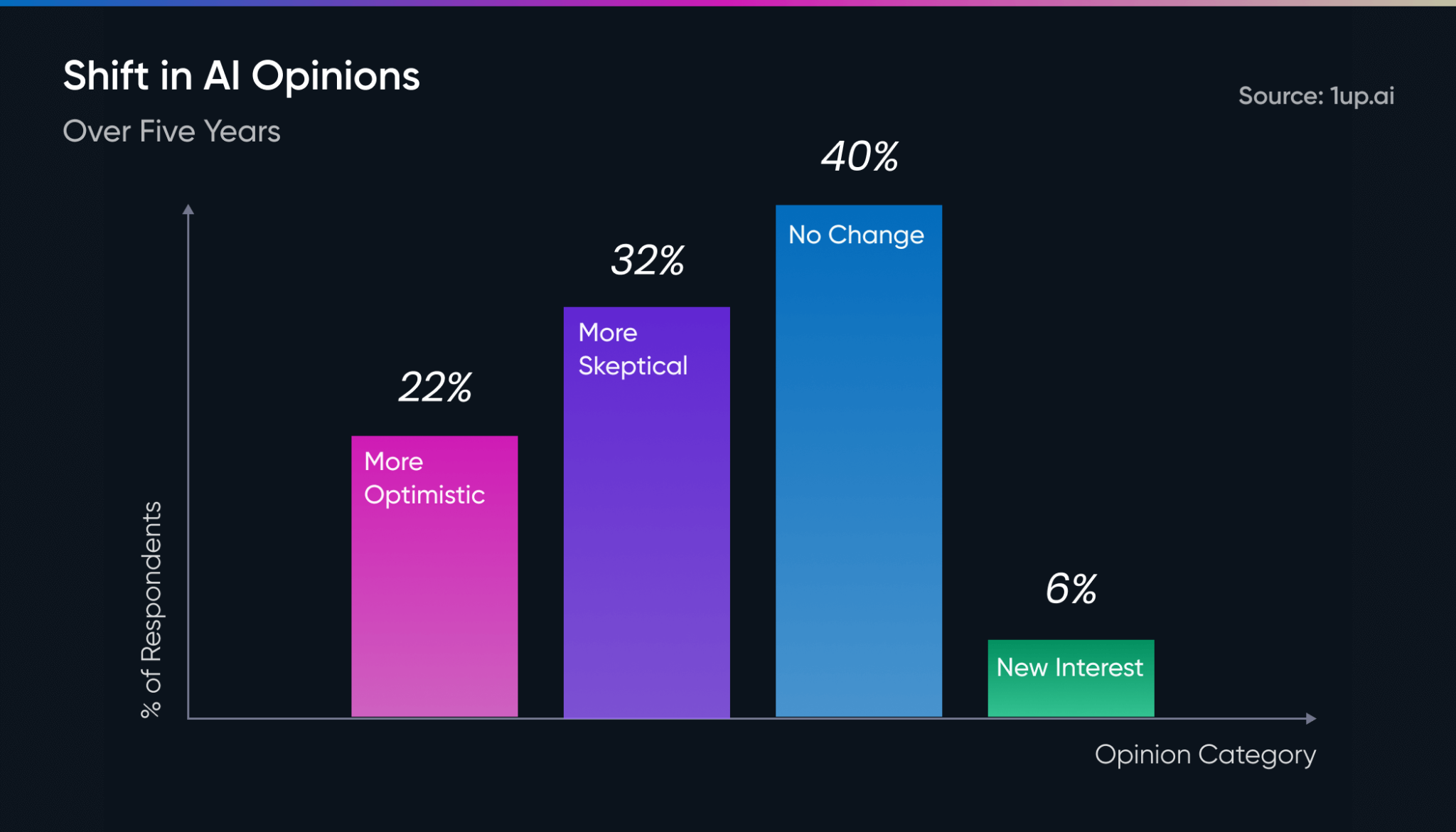
According to our State of AI in Sales and Presales report, 32% of sales people trust companies less than they did five years ago. Buyers have had too many surprises. Giving an unclear answer to a question about the cost is the kind of thing that makes buyers quickly put you in the "maybe" group.
How to respond:
Be direct. Give a price range and explain what makes the price go up or down.
Example of a great response:
“Our software starts at $15,000 per year for up to 50 users. Most customers also pay a one-time $2,000 setup fee. If you need special connections to other tools, the price can go up. Does that fit your budget?"
This is a great response because it immediately provides a clear, concrete starting price of $15,000 and transparently details what is included and what costs are separate. It effectively manages the buyer's expectations by explicitly stating the factors, like advanced features, that can cause the price to increase.
Finally, it pivots the conversation with a professional offer to discuss a typical setup, which builds trust and moves the deal toward a close.
2. What are the setup and onboarding fees?
Why they're asking:
Buyers hate "hidden costs." They don't want to sign a contract and then find out they owe more money just to get started.
Our research found that 76% of sales and presales teams are using more than five tools on a daily basis.
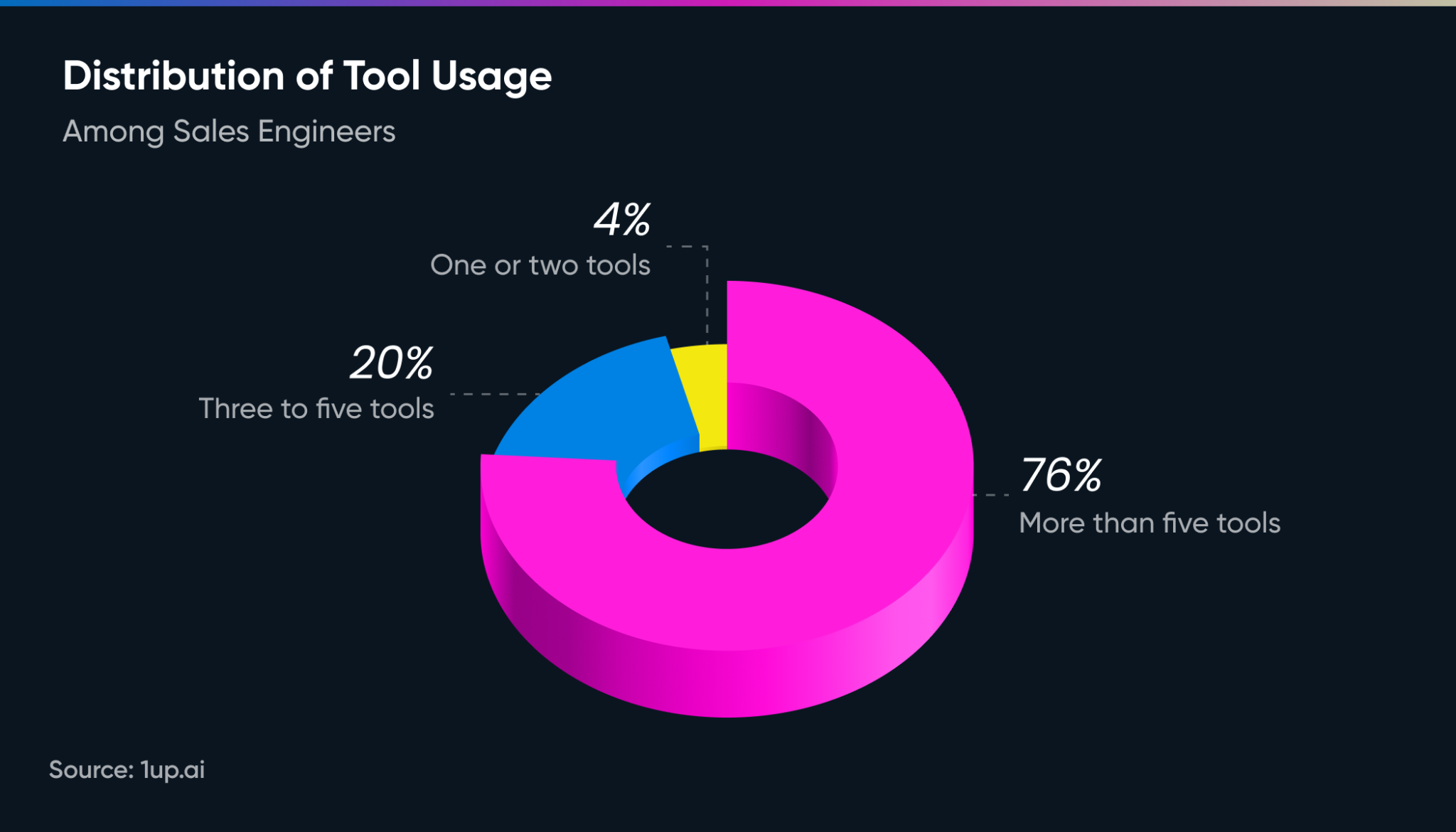
This kind of tool overload means reps are already stretched thin. The last thing they need is to hunt down pricing docs or dig through old Slack threads every time a buyer asks a question. Having clean, ready-to-go answers to pricing questions isn't just nice to have. It's a real competitive edge.
How to respond:
List every fee upfront. If you charge for training, say so. If you don't, point that out as a benefit.
Example of a great response:
"We charge a $2,000 fee for setup and training. This helps our clients get started 50% faster. If you’d rather do it yourself using our videos, we have a free option too."
This answer is very clear and honest about the $2,000 fee and exactly what it pays for. It shows the fee is a good deal by explaining that this support helps teams get started faster and have fewer issues later on. The response also gives a free option for self-serve setup, which helps the buyer feel like they can trust the company.
Best practice:
Customers generally don't love flat fees for onboarding, so try to build it into your plan if you can. If that's not an option, at least make your onboarding and setup fees clear early in the sales process. Nobody likes surprises when it comes to pricing.
3. Do you charge extra for support or special features?

Why they're asking:
This buyer has been burned before. They’ve likely been "nickel-and-dimed" before. They want to make sure the price they see is the price they actually pay.
“49% of software buyers said the number one thing they would change is the lack of availability of transparent pricing information.”
TrustRadius
That's not a niche complaint. Almost half of all buyers are walking into deals already frustrated by vendors who don't communicate costs clearly. This question is their way of trying to avoid getting surprised again.
How to respond:
Break it down. Keep it simple. No jargon, no ambiguity, and no "talk to your rep for more info." They don't want to play games. Don't make them. The more clearly you can spell out what's included and what costs extra, the faster you move from "vendor being evaluated" to "partner we trust."
Example of a great response:
"Our base package includes core features like reporting, workflow automation, and email notifications. Premium features like Salesforce integration and custom dashboards come with our Pro and Enterprise plans. Customer branding is part of the Pro tier. We never charge extra for support."
This response works because it gives the buyer everything they need in one shot. It names what's included in the base package, spells out which features cost more and exactly which plan unlocks them, and closes with a direct statement on support pricing. The buyer doesn't have to read between the lines or book another call to find out where the hidden costs are. Everything is out in the open.
Best practice:
Showing a pricing list on your website makes it easy for the buyer to compare plans. However, many enterprise SaaS companies require buyers to request pricing. In this case, it can be frustrating if there is little to no pricing information. Even if your company does choose to go this route, it’s a good idea to have some information available for comparison even if the price tag is missing.
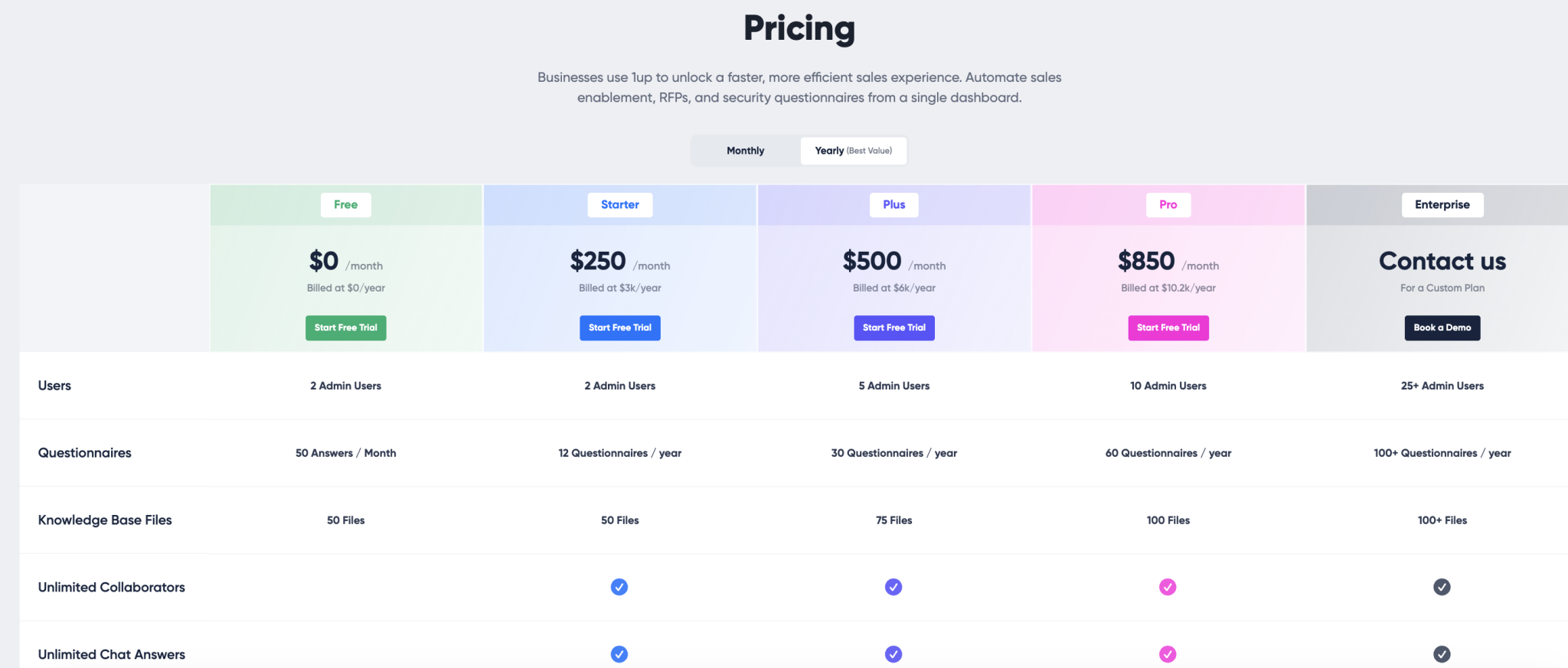
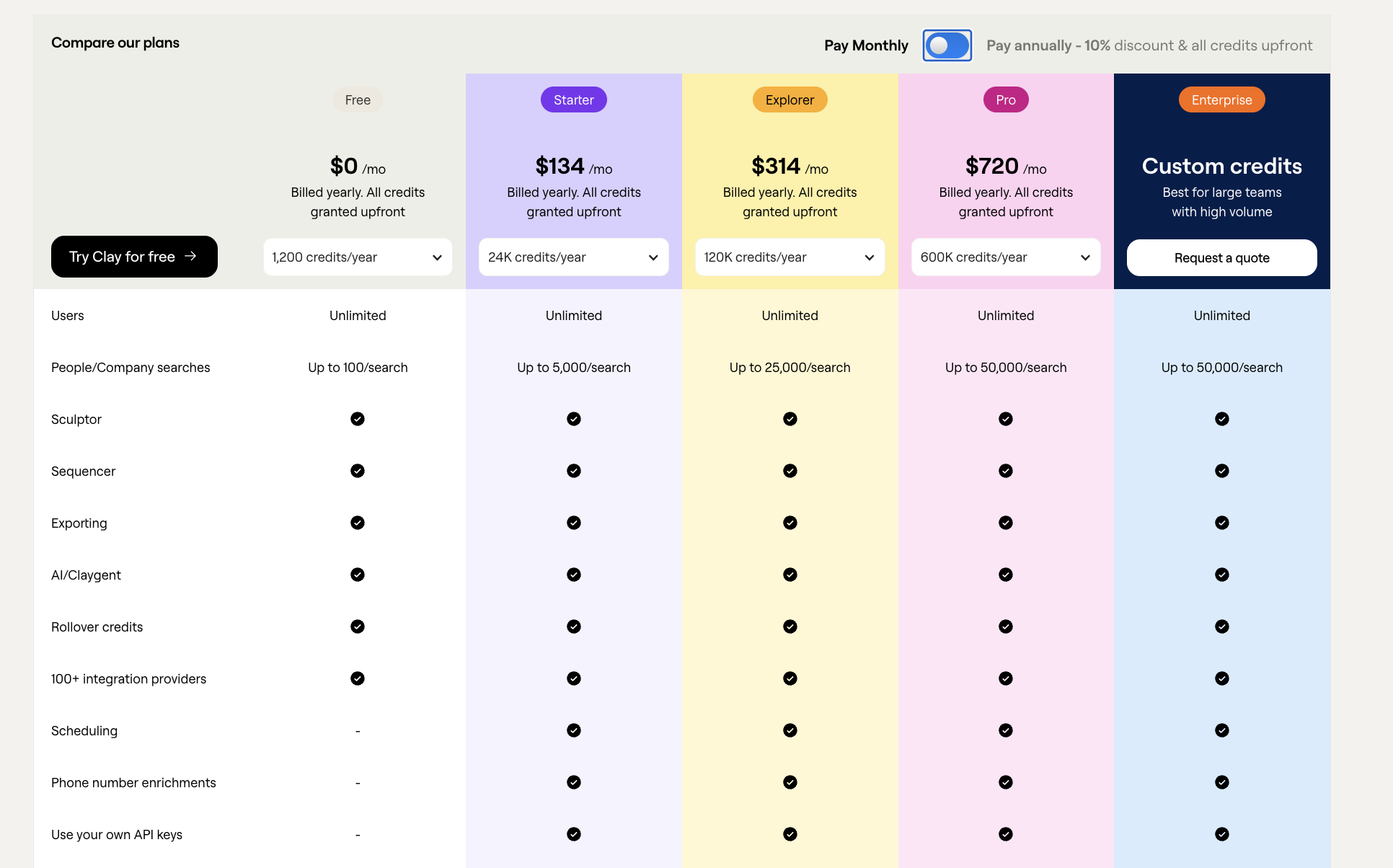
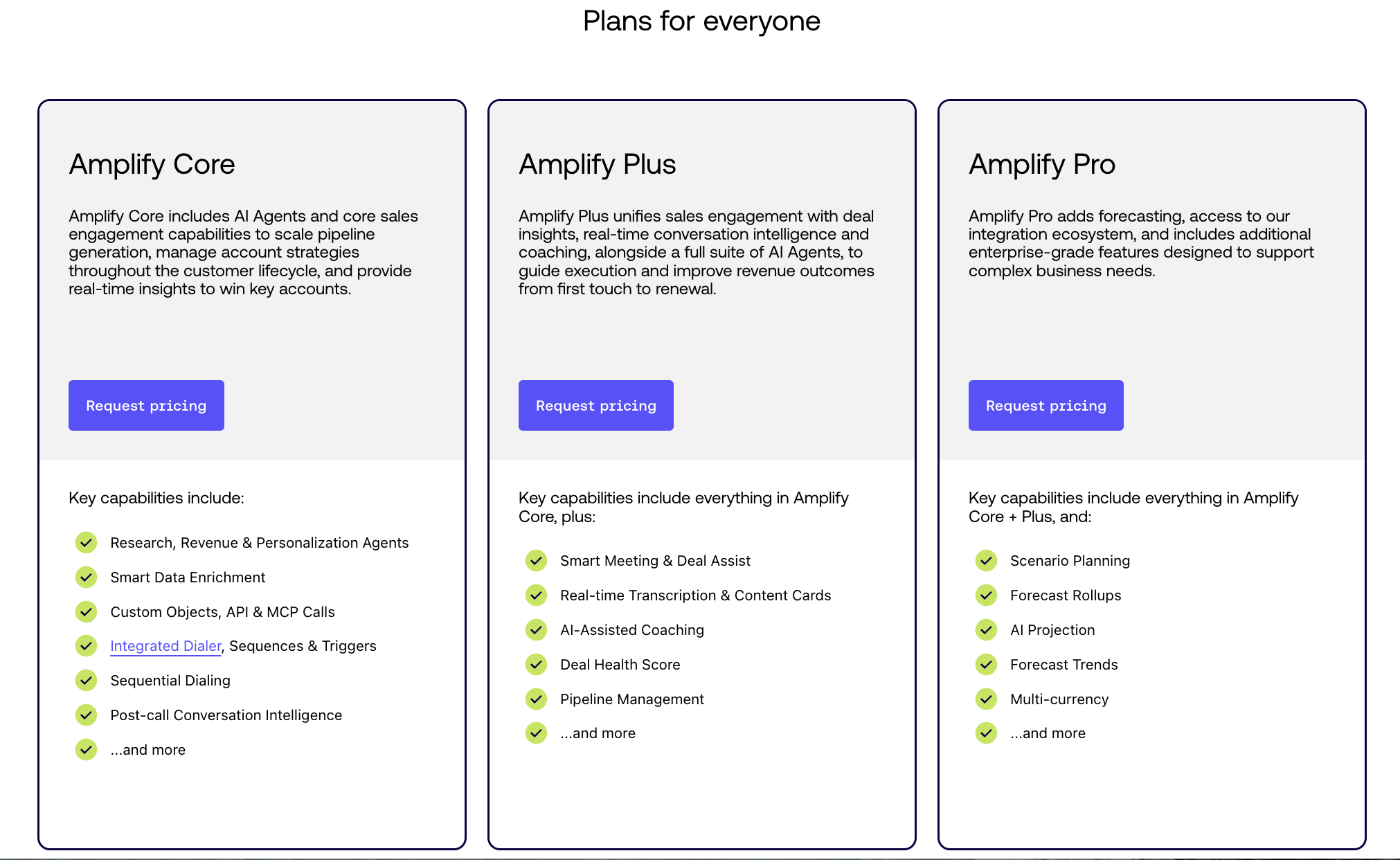
Here are three examples of pricing pages:
- 1up: This is a traditional pricing list with every tier clearly spelled out.
2. Clay: Another example of a clear, informative pricing strategy with all the information buyers need to make a quick decision.
3. Outreach.io: This is an example of how you can share enough information with the buyer to give them an idea of what they get while going with different plans without creating frustration about the actual price.
4. How does the price change as we grow?

Why they're asking:
No one wants to close a deal today only to find out that adding more teammates next month will break the bank. That kind of thing can really hurt your credibility internally.
It's a reasonable thing to worry about right now. According to SaaStr, prices for software you pay for online, also called SaaS, went up by about 11.4% in 2025. This is almost five times more than the normal rate that prices rise. Buyers are paying more for everything, and they know it. So, when they ask about your prices and discounts for large teams, they are not just being thorough. They are trying to figure out if your pricing will still work well for their team in six months, not just today.
How to respond:
Use clear numbers. Show them that growing with you actually saves them money per person.
Example of a great response:
"We charge $25 per user. Once you hit 100 users, the price drops to $20. We want to make sure you aren't punished for growing your business."
This response works because it answers the question completely in three sentences. The buyer understands the price plan, the starting cost, when it changes, and what happens as their company grows. There are no unanswered questions. The best part is how it's explained at the end. Instead of just listing numbers, it makes larger-volume pricing sound like a good thing for the buyer.
Phrases like "You're never punished for growth" and "the price per user actually goes down as you scale" make a complex price structure sound like it was made to help the buyer. That's the difference between just reading prices and actually selling.
It's also short. A buyer can read it in ten seconds and walk away with a complete picture.
Simple = easy to understand = easy to buy.
5. Why isn't your pricing on your website?
Why they're asking:
Buyers prefer to do their own research. If they can’t find a price, they might think you are hiding something or are too expensive.
According to a 2025 Gartner survey, 61% of B2B buyers prefer a rep-free buying experience, and 73% actively avoid suppliers who send irrelevant outreach. Buyers want to do their research on their own terms. If they have to chase you down just to find out what something costs, a lot of them will move on before that conversation ever happens.
How to respond:
Explain the reason like a human. Don't just say "it's complicated."
Example of a great response:
"We don't list prices online because every team is different. Factors like how many users you have and your security needs change the cost. I’m happy to give you a quote once I know a bit more about your goals."
This response works well because it helps build trust and shows the company is honest. Instead of vaguely saying the pricing is custom, it clearly explains why the price isn't public, which is a more transparent approach. It lists specific factors that change the cost, such as the number of users and security needs, which shows the buyer that the pricing process is logical and fair.
Finally, by offering a quote after learning a bit more about the buyer's goals, the response puts the buyer in control of the next step and doesn't force them into an unwanted sales conversation.
Best practice:
Make your pricing page easy to find. Buyers expect software pricing to be accessible. It's just the standard now.
6. What are your payment terms? (When do I have to pay?)
Why they're asking:
Their finance team needs to plan their spending. They need to know if they are paying all at once or in small chunks. Also, RevOps teams are often involved in vendor decisions and they care a lot about billing predictability.
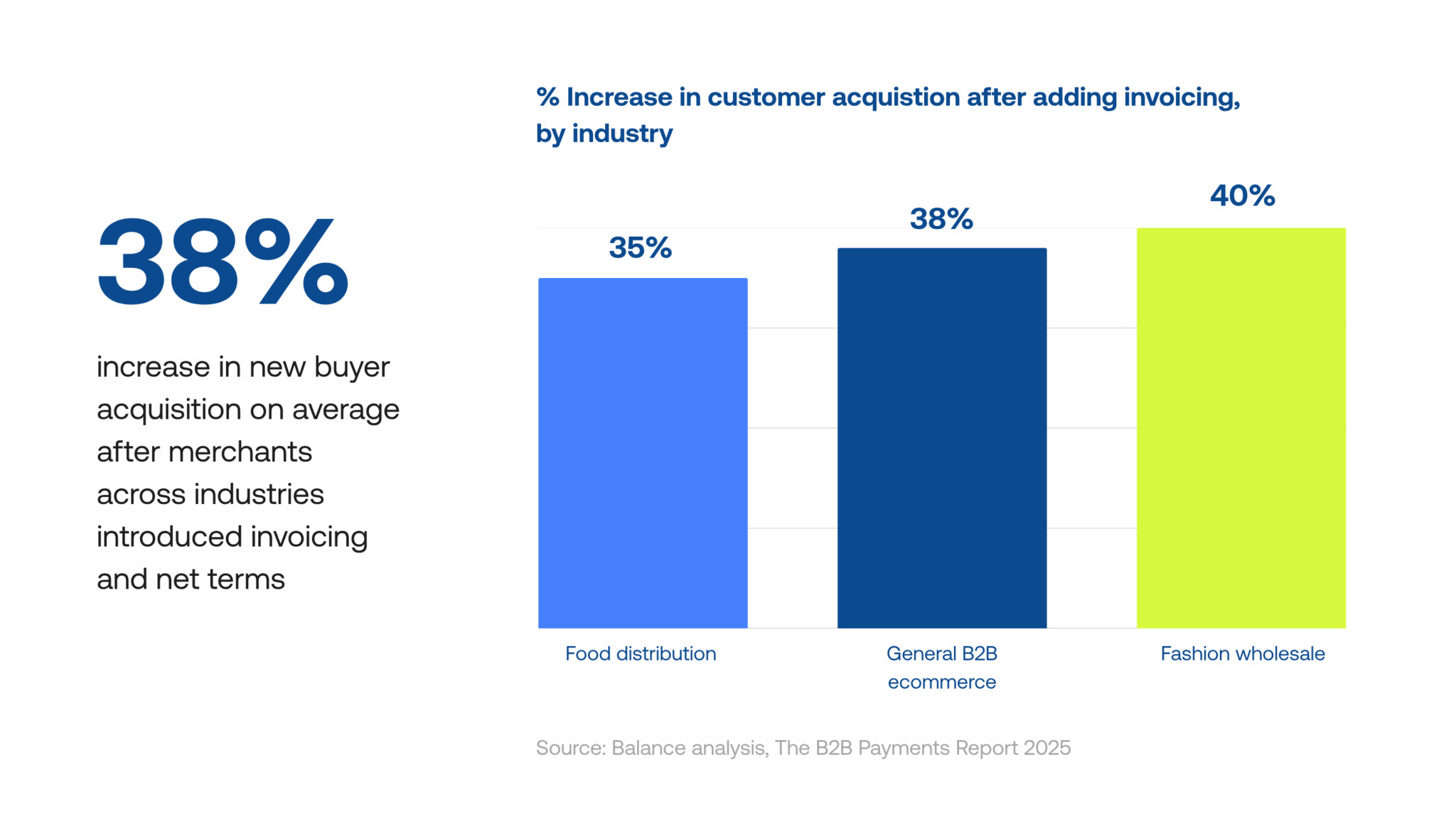
The Balance's B2B Payments Report says that businesses that offered flexible billing and credit terms saw a 38% average increase in getting new customers. In addition, 40% of their current customers who were given these flexible payment choices ended up spending more money each month. This shows that offering flexible payment options is not just a helpful feature, but a major way to grow the business.
How to respond:
State your standard rule, but show you are willing to be flexible.
Example of a great response:
"Usually, we bill once a year with payment due in 30 days. However, we can talk about quarterly payments if that works better for your team."
This response works well because it first tells the buyer the company's standard rule: billing once a year with payment due in 30 days. This makes the company sound confident in its business model.
Then, it immediately shows flexibility by offering to talk about quarterly payments. This order is helpful because the buyer gets a clear answer right away, and then learns that there is still room to find a payment plan that works better for their team.
7. Will the price go up when I renew my contract?

Why they're asking:
They don't want a "teaser rate" that doubles in a year. They are looking for a predictable partner. This often comes up in formal RFP processes where procurement teams are doing a full comparison across vendors and need to model out multi-year costs.
Buyers have a good reason to be worried. The Vertice SaaS Inflation Index says that 60% of companies hide their price increases. They often do this by adding new features or changing their billing system in ways that make it hard for customers to track what they are actually paying.
Because buyers have been surprised by price hikes many times, they now ask about price change policies before signing anything. Being honest and direct about this is one of the easiest ways to stand out from other companies.
How to respond:
Be honest about how often prices change. Offer to "lock in" their price if they sign a longer deal.
Example of a great response:
“Your price is locked for the length of your contract. After that, prices usually go up about 3% to 7% per year to match inflation. We can sign a three-year deal now if you want to keep today’s price."
This response works well because it removes any worry for the buyer. First, it is very clear that the price will not change while the contract is active, which builds confidence.
Second, it gives an honest and specific price range for future increases, which makes the price change feel manageable and predictable, not random.
Third, offering a three-year deal to lock in today's price turns the question from a risk into a chance for the buyer to get long-term cost certainty.
How to Automate Answers to Pricing Questions
Pricing questions don't have to be a big problem. Once you understand why people are asking, you’ll feel much more sure about giving real answers. Clear, direct replies help people trust you and move sales along faster.
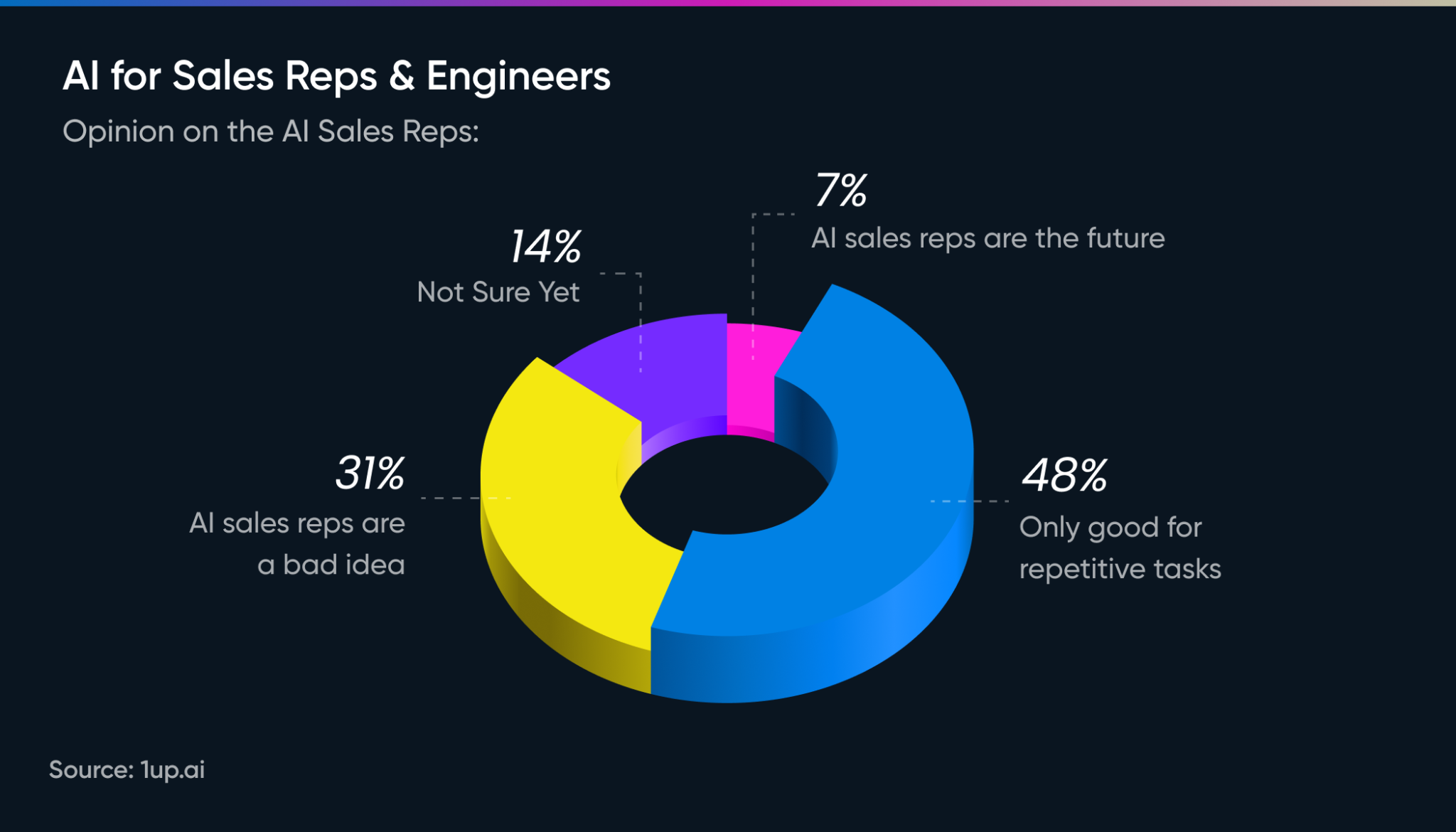
Our State of AI in Sales and Presales report found that 48% of sales professionals see AI as most valuable for handling repetitive tasks, not leading conversations.
Pricing questions are a perfect example of this dynamic.
Reps shouldn't have to reinvent the wheel every time a buyer sends a spreadsheet. It’s a repetitive task that should be automated.
Only 7% of those surveyed believe computer sales reps will fully replace humans. Most people see computers as a tool for the repeated stuff, so sales people can spend more time on the work that actually requires a person: understanding the buyer, handling disagreements, and building relationships.
Pricing questions are definitely in that group of repeated jobs. If your team is still looking for old pricing papers or going through old chat messages every time a buyer asks a question, that's time that could be spent on more important work.
That's the problem 1up solves. Sales teams use it to automatically answer tough questions like these, pulling from your best past answers so your reps always have something accurate and ready to go.
Here's how:
FAQs
Give a range and explain what moves it up or down. Buyers don't need an exact number at this stage. They need to know if you're in the same ballpark and whether you'll be straight with them about it.
Not necessarily. But you need to explain why, not just say pricing is custom. Buyers are more likely to stay engaged if they understand the reasoning, such as that pricing varies based on user count, features, or compliance requirements.
Be specific. Vague reassurances do more damage than honest numbers. Telling a buyer that increases have historically stayed in the 3-7% range annually is far less alarming than saying "we review pricing periodically." You can also offer a multi-year deal to take the question off the table entirely.


How to Write an RFP Response That Survives AI Scoring
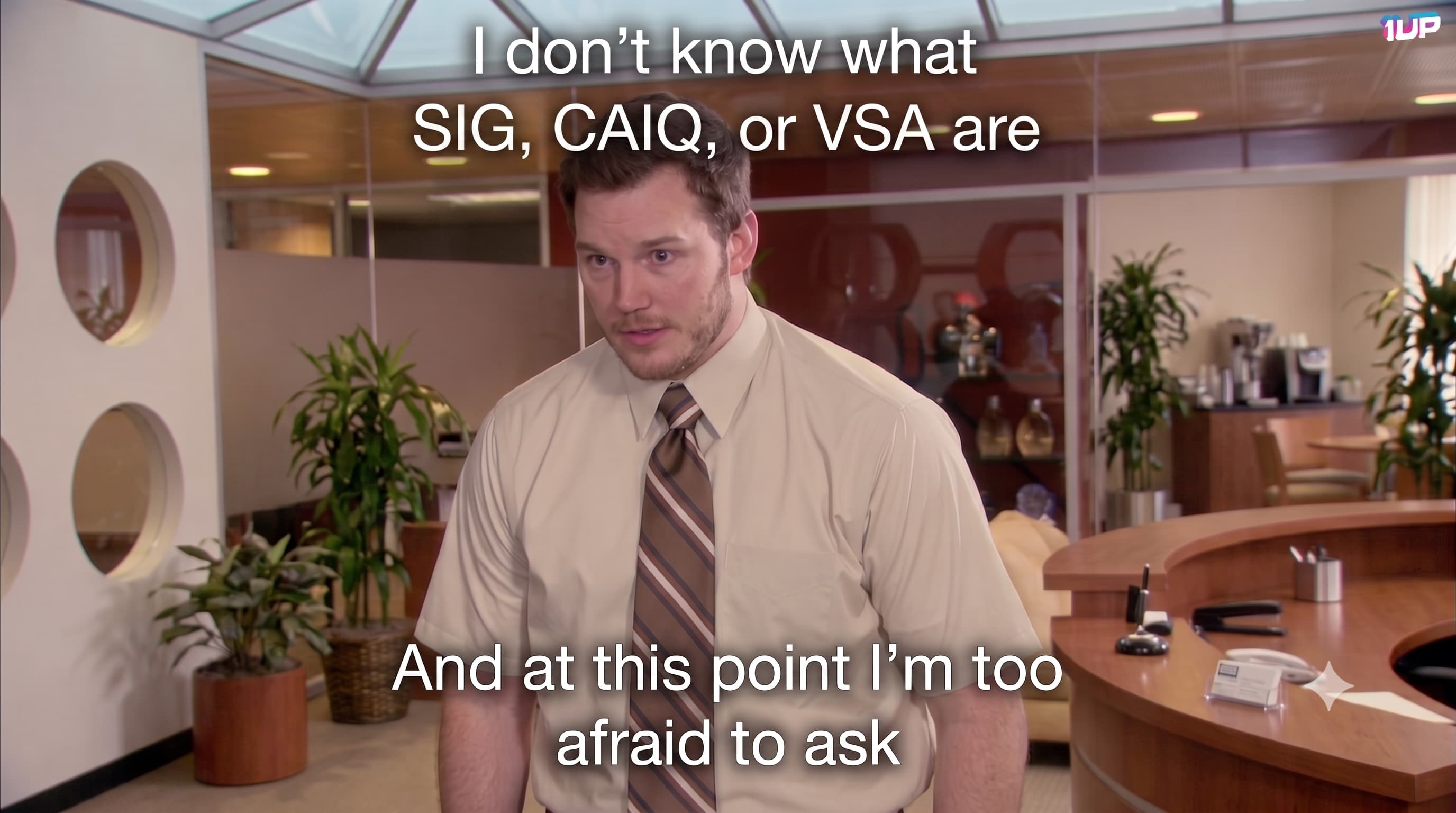
SIG vs CAIQ vs VSA: A Simple Guide to the Big Three
How to Win Government RFPs With AI (Without Getting Disqualified)
How to NOT Use AI for Sales: 7 Mistakes That Lose Deals
ChatGPT vs. Copilot vs. Claude for RFPs: A Side-by-Side Comparison