Sales automation is a method for mechanizing manual and time-consuming sales tasks and processes by using software, artificial intelligence (AI), and other digital tools.
It does this by managing certain responsibilities of sales representatives, thereby helping them to improve their efficiency, eliminate manual tasks, streamline recurring activities, and, most importantly, ensure that leads don’t fall through the cracks while improving the quality of day-to-day sales tasks. In fact, there’s a huge range of tools available that automate different parts of the sales process to cover everything from prospecting and pipeline management to sales forecasting and data tracking, and everything in between.
The key benefit of sales automation is that it enables teams to spend more time focusing on important tasks, such as:
- Improving sales processes and pipelines
- Scoring and qualifying leads for more conversions
- Tracking and improving customer relationships
In a nutshell, sales automation helps to streamline the B2B and B2C sales processes for more conversions, stronger client relationships, and improved sales data.
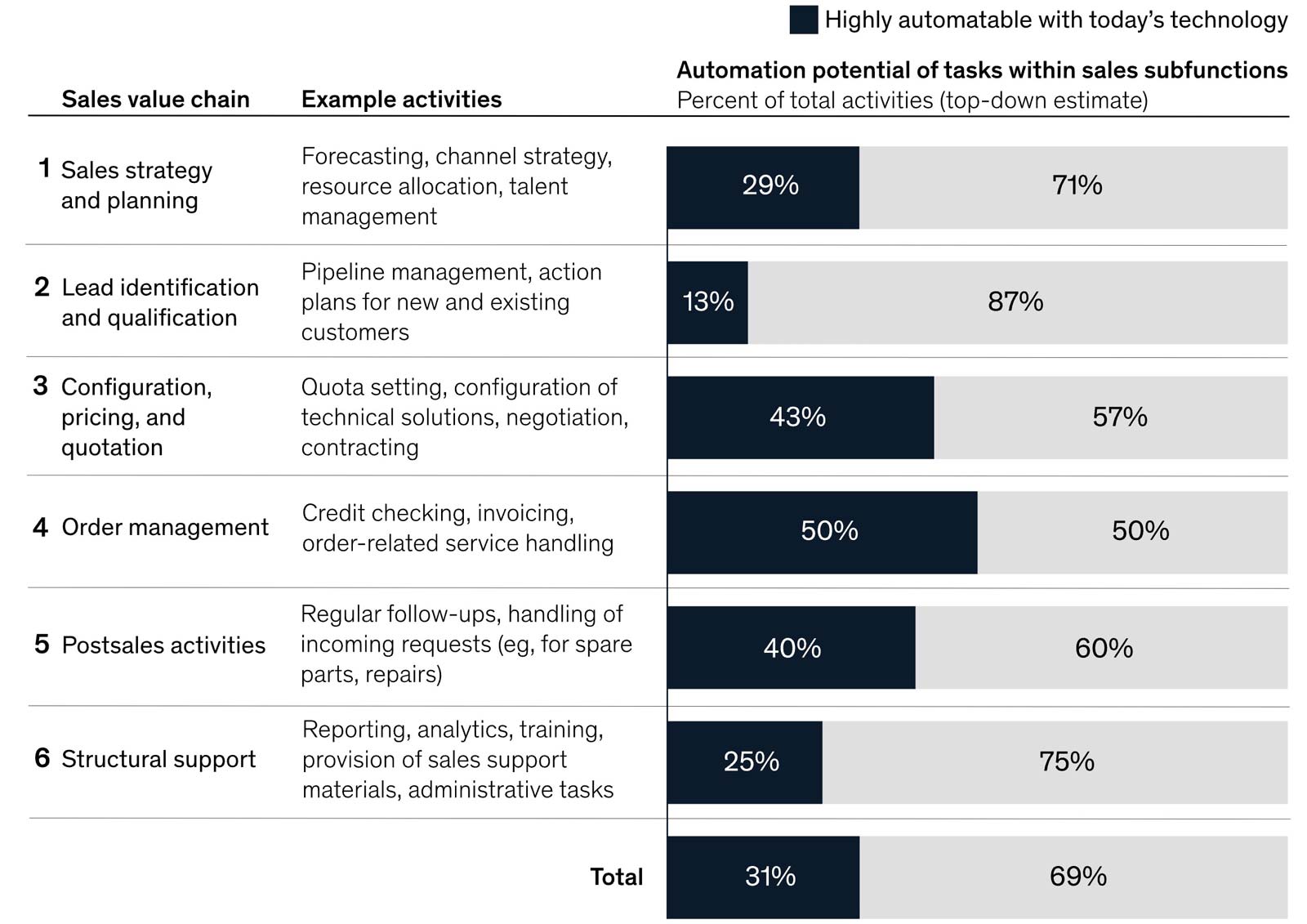
Sales Automation Explained:
FAQs
Common types of sales automation tools include: CRM platforms like Salesforce or HubSpot centralize contact and deal information. Sales engagement tools like Outreach or Salesloft automate and personalize outbound communication. Marketing automation platforms like Marketo or Mailchimp nurture leads until they're sales-ready. Email automation software can send sequences based on prospect behavior. Meeting scheduling apps like Calendly eliminate back-and-forth emails. And finally, AI tools that predict deal outcomes, recommend next steps, or write draft emails.
Automated processes help to increase productivity and efficiency, reduce manual workloads for sales teams, and enable overall faster sales cycles.
Sales automation leverages technology to automate repetitive sales tasks, processes, and workflows, such as lead scoring, email follow-ups, scheduling meetings, and generating sales reports.
Come on. There's always a drawback, right? Look, sales automation isn't a silver bullet. When overused or poorly configured, it can make your attempts at outreach feel robotic. When that happens, your customers won't engage. Some tools can flood prospects with too many messages. Others put speed over substance. There's also a learning curve and an initial time investment to get automation tools properly set up.