A prompt jockey is a half-joking name for someone who sits there feeding prompts into an AI tool all day, mostly by grabbing templates and nudging the wording around, without really knowing what is going on under the hood. The "-jockey" bit works the way it does in "desk jockey" or "disk jockey." Someone who just runs the thing. Could be a friendly self-roast. Could be a small dig. Depends who says it, and how. A lot of these folks lean on the same recycled prompts and prompt packs that get passed around online. The results come out fine, sometimes even great. But ask why a prompt works and you usually get a shrug.
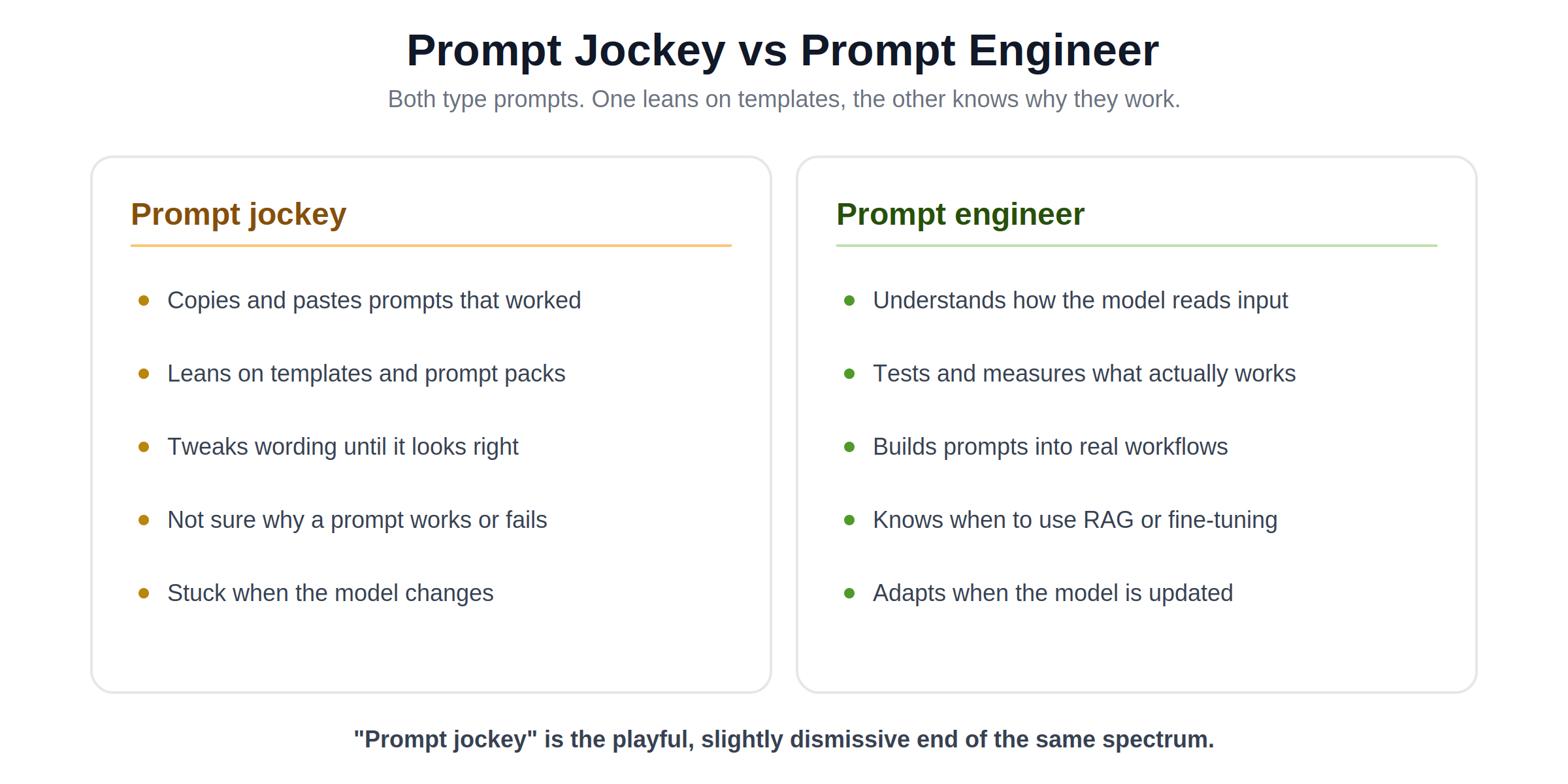
The word tends to show up right next to its fancier cousin, the prompt engineer. People draw the line something like this. A prompt engineer gets how the model reads language, runs real tests, checks the output, and bakes prompts into actual software that has to keep working. A prompt jockey runs on trial, error, and whatever happened to work last time. The Oxford English Dictionary has an entry for prompt engineering as a real discipline now, so the serious version clearly counts as a skill. The jockey label lands on the opposite end of that spectrum. The end where it feels more like jabbing at buttons than building anything.
And here is the awkward bit. The fight over whether prompting is even a deep skill has been dragging on for ages. One camp swears anyone can learn the basics over a lunch break, so slapping "engineering" on it feels silly. The other camp fires back that shifting a couple of words can yank the output way off course, so doing it well takes reps. Funny thing is, they are both right. The real answer hides in the messy middle. Basic prompting? Easy. Steady, reliably good prompting? Not even close. That gap between the two is the exact spot the word prompt jockey likes to poke.
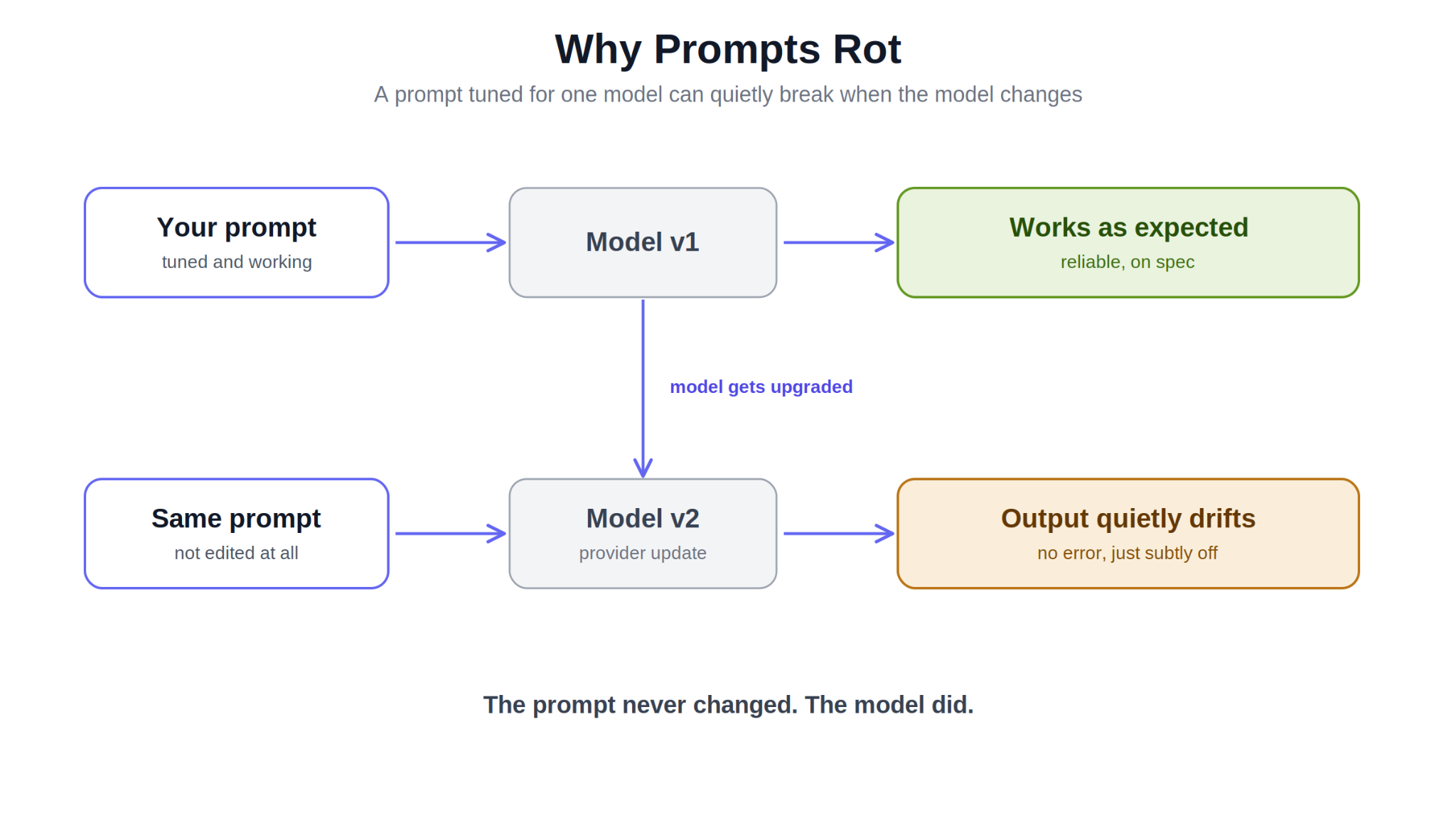
The job market muddies it even more. Rewind to 2023, when the Wall Street Journal slapped "one of the hottest jobs around" on prompt engineer. Then the standalone title started melting away almost as fast as it showed up. It did not actually die. It got swallowed into bigger roles, the AI engineer and LLM engineer kind. So the pure "all I do is write prompts" version, the most jockey-ish one, is the slice that shrank, while prompting as one skill on a longer list kept climbing. Models shift too. A prompt that crushed it on one version can quietly fall apart on the next. The jockey hits a wall right there. The person who actually understands the model just pokes at it and adjusts.
Being a prompt jockey is not some terrible thing, though. A ton of real work gets knocked out by people who grab a good template, fill it in, and keep moving. Think of the label as an elbow to the ribs, not an insult. A little reminder that canned prompts only carry you so far. Copy and paste on repeat and you end up with the same flat, generic stuff as everyone else. Climbing out of that is easy to say, harder to do. Pick up a bit about how the model actually thinks. Run your prompts through a few real tests instead of guessing. Pay attention to why one landed and another flopped. AWS describes good prompting as an iterative loop of refining the input and checking the result, which is a long way from grabbing the first template you trip over.
Signs you might be a prompt jockey:
- Template reliance. You collect prompt packs and reuse them without changing much.
- Copy and paste. Your go-to move is pasting a prompt that worked for someone else.
- Guess and check. You tweak words until it looks right, with no real plan.
- No why. You cannot explain why one prompt beats another.
- Model panic. When the AI tool updates, your prompts break and you are not sure how to fix them.
Prompt Jockey Explained:
Want to move past copying templates and actually understand prompting? This video breaks down how prompt engineering really works, so you can write prompts on purpose instead of by guesswork.
FAQs
A prompt jockey is a casual, slightly teasing term for someone who works with AI prompts mostly by copying templates and tweaking the wording, without really understanding how the model works underneath. The name uses the "-jockey" ending, like "desk jockey," to suggest someone who just operates a tool. Tone decides everything here. It can be playful, or it can be a mild insult.
Sometimes, not always. It can be a gentle self-deprecating joke, the way you might call yourself a button-pusher. It can also be a quiet jab, the kind that hints someone leans on canned prompts and does not really get the AI behind them. Who says it, and why, changes the whole meaning.
A prompt engineer understands how a model reads language, measures how prompts perform, and builds them into real products. A prompt jockey leans more on templates, reuse, and plain trial and error to get something quick. Same spectrum, different ends. The jockey sits at the casual end, the engineer at the skilled, technical one.