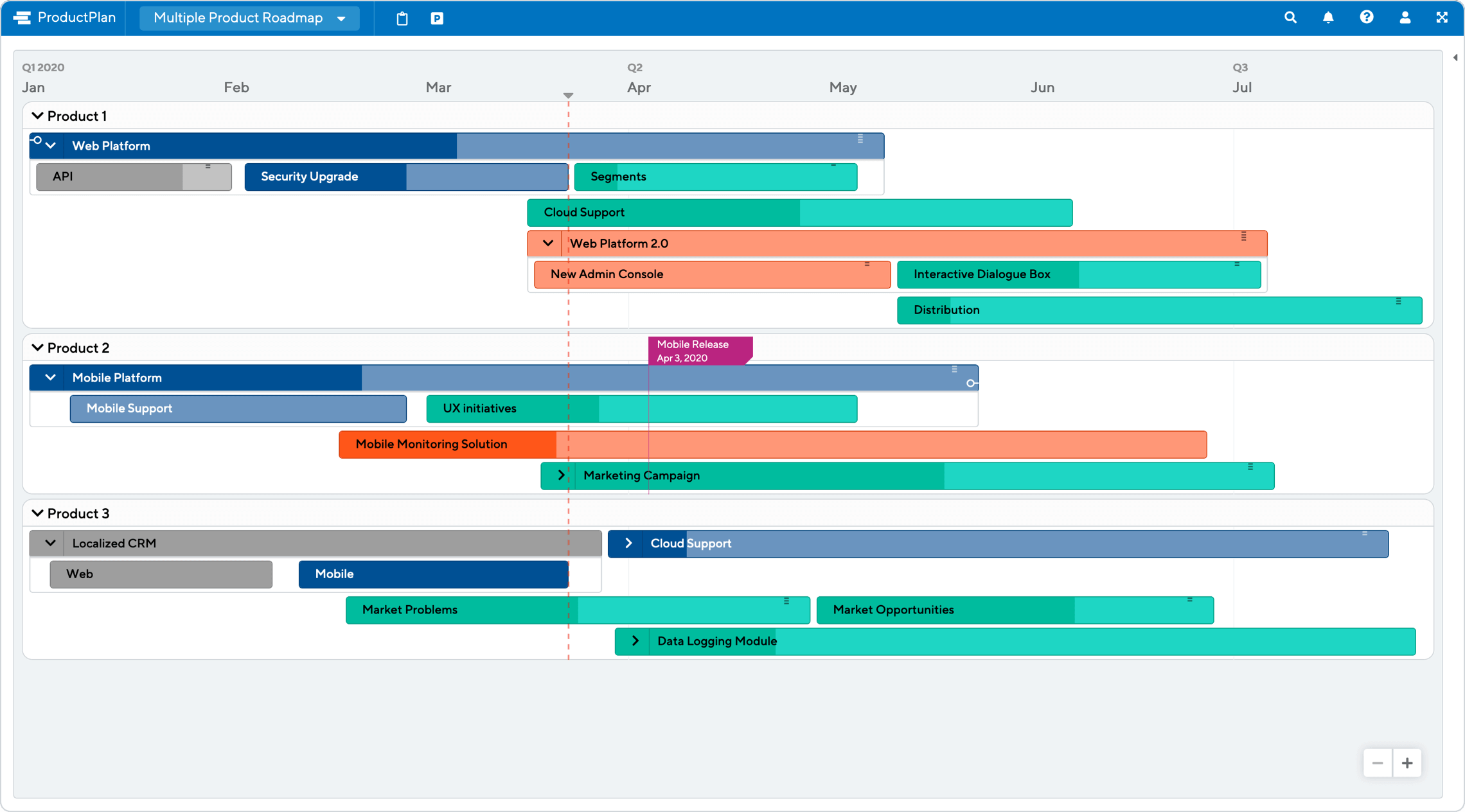
A product roadmap is a high-level strategic document that maps out a product’s intended vision and development over a given period. Essentially, a blueprint for how a product is designed to grow and adapt over time, it visually maps out specific details about a product’s evolution, such as new features, enhancements, and release milestones.
Ultimately, a roadmap has several goals:
- Describe the vision and strategy for a product.
- Provide guidance for executing the strategy.
- Align everybody around a single source of truth.
- Achieve internal stakeholder buy-in.
- Facilitate scenario planning.
- Enable communication with external stakeholders.
These roadmaps can take many forms. They can be timeline-based, goal-oriented, or feature-based. This all depends on your organization’s needs. Some roadmaps can be highly visual and designed for customers. Others are internal-only, and those are focused on technical dependencies. To develop a roadmap, you’ll need to collaborate across functions. This is especially true when balancing short-term customer demands alongside strategic initiatives.
A good product roadmap will never be static. Instead, it will evolve alongside market trends, user feedback, and product performance. That way, it will serve as both a strategic planning tool and a dynamic communication asset.
Tips for Building a Product Roadmap:
FAQs
Typically, the product manager is the one who owns the roadmap. However, the doc should be developed in collaboration among teams in engineering, design, marketing, sales, and customer success. This will help you make sure the doc reflects your business goals as well as your user needs.
Key elements include product vision and goals, major features and enhancements, timelines and milestones, prioritization of tasks, and dependencies between different parts of the project.
A product roadmap outlines the long-term vision and direction for a product, whereas a product strategy outlines the steps that need to be taken to achieve this vision.
It's a strategic document that outlines the vision, direction, and progress of a product over time. It details the planned features, improvements, and timelines for development and release.