If you work in revenue operations, you already know the tool stack question never really gets settled. Every quarter someone new joins the team, looks at your setup, and asks why you aren't using whatever they had at their last job. And every six months there's a new "must have" platform getting hyped on LinkedIn. We've been tracking this space pretty closely (you can see our running take on AI in RevOps over on the blog), and 2026 is the year a few real shifts finally happened. So here's our list.
This is not a generic listicle. We picked tools based on what actually shows up in stacks at companies doing real revenue work, not the ones that bought the most ads this year. Some are obvious. A few are less obvious. One of them is us, and we'll be honest about that when we get there.
A quick warning before we dive in: there is no single best RevOps tool. What matters is the job each one does in your stack, and whether it fixes a real problem you have. As you read, think about which gap each tool fills for your team.
What we looked for
Five rough criteria. Nothing fancy.
- Does it solve a problem RevOps actually owns?
- Does it work across sales, marketing, and customer success?
- How well does it play with the rest of your stack?
- Is the AI in 2026 actually real, or just a sticker on the box?
- Is the pricing sane for the company size it targets?
That's it. Now the list.
1. Clari
Clari made its name on AI powered forecasting and pipeline visibility, and in 2026 it is bigger news than ever because of the Salesloft merger. Combining Clari's forecast layer with Salesloft's sales engagement features gives you something close to a real end to end revenue platform.

For now you can still buy them separately, but the writing is on the wall. If you are shopping in this space, factor the merger into your buying decision. Roadmaps will shift.
Best for: Enterprise teams where forecast accuracy is a board level metric.
2. Gong
Gong started as a call recording tool. In 2026 it is a full revenue intelligence platform that goes head to head with Clari on forecasting and adds something Clari cannot easily copy: the actual conversations.

Gong's pitch in 2026 is that conversation data is the truth. Pipeline reports lie. Deal notes lie. But the call shows what really happened. Their AI flags risk signals like champion engagement dropping or competitor mentions creeping into late stage deals. RevOps teams use it to build early warning systems before deals slip.
Best for: Teams who want forecasting grounded in real buyer behavior, not just CRM stage updates.
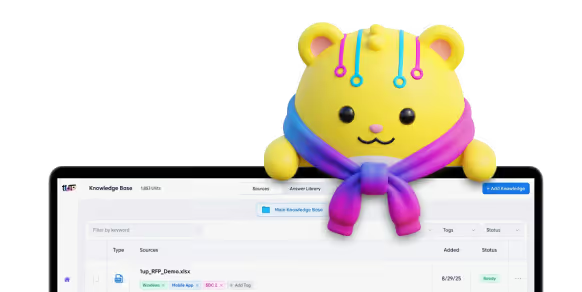
3. 1up
Okay, this one is us. Full disclosure up front so nobody feels tricked. But here's why 1up belongs on this list even if we weren't writing it.
Most RevOps tools focus on the CRM, the pipeline, or the data layer. None of them touch the actual knowledge problem. When a sales rep needs a fast answer about pricing, security, or how your product stacks up against a competitor, they have three options: ping the SE team on Slack, dig through old proposal decks, or guess. RevOps owns that mess too, even though most stack guides skip right past it.

1up is an AI answer engine that pulls from your existing knowledge sources (Salesforce, Confluence, SharePoint, Google Drive, your wiki, your trust center) and gives reps accurate answers in seconds. It also handles RFPs and security questionnaires, which has been a quiet RevOps headache for years.
1up pulls answers directly from your CRM data without anyone exporting a thing and if your team lives in chat, you can build an AI knowledge assistant that drops into wherever your reps already work.
The bigger trend we keep flagging: RevOps teams are starting to treat knowledge as part of the core stack, not a sales enablement side project. Rep onboarding gets faster. Win rates go up. Fewer deals stall because someone couldn't find a one line answer.
Best for: Teams losing deals because reps cannot get fast, accurate answers during live sales cycles.
4. Clay
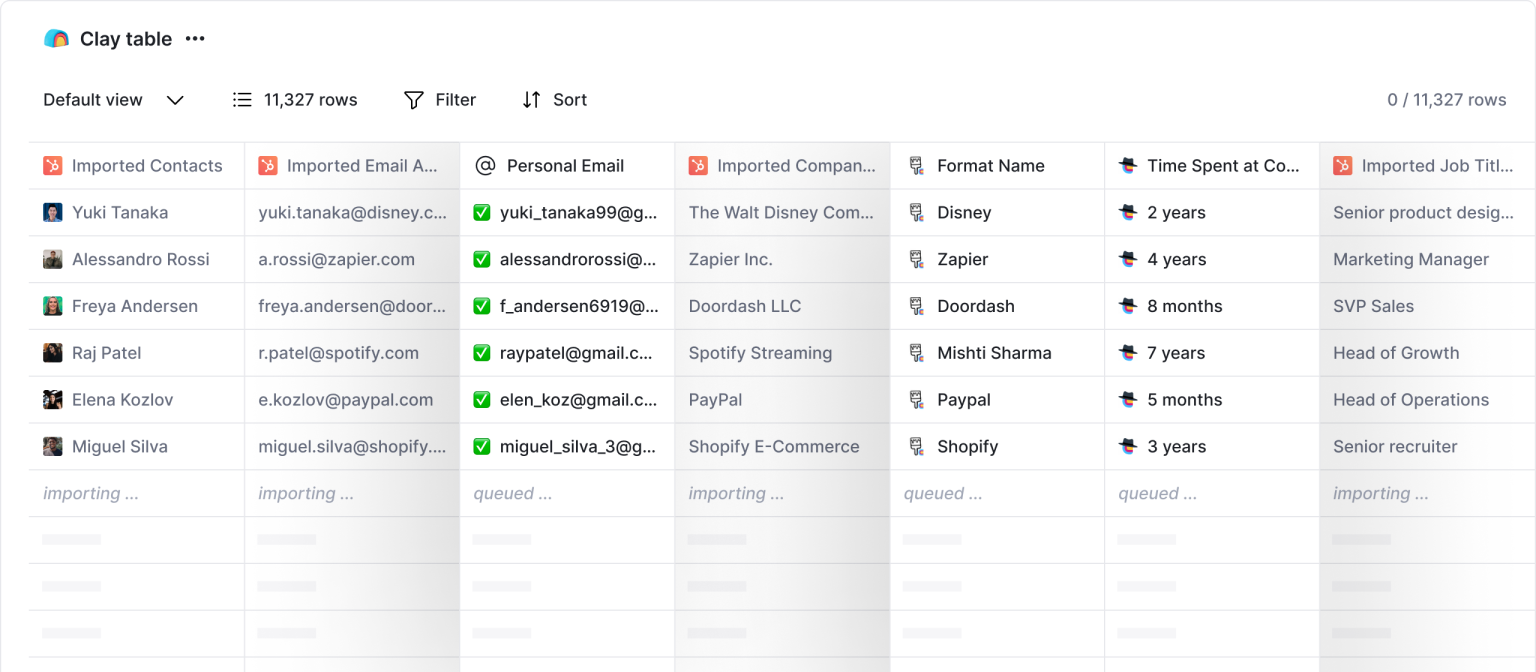
Clay is the GTM data nerd's favorite tool. It runs waterfall enrichment across more than 100 data providers, which means you check provider A for a phone number, and if that comes back empty, you check provider B, then C, until you fill the gap. Combined with Claygent (their AI research agent), Clay can also pull custom data points like funding rounds, hiring patterns, or tech stack changes.
The catch is Clay has a real learning curve. The credit pricing model also makes spend hard to forecast month over month. Some teams love that flexibility. Some get burned by it.
Best for: RevOps teams who want to build custom enrichment logic instead of taking whatever one provider gives them.
5. ZoomInfo
ZoomInfo plays a different game than Clay. Instead of stitching together providers, ZoomInfo gives you the deepest single source B2B database in the category. Over 600 million professional profiles, intent signals, org charts, technographics. It is the most expensive option here and also the most complete.
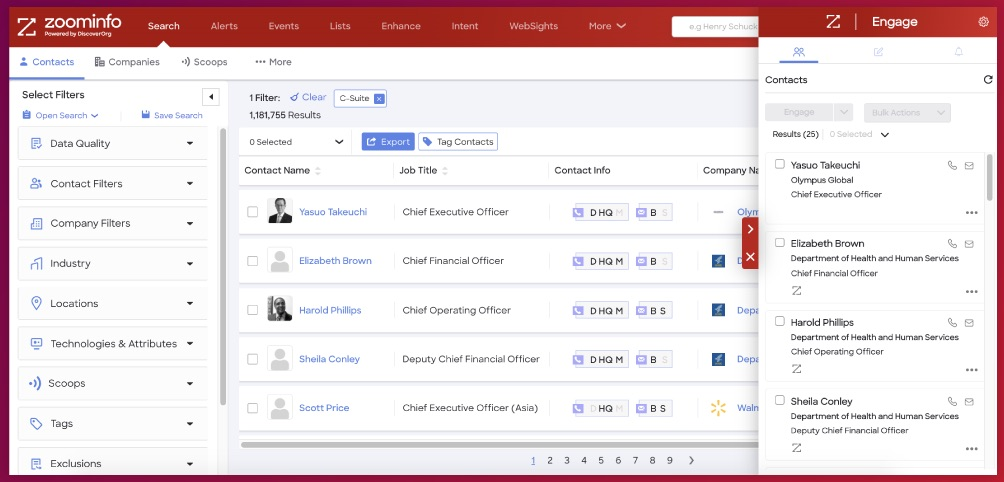
ZoomInfo works best as the foundation under everything else. Clean data in, and your Salesforce, Gong, Clari, and sequencer all work better.
Best for: Enterprise teams running account based motions who need the broadest data layer they can buy.
6. LeanData
Lead routing sounds boring until you watch a team try to do it manually. LeanData automates the logic of who gets which lead, based on territory, account ownership, deal size, and any other rule you cook up. For companies with high lead volume, this saves hours every week and stops good leads from sitting in queues.

Nobody writes love letters to a routing tool. But the day you turn it on, the inbound team gets quieter, and that is the whole point.
Best for: Teams with complex routing rules and enough lead volume to justify the cost.
7. 6sense
6sense is the dominant ABM and intent data platform. It tells you which accounts are showing buying signals before they fill out a form. RevOps teams use it to prioritize outbound, align marketing's ABM motion with how sales actually executes, and stop wasting reps' time on dead accounts.
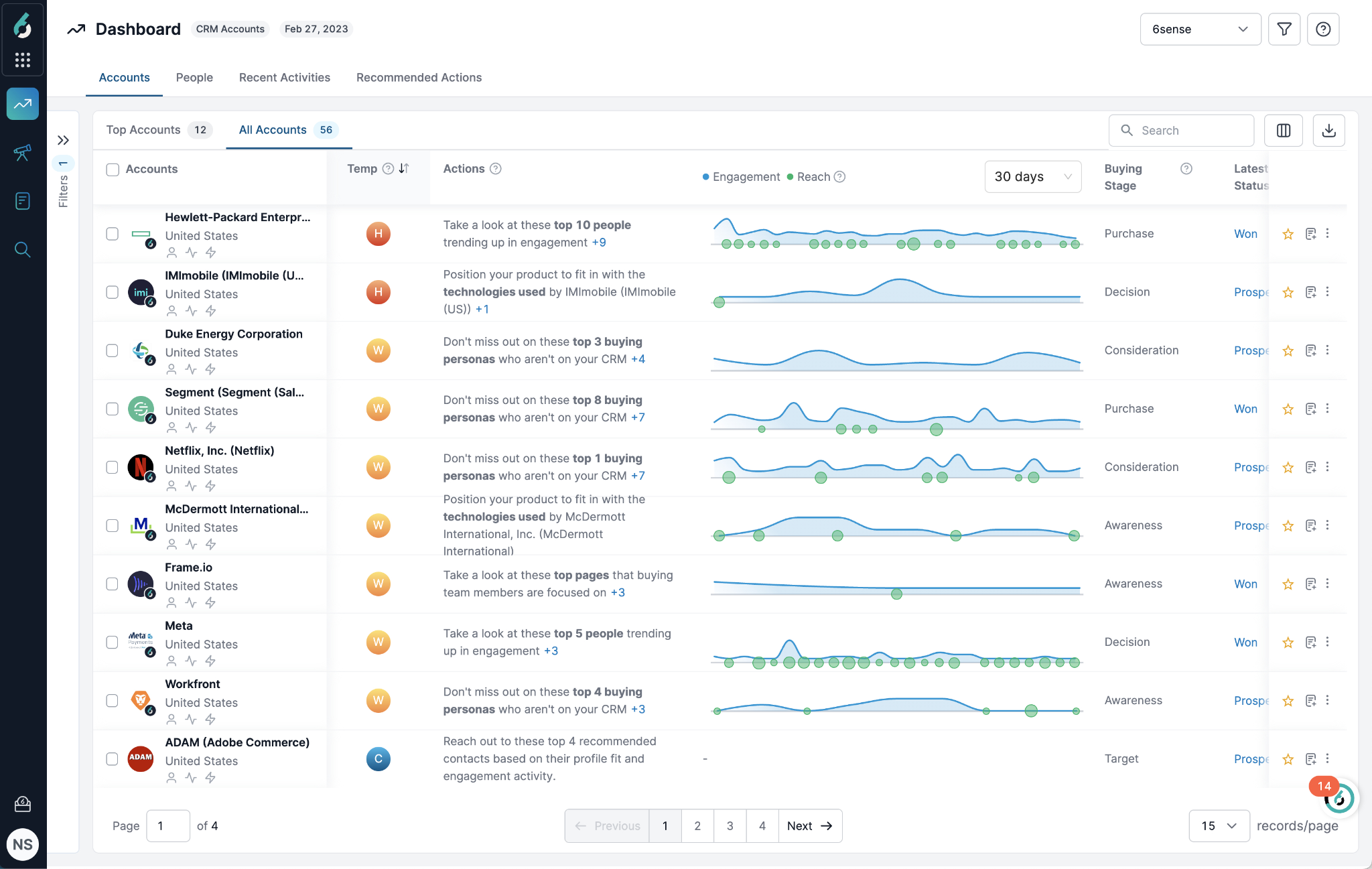
According to Forrester, companies with aligned RevOps functions grow faster than the ones without. 6sense is one of the tools that actually drives that alignment by giving both teams the same signals to work from.
Best for: B2B teams running account based plays who want intent data driving the prioritization.
8. Zapier
The unsexy pick everyone needs. Zapier is the connective tissue between every other tool on this list. When a new lead in HubSpot needs to trigger a Slack ping to the account exec, an enrichment lookup in Clay, and a row in a finance team spreadsheet, Zapier is what makes that happen without writing code.

For more complex enterprise level automation, Workato is the alternative. But Zapier wins on ease of use and on the sheer number of apps it supports out of the box.
Best for: Every RevOps team. Full stop.
9. Salesforce
You know what this is. Salesforce is still the system of record for most enterprise revenue teams, and that is not changing soon. According to Gartner, companies with mature RevOps functions hit revenue targets more often, and the CRM sits at the center of most of that work.

What keeps Salesforce sticky is the ecosystem. AppExchange has more integrations than any team will ever use. The downside is also real. Salesforce gets expensive fast. The same flexibility that makes it powerful is what makes it a maintenance burden. You will need at least one admin, sometimes a whole team, just to keep it running clean.
Best for: Enterprise teams who already have Salesforce admins on payroll.
10. HubSpot
HubSpot is the other CRM most RevOps teams end up on, mostly in SMB and mid market. Operations Hub turned HubSpot from "marketing tool with a sales tab" into a real RevOps platform with data sync, programmable workflows, and built in data quality checks.

The trade off is that HubSpot's pricing gets weird as you scale. Marketing contact based pricing has surprised a lot of teams at renewal time. But for companies under about 500 employees, HubSpot is usually the right call. The setup is faster, the workflows are easier to build, and your CS team will actually open it.
Best for: SMB and mid market teams who want one platform instead of stitching six together.
11. Driven
Driven started as a way to kill the commission spreadsheet, and in 2026 it's become the compensation layer most RevOps stacks are still missing. Every tool on this list eventually feeds into one question: did the rep get paid correctly for what they closed? Most stacks still answer that with a spreadsheet one person half-understands.
.png)
Driven's pitch is that compensation should be as automated and transparent as the rest of the funnel. It calculates commissions in real time straight off your CRM data, models new comp plans before you roll them out, and gives reps a live dashboard so "why is my check wrong" stops being a monthly Slack thread. RevOps teams use it to close the loop between pipeline and payout instead of leaving that gap to finance and guesswork.
Best for: Teams who want compensation to run on real deal data instead of a spreadsheet nobody wants to touch.
How to actually build your RevOps stack
If you are starting fresh, here is the order we tell teams to build in. You do not need all ten on day one.
- CRM first. Salesforce or HubSpot.
- Data layer. ZoomInfo or Clay, depending on whether you want depth or flexibility.
- Knowledge engine (1up) so reps can actually answer questions during live deals.
- Conversation intelligence (Gong) once you have enough call volume to learn from.
- Forecasting (Clari) when leadership starts asking harder questions.
- Routing and automation (LeanData, Zapier) when inbound gets messy.
- ABM and intent (6sense) when you are ready to run account based plays seriously.
The mistake we see most often is teams buying expensive forecasting before fixing data quality, then blaming the forecast tool when the numbers are off. Start at the foundation. Move up the stack.
Want more numbers on why RevOps keeps getting more important? Our RevOps statistics post has the data points worth bookmarking.
That is the list. Add the tools that fix your real problems. Skip the ones that do not. And if a vendor cannot explain in one sentence what job their tool does for RevOps, that is your answer right there.
FAQs
Salesforce and HubSpot still anchor most stacks as the CRM. Clari and Gong handle forecasting and revenue intelligence. Clay and ZoomInfo cover data enrichment. LeanData runs lead routing, 6sense delivers intent data, and Zapier connects everything. 1up fills the knowledge layer by giving reps accurate answers during live deals.
For most teams, yes. A CRM tracks what already happened. RevOps tools help you act on it. Forecasting platforms like Clari, conversation intelligence like Gong, and AI knowledge engines like 1up all sit on top of the CRM and solve problems the CRM was never built to handle. The CRM is the foundation. It is not the full stack.
Start with the CRM. Clean up your data layer next with ZoomInfo or Clay. Add a knowledge engine so reps can answer buyer questions fast. Layer in conversation intelligence and forecasting once you have enough call volume and pipeline to learn from. Most teams skip ahead to forecasting too early, then blame the forecast tool when the numbers are off.

.png)
AI Made Writing Code Free and Moved the Bottleneck to Code Review

The Payoff of Connecting Questionnaire work to your Sales Pipeline

Shadow AI: What Your Reps Are Pasting Into ChatGPT Right Now

How to Write an RFP Response That Survives AI Scoring

SIG vs CAIQ vs VSA: A Simple Guide to the Big Three