Knowledge Automation: How Top Companies Deliver Answers at Scale

.jpg)
Here's a situation most people at mid-size or large companies know well. You need to find a document. You search for it. You get nothing useful back. You ask a coworker. They point you to a folder. The folder has six versions of the same file and you have no idea which one is current.
Companies generate a ton of information. Product docs, sales decks, onboarding guides, API docs, video transcripts, PDFs. It piles up fast, it lives in too many places, and there's almost never a clear owner. So people stop trusting the search tool and just ask whoever seems to know the answer.
Knowledge automation is how companies are starting to fix this.
Why Old Tools Are Not Cutting It Anymore
Knowledge management software is not new. Tools like Confluence, Notion, Guru, Bloomfire, and ClickUp have been around for years and a lot of teams get real value out of them. They are not going away. What's happening is that they are all evolving, and knowledge automation is part of that evolution.
The gap these tools have always had is search. Traditional keyword search works fine if you use the exact same words as the document. Most of the time that is not how it goes. Enterprise search is genuinely hard to get right, and when it fails people just ask someone instead. That person becomes the default answer machine for the whole team, which is great for getting quick answers and terrible for their actual workload.
There is also the maintenance side. Keeping a company knowledge base clean and current takes real effort, and in most companies that job falls on an admin who has plenty of other things to do.
What Is Knowledge Automation?
Knowledge automation is the use of large language models to connect a company's existing information sources and deliver accurate answers to questions instantly, without employees having to search for them manually.
Those sources can be pretty much anything. Google Drive, Confluence, Notion, URLs, PDFs, spreadsheets, video transcripts. Even things that were never part of a formal knowledge base before can now be pulled in and searched alongside everything else.
There are three core elements that make knowledge automation work differently from older tools.
1. You stop building and start connecting
Traditional setups required someone to write wikis, create documents, and tag everything correctly before any of it was usable. With knowledge automation you are mostly just pointing the system at what already exists. The connection and ingestion happen automatically.
2. People ask questions instead of searching for keywords
Instead of typing keywords and hoping for the best, people ask in plain language, more like a ChatGPT prompt than a Google search. The system understands meaning and context so you get relevant results even when your wording does not match the document exactly. A lot of how AI is changing knowledge management comes down to this shift alone.
3. Nobody has to prep files before uploading them
This one tends to get overlooked. Knowledge automation skips the cleanup step entirely. The system reads documents as they are, figures out what they are about and what structure they contain, and makes them usable right away. Messy formatting or inconsistent structure does not break anything. You can connect any document without worrying about whether it is clean enough to use.
How Real Companies Are Using Knowledge Automation
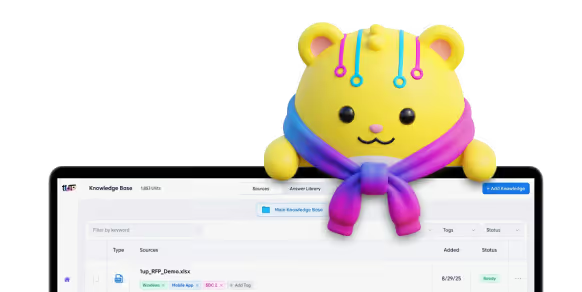
1up is one of the platforms simplifying knowledge automation for businesses. It connects to the tools and files a company already has and turns them into a searchable knowledge layer that anyone on the team can query in plain language. Here’s how:
JumpCloud rolled out 1up for their sales engineering team. Before, reps used to dig through multiple documents during a live customer call to find a specific technical detail. Now they just ask and get the answer in seconds.

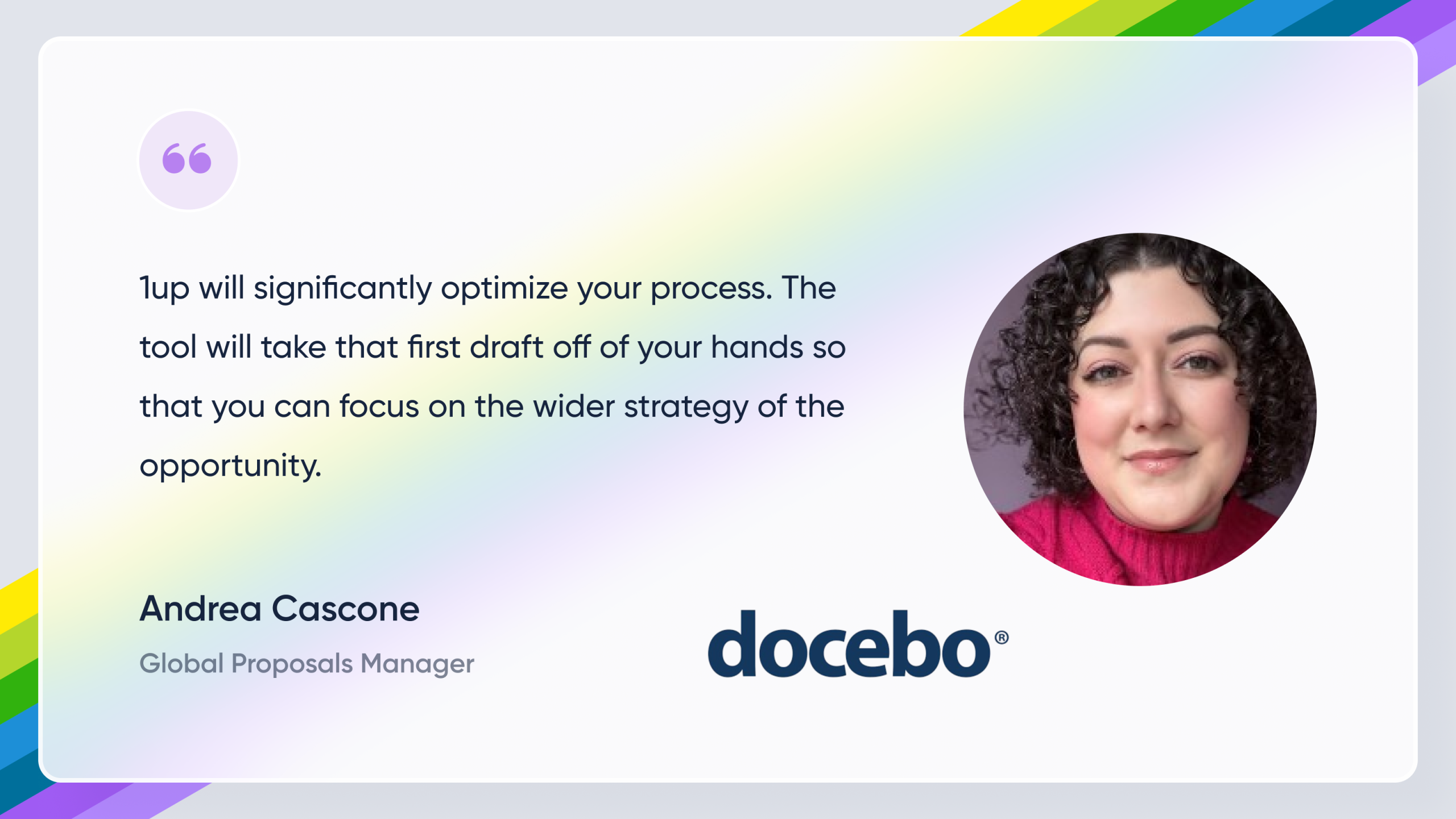
Docebo uses 1up to speed up their RFP process. RFP forms require detailed answers pulled from across the company and it used to take their teams much longer to fill them out manually. Now, the system provides answers and reps simply review them.
Fleetio connected their internal API docs and technical materials to 1up so their sales and technical teams could get fast answers without derailing conversations or pulling other people away from their work.

These are pretty representative of how companies are automating knowledge management across sales, support, and technical teams right now.
What Changes When Knowledge Actually Works
The companies getting the most out of knowledge automation are not necessarily the biggest or the most technical. They are just the ones who stopped accepting slow answers as normal. When the right information reaches the right person at the right time, everything moves faster. Sales calls go better. RFPs get done quicker. New hires stop feeling lost. Experts stop getting pulled away from real work to answer the same questions on repeat.
The truth is most companies already have what they need. The product docs exist. The technical guides have been written. The answers are in there somewhere. The problem has never been a lack of information. It has been getting that information to the right person before the moment passes. Knowledge automation solves that without asking anyone to rebuild their systems from scratch or spend weeks setting something up. You connect what you have and the hard part is mostly done.
That is what good knowledge management is supposed to do. Automation is finally making it possible at scale.
FAQs
Knowledge automation is the use of AI-powered tools to provide instant, contextual access to your company's sales knowledge. Instead of digging through files or waiting for a manager to respond, reps can ask the tool a question and get accurate answers in real time.
Any company that deals with a high volume of internal questions benefits from it. Sales teams, support teams, and technical teams tend to see the biggest impact because they rely on fast access to accurate information to do their jobs well.
A traditional knowledge base requires teams to build, format, and maintain content by hand. Knowledge automation connects sources that already exist, understands them automatically, and lets people ask questions in plain language instead of searching for keywords.
.png)
AI Made Writing Code Free and Moved the Bottleneck to Code Review

The Payoff of Connecting Questionnaire work to your Sales Pipeline

Shadow AI: What Your Reps Are Pasting Into ChatGPT Right Now

How to Write an RFP Response That Survives AI Scoring

SIG vs CAIQ vs VSA: A Simple Guide to the Big Three