Top AI Tools for Customer Success Teams in 2026
Customer success used to be the team that put out fires. Now it is the team that keeps the business growing. New logos are expensive and getting harder to win, so most of the growth has to come from customers you already signed. That is why net revenue retention shows up on nearly every board deck these days. AI is how small teams keep those numbers up without doubling headcount. It pulls the grunt work off a CSM's plate and points them at the accounts that actually need them. Solid knowledge automation quietly powers the rest, because a rep who cannot find an answer cannot give one.
The tool landscape is a mess of overlapping claims, so it helps to ask a simpler question first. What job do you need done? Some tools watch account health and warn you before a customer bolts. Others sit in on calls. A few close support tickets so nobody on your team has to. And some just find answers, fast. Seven are worth your time below. For each one I have tried to be straight about the good parts and the annoying parts, because the right pick really does come down to your team size, your stack, and whatever is costing you sleep right now.
1. Gainsight
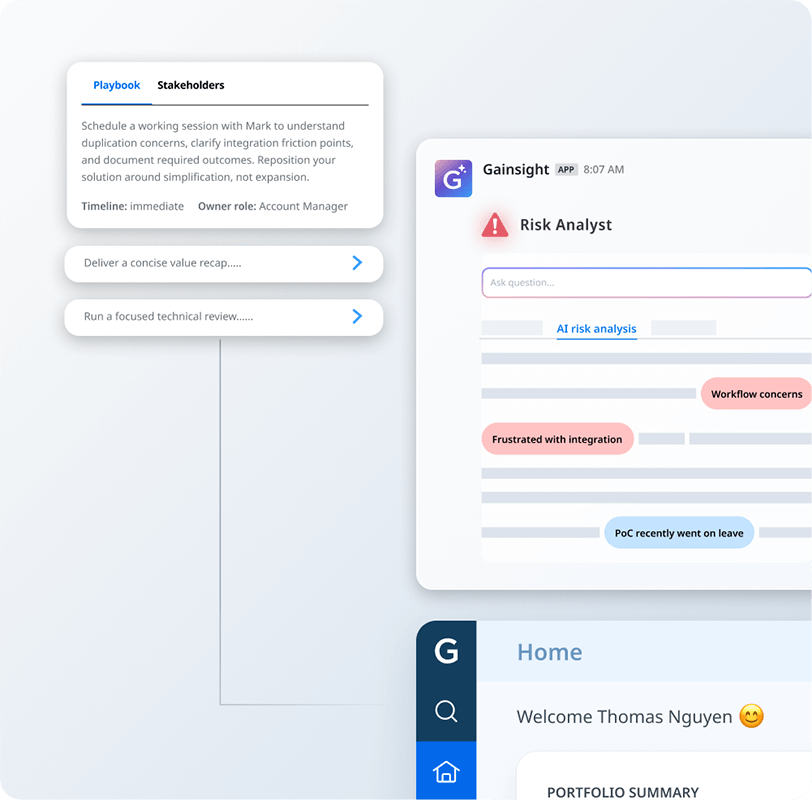
Gainsight is what most people mean when they say customer success software. It takes your product usage, CRM records, support tickets, and survey scores and rolls them into a single health number. When that number dips, a playbook kicks in. The AI layer is called Horizon AI, and a few pieces of it genuinely earn their spot. Meeting Assist writes up your calls, action items and all, and flags the risks it heard. A Customer Cheat Sheet preps you before a big meeting. A Renewal Likelihood Score does about what you would guess, mixing your success data with deal data from the CRM. Nobody really matches its depth, and reviewers on Gartner Peer Insights mostly agree.
Now the downside. Gainsight ships more than 30 modules. Most teams settle into using maybe a dozen. Getting your health scores dialed in can eat weeks of admin time, and the price is steep, often 2,400 to 4,200 dollars per user a year before you add tens of thousands for setup. The AI rides on top of all that machinery. It makes the platform smarter. It does not make it lighter. If you are a large team with someone whose whole job is running Gainsight, wonderful. If you are five people, it will probably flatten you.
2. ChurnZero
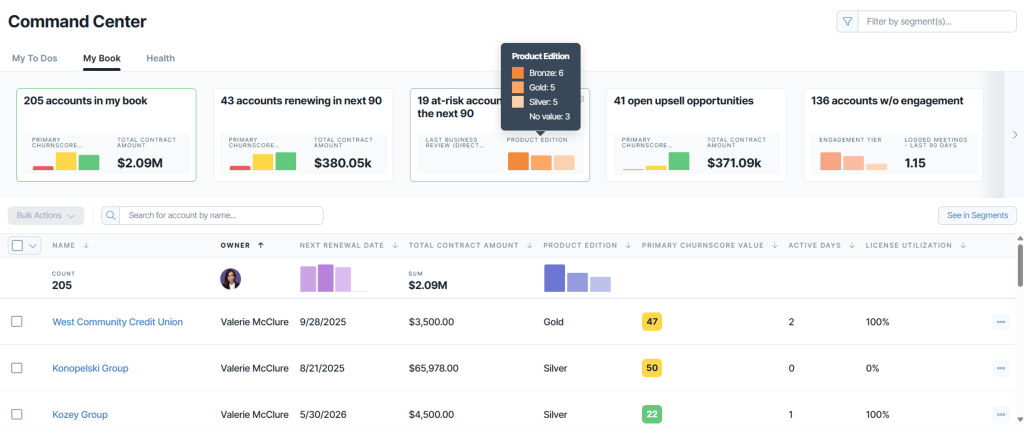
ChurnZero is the sensible pick for a lot of mid market SaaS teams. Health scores update live as usage and engagement move, so you are never staring at last month's snapshot. When an account slips, the alerts and playbooks tell you who to call and roughly what to say. That live view is the whole point. You catch a wobbly account while there is still time to steady it, instead of finding out during the renewal scramble.
Speed is the other draw. Setup runs in weeks, and you will not need a dedicated admin babysitting it. It cannot go toe to toe with Gainsight on raw features, and a very large org may outgrow it eventually. For a handful of CSMs with a growing book, though, it sits in a nice spot between powerful and simple.
3. 1up
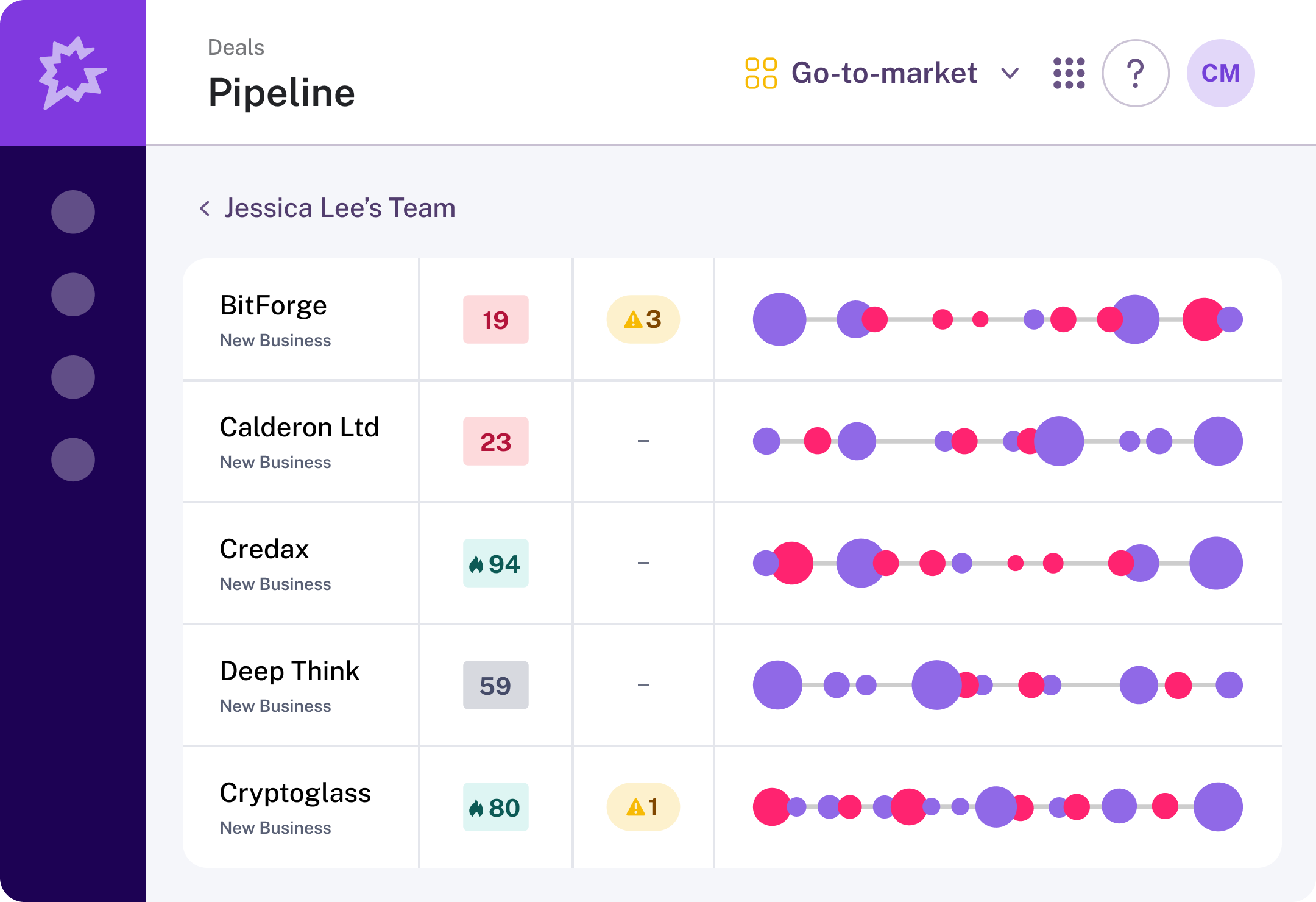
Here is a category people forget to shop for. Customer success is a knowledge job. Customers fire off product questions, security questions, compliance questions, and they want real answers now, not next Tuesday. When a CSM cannot find the answer, they either wing it or go bug an engineer, and both cost you something. 1up is an answer engine built for that exact headache. You connect your trusted sources, Google Drive, Confluence, Notion, SharePoint, even plain web pages, and it answers questions in seconds with a link back to wherever the answer lives.
It started out for sales, RFPs, and those brutal security questionnaires, but the value carries straight into CS. WalkMe, for one, cut its RFP response time by as much as 90 percent after it centralized everything in 1up. For a CS team the same engine means you can handle a thorny technical question or a customer objection on the spot. This kind of tool is part of a bigger shift toward the AI answer engineer, the person whose whole focus is making company knowledge usable the second someone needs it. One thing to be clear about. 1up will not score account health or record your calls. Treat it as the answer layer running next to the other tools here, not a stand in for them.

4. Gong
Gong made its name in sales, but CS teams get plenty out of it. Every call gets recorded and transcribed, then the AI reads the transcript so you do not have to. It picks up mood shifts, competitor name drops, and engagement that is starting to fade. Objection detection has gotten sharp, around 91 percent accuracy in recent testing. For a CSM that means the churn warning buried in some call nobody rewatched actually surfaces. If a customer name checks a rival on a renewal call, you want that today. Not in Q3.
The catch is that Gong still thinks like a sales tool at heart. The retention and expansion signals are in there, but they can rot inside a transcript unless your process pushes them to whoever needs to act. Gong pays off most when it is feeding your other systems rather than sitting off in a corner. It also works nicely alongside a strong sales knowledge base, so when a call turns up a gnarly product question, a rep can answer it without dragging an engineer into the thread.
5. Fin (By Intercom)
If your team is buried under repetitive tickets, Fin is one of the better known AI agents out there. It reads your help docs and closes out customer questions on its own, handing the hard ones to a person. Pricing is unusually plain. You pay 0.99 dollars per resolution, and the base plan covers 50 a month. Intercom says Fin resolves roughly 67 percent of conversations across tens of millions of chats, though outside case studies usually come in nearer 42 to 50 percent. Budget with the smaller figure. Every ticket Fin closes is one your CSMs never touch, which hands them back time for the relationship work that keeps customers around.
Two cautions. Pay per resolution means the better it performs, the bigger your bill, and for a high volume team that gets tough to forecast. There is also a shakeup underway. Intercom renamed the company itself to Fin back in May 2026, and in June, Salesforce agreed to buy Fin for something like 3.6 billion dollars. None of the pricing has moved yet. Even so, a pending acquisition is worth a second thought before you lock into a long contract. And remember, deflection is tuned to cut the number of questions, not to figure out why people keep asking the same one.
.jpg)
6. Pendo
Churn often gets decided during onboarding, before anyone notices. An account that never hits its first real win tends not to renew, however warm the kickoff felt. Pendo goes right at that. It bundles product analytics, in app guides, and feedback tools so you can nudge users toward value without filing a ticket with engineering every time. Its Product Engagement Score squishes adoption, stickiness, and growth into one figure, which is handy for spotting both your power users and the accounts quietly drifting off. A newer feature called Predict flags churn and upsell signals, and Agent Analytics tracks how people use the AI features inside your own product. On G2, reviewers keep coming back to the guide builder and the analytics.
The tradeoffs are real, though. Pendo bills by monthly active users, so your invoice grows right alongside your product, and plenty of customers have watched prices jump 20 to 34 percent year over year. New users mention a learning curve, and the features can feel scattered across the tool. It really shines for product led teams and bigger companies running a single adoption layer over several apps. A tiny team will probably find it overkill.

7. Velaris
Velaris belongs to a newer crop of customer success platforms that were designed around AI from day one instead of bolting it on later. Headlines and CallSense take a pile of messy, high volume customer chatter and boil it down to a short list of risks, openings, and next moves. Health scoring covers the full post sale journey, and a low code builder lets you wire in your other tools without a developer. The promise, in plain terms, is less time hunting for context and more time doing something with it.
Being young cuts both ways. Velaris does not have the years of track record or the wall of enterprise logos that Gainsight can show off, and that is fair to poke at during a pilot. But if you want an AI first workflow and you cannot stomach a multi month rollout, it earns a place on the shortlist. The same wave is hitting the sales side, where the AI answer engineer is rewriting how technical teams manage what they know. CS is on the same road, just a little behind.

8. Vitally
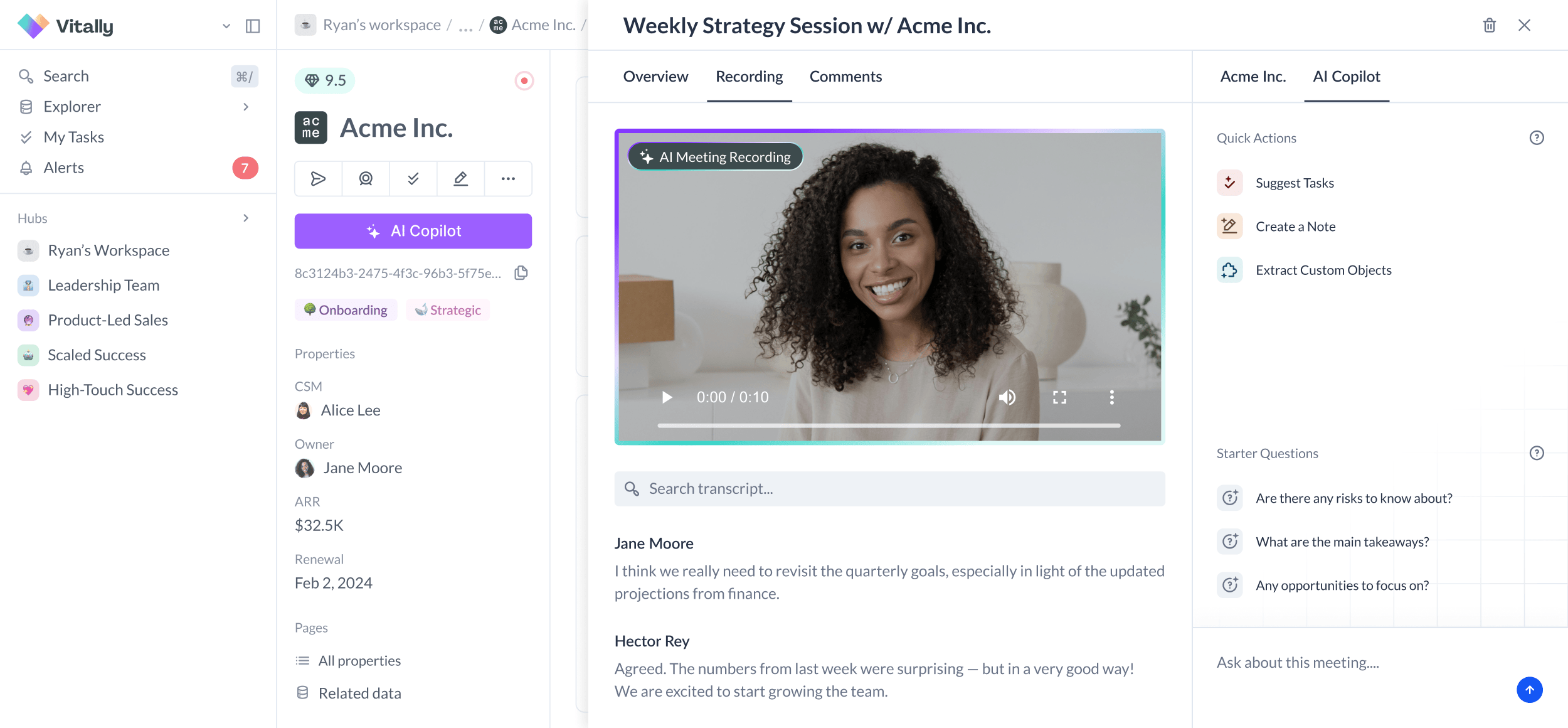
Vitally sits in the same modern CS platform world as ChurnZero and Velaris, and its whole personality is built around one idea. Make the work feel good to do. It pulls your product usage, CRM, billing, and support data into a single workspace, turns that into dynamic health scores, and then lets your team run everything right there through Playbooks, Projects, and shared Docs. The AI piece, Vitally AI, writes clean customer summaries from your notes and transcripts, drafts replies, and teed-up follow up tasks so nothing slips. What really sets it apart is how much CSMs enjoy living in it day to day. That shows up in the reviews. It holds a 4.5 on G2 across more than 700 of them. Navattic is a good example, cutting monthly churn by 20 percent after it moved QBRs and renewals into the tool.
The one thing to plan for is pricing. Vitally works from custom quotes rather than public rates, and the tiers scale with your seats and the number of accounts you manage, so it pays to get a number early and map it to your growth. The flip side is that you get a platform shaped around how your team actually works, with polished automation and a UI people are happy to open. For a B2B SaaS team with a few full time CSMs and a customer journey that has gotten more involved, it is a genuinely strong choice.
How to choose the right AI tool for your team
Start with the thing that hurts the most. Do not try to buy the whole stack at once. Losing accounts with no warning? Health scoring and prediction first. Drowning in tickets? An AI support agent buys back the most hours. Customers stalling out early? Go for product adoption. And if your CSMs burn half their week digging for answers, a knowledge tool earns its keep almost right away.
A few habits keep any of these from turning into shelfware. Pilot it on a slice of accounts before you roll it out everywhere, and pin it to one number you actually care about, like renewal rate or time to first value. Guard against alert fatigue, which is how a promising tool ends up ignored. One rule that works well is to send only your riskiest 5 to 10 percent of accounts into proactive playbooks, and let the weaker signals show up as optional tasks a CSM can glance at. Whatever you choose has to plug into your CRM and product data, because a tool that sees half the picture is worth about half as much. And keep watching the pricing. A per resolution or per seat model can look cheap on day one and sting at scale.
FAQs
There is not one. It depends on what you are trying to fix. Gainsight is the choice for big enterprise teams that want the deepest toolset. ChurnZero suits mid market teams after live health scoring without a heavy lift. If ticket volume is the problem, Intercom Fin is a strong agent, and for onboarding and adoption most people land on Pendo. Work out your biggest pain first, then pick the tool built for it.
Mostly in three ways. It flags risk sooner by scoring account health from usage, tickets, and what gets said on calls, so you can move before a renewal is on the line. It clears out busywork like call notes and ticket replies, which frees CSMs for real customer time. And it can point to why a score dropped, which is the part that tells you what to fix. The software will not save the account by itself. It just gives your team a running start.
They can be, but keep a close eye on how they charge. Plenty bill per active user or per resolution, so a number that looks harmless in a demo can balloon as you grow. A small team is usually better off with one focused tool that nails a single problem, say a knowledge answer engine or a live health platform, than with a sprawling enterprise suite. Run a short pilot tied to one metric before you sign anything long term.
.png)
AI Made Writing Code Free and Moved the Bottleneck to Code Review
The Payoff of Connecting Questionnaire work to your Sales Pipeline
Shadow AI: What Your Reps Are Pasting Into ChatGPT Right Now

How to Write an RFP Response That Survives AI Scoring
SIG vs CAIQ vs VSA: A Simple Guide to the Big Three