Sales Hit Rate

Share this post

A sales hit rate is a metric that counts the number of sales divided by the number of prospects. While a prospect can be defined in different ways, the general idea is to quantify the number of product visitors who have converted into customers.

Sales hit rates are often used to:

  • Measure an individual rep’s performance
  • Help calculate sales forecasts
  • Define productivity-per-rep and quotas
  • Understand part of a business’s financial model

Calculating a hit rate can be a simple ratio.

Number of Sales / Number of Prospects * 100 = Hit Rate

It’s important to note that there is no magic number for a good sales hit rate. In eCommerce we often hear of “1% conversion rates” or other common notable figures. This is not applicable to individual sales reps as they all have different methods, styles, and approaches to prospecting.

For example: a sales rep may choose to prospect a high volume of leads and only close a small number of deals. Others may be very selective of the qualified leads they pursue and only talk to a handful of prospects. The 2 reps might close the same number of deals, but would have drastically different hit rates.
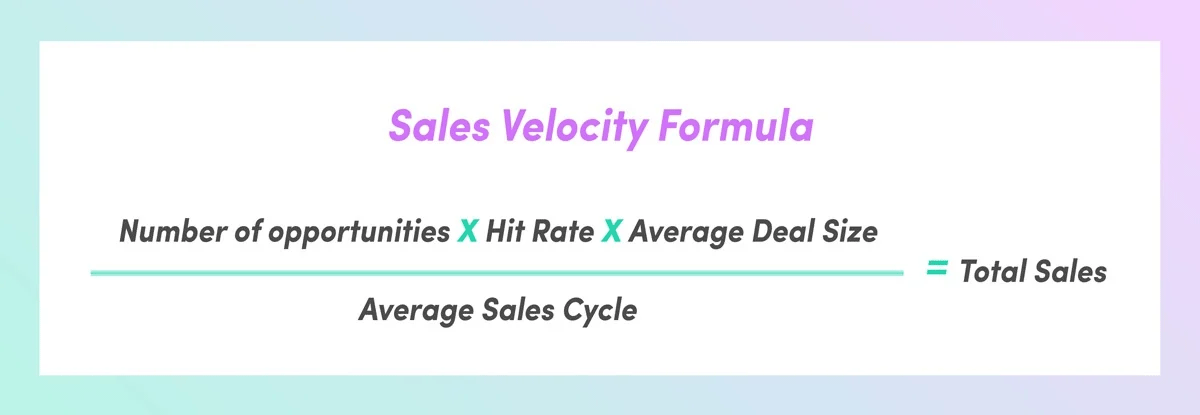
What is a Hit Rate
Source: Vainu

More on Hit Rate Meaning

To understand hit rate meaning a bit more, we’ve got to consider the metrics beyond just raw conversion rates.

A high hit rate usually means a sales rep is great at turning paying prospects into paying customers.

But a low hit rate doesn’t necessarily mean the opposite. In fact, it may simply be a case of a sales rep who spends more time in the top of the funnel. They might be raising awareness or qualifying leads. And this approach could turn into a strong long-term sales strategy.

The hit rate meaning can also change based on the industry or the sales model a sales rep is using.

For example: in enterprise sales, deal sizes are larger and the sales journey is longer. A rep might focus on fewer prospects but take a personalized approach. A hit rate of 20% would be awesome here. In a more transactional industry, like SaaS, a rep might reach out to a higher volume of leads and get a hit rate of 10%. Both can be signs of excellent sales strategies.

In the end, tracking and analyzing hit rates over time will help sales teams:

  • Identify patterns in customer behavior
  • Highlight effective strategies used by high-performing reps
  • Figure out which sales reps could use coaching, and which should be coaches

When you understand the hit rate meaning on a deeper level, you can use it to better drive performance. From there, you can align your sales tactics with your growth objectives, and aim for more wins.

Sales Hit Rate Examples:

FAQs

This is really subjective. A good hit rate will change based on the industry, the sales rep, and the sales process. You also have to factor in your sales team's definition of a prospect.

Both terms refer to turning prospects into customers. Conversion rate is used in marketing for things like website visitors who add their email addresses. Hit rate is used in sales to describe a deal closed from a prospect.

To bring your hit rate up, you can try a few approaches: qualify your leads, personalize your outreach efforts, and follow-up consistently with your prospects.

Absolutely. Hit rate can be used at both an individual and a team level. The only difference is that, with teams, it's usually only used as part of a larger whole that includes other metrics like sales cycle length, lead quality, and average deal size.
Related Articles

Previous Article
No previous post!
Check out our Directory
Next Article
No next post!
Check out our Directory
Account-based Marketing (ABM)

Account-based Marketing (ABM)

August 15, 2022
Annual Recurring Revenue (ARR)

Annual Recurring Revenue (ARR)

August 15, 2022
Average Contract Value (ACV)

Average Contract Value (ACV)

August 15, 2022
Bottom of the Funnel (BOFU)

Bottom of the Funnel (BOFU)

August 15, 2022
Top of the Funnel (TOFU)

Top of the Funnel (TOFU)

August 15, 2022
Sales Development Representative (SDR)

Sales Development Representative (SDR)

August 15, 2022
Business Development Representative (BDR)

Business Development Representative (BDR)

August 15, 2022
Closed Lost

Closed Lost

August 15, 2022
Closed Won

Closed Won

August 15, 2022
Inbound Marketing

Inbound Marketing

August 15, 2022
Sales Enablement

Sales Enablement

August 15, 2022
Demand-Generation

Demand-Generation

August 15, 2022
Drip Campaign

Drip Campaign

August 15, 2022
Inbound Sales

Inbound Sales

August 15, 2022
Sales Qualified Lead

Sales Qualified Lead

August 15, 2022
On Target Earnings (OTE)

On Target Earnings (OTE)

August 15, 2022
Outbound Sales

Outbound Sales

August 15, 2022
Sales Automation

Sales Automation

August 15, 2022
Sales Kickoff (SKO)

Sales Kickoff (SKO)

August 15, 2022
Sales Productivity

Sales Productivity

August 15, 2022
SalesForce Admin

SalesForce Admin

August 15, 2022
Spiff (Sales Program Incentive Funds)

Spiff (Sales Program Incentive Funds)

August 15, 2022
Statement of Work (SOW)

Statement of Work (SOW)

August 15, 2022
Total Addressable Market (TAM)

Total Addressable Market (TAM)

August 15, 2022
Unique Selling Point (USP)

Unique Selling Point (USP)

August 15, 2022
MEDDIC Sales Methodology

MEDDIC Sales Methodology

August 15, 2022
Objection Handling

Objection Handling

August 15, 2022
Smarketing

Smarketing

August 15, 2022
Social Selling

Social Selling

August 15, 2022
GTM Strategy

GTM Strategy

August 15, 2022
Bad Leads

Bad Leads

August 15, 2022
Monthly Recurring Revenue (MRR)

Monthly Recurring Revenue (MRR)

August 15, 2022
Weighted Pipeline

Weighted Pipeline

August 15, 2022
Call to Action (CTA)

Call to Action (CTA)

August 15, 2022
Audience Segmentation

Audience Segmentation

August 15, 2022
Conversational Marketing

Conversational Marketing

August 15, 2022
Marketing Operations (MarkOps)

Marketing Operations (MarkOps)

August 15, 2022
Marketing Technology (MarTech)

Marketing Technology (MarTech)

August 15, 2022
Conversion Rate Optimization (CRO)

Conversion Rate Optimization (CRO)

August 15, 2022
Chief Revenue Officer

Chief Revenue Officer

August 15, 2022
Retargeting

Retargeting

August 15, 2022
Sales Funnel

Sales Funnel

August 15, 2022
Channel Partners

Channel Partners

August 15, 2022
Sales Hit Rate

Sales Hit Rate

August 23, 2022
Sales Quota

Sales Quota

August 23, 2022
Value Proposition

Value Proposition

August 23, 2022
What is Zoho?

What is Zoho?

August 23, 2022
What is Jira?

What is Jira?

August 23, 2022
Year-over-Year (YoY) Growth

Year-over-Year (YoY) Growth

August 23, 2022
Expansion ARR

Expansion ARR

August 24, 2022
Sales Forecast

Sales Forecast

September 1, 2022
Lead Scoring

Lead Scoring

September 1, 2022
Revenue Operations (RevOps)

Revenue Operations (RevOps)

September 1, 2022
Marketing Automation

Marketing Automation

September 1, 2022
Market Intelligence

Market Intelligence

September 1, 2022
Product-Market Fit (PMF)

Product-Market Fit (PMF)

December 5, 2022
Lifetime Value (LTV)

Lifetime Value (LTV)

December 5, 2022
Net Promoter Score (NPS)

Net Promoter Score (NPS)

December 5, 2022
Service Level Agreement (SLA)

Service Level Agreement (SLA)

December 5, 2022
Startup Runway

Startup Runway

December 5, 2022
Total Contract Value (TCV)

Total Contract Value (TCV)

December 5, 2022
Compound Annual Growth Rate (CAGR)

Compound Annual Growth Rate (CAGR)

December 5, 2022
Deferred Revenue

Deferred Revenue

December 5, 2022
Remaining Performance Obligation (RPO)

Remaining Performance Obligation (RPO)

December 5, 2022
Sales Pipeline Coverage

Sales Pipeline Coverage

December 5, 2022
Sales Engineer

Sales Engineer

December 5, 2022
Time to Value (TTV)

Time to Value (TTV)

December 5, 2022
Daily Active User DAU

Daily Active User DAU

December 5, 2022
Monthly Active User MAU

Monthly Active User MAU

December 5, 2022
Sales Decision Maker

Sales Decision Maker

December 5, 2022
What is a Competitor?

What is a Competitor?

January 9, 2023
BANT

BANT

January 12, 2023
GPCTBA/C&I

GPCTBA/C&I

January 12, 2023
Loss Leader

Loss Leader

January 12, 2023
Product-led Growth (PLG)

Product-led Growth (PLG)

January 12, 2023
Revenue Marketing

Revenue Marketing

January 12, 2023
Net Dollar Retention (NDR)

Net Dollar Retention (NDR)

January 12, 2023
Revenue Per Employee (RPE)

Revenue Per Employee (RPE)

January 12, 2023
Reduction in Workforce (RIF)

Reduction in Workforce (RIF)

January 12, 2023
Top Down Sales Strategy

Top Down Sales Strategy

January 12, 2023
Value Based Pricing

Value Based Pricing

January 12, 2023
Sales-Led GTM

Sales-Led GTM

January 12, 2023
Customer Relationship Management (CRM)

Customer Relationship Management (CRM)

February 2, 2023
Nurture Stream

Nurture Stream

February 2, 2023
Customer Churn

Customer Churn

February 2, 2023
Customer Success Manager

Customer Success Manager

February 2, 2023
Marketing Qualified Lead (MQL)

Marketing Qualified Lead (MQL)

February 2, 2023
Ideal Customer Profile

Ideal Customer Profile

February 14, 2023
What is a BAFO

What is a BAFO

November 28, 2023
Lead Generation

Lead Generation

December 18, 2023
Upselling

Upselling

December 18, 2023
Cross-Selling

Cross-Selling

December 18, 2023
SPIN Selling

SPIN Selling

December 18, 2023
Objection Prevention

Objection Prevention

December 18, 2023
Renewal Rate

Renewal Rate

December 18, 2023
Customer Journey Mapping

Customer Journey Mapping

December 18, 2023
Revenue Attribution

Revenue Attribution

December 18, 2023
Revenue Retention

Revenue Retention

December 18, 2023
Sales Velocity

Sales Velocity

December 28, 2023
Win/Loss Analysis

Win/Loss Analysis

December 28, 2023