A sales forecast is an estimate of the total number of sales that will close in a given period. Often a forecast is given per month or quarter, and aligns with a company’s financial reporting methods.
Accurate forecasting can be considered a superpower and a sign of a mature organization. It allows a sales team to confidently predict their quarterly outcomes, which in turn drives hiring, budgeting, and resource allocation.
Revenue Operations teams are often tasked with helping generate the forecast with participation from individual sales directors and teammates. They can employ a number of methodologies such as weighted pipeline, bottoms up, and productivity-per-rep modeling.
As a sales process becomes more repeatable, it can become easier to predict sales figures. Forecasts are commonly used alongside financial projections to help investors in the private and public markets assess the future value of a business.
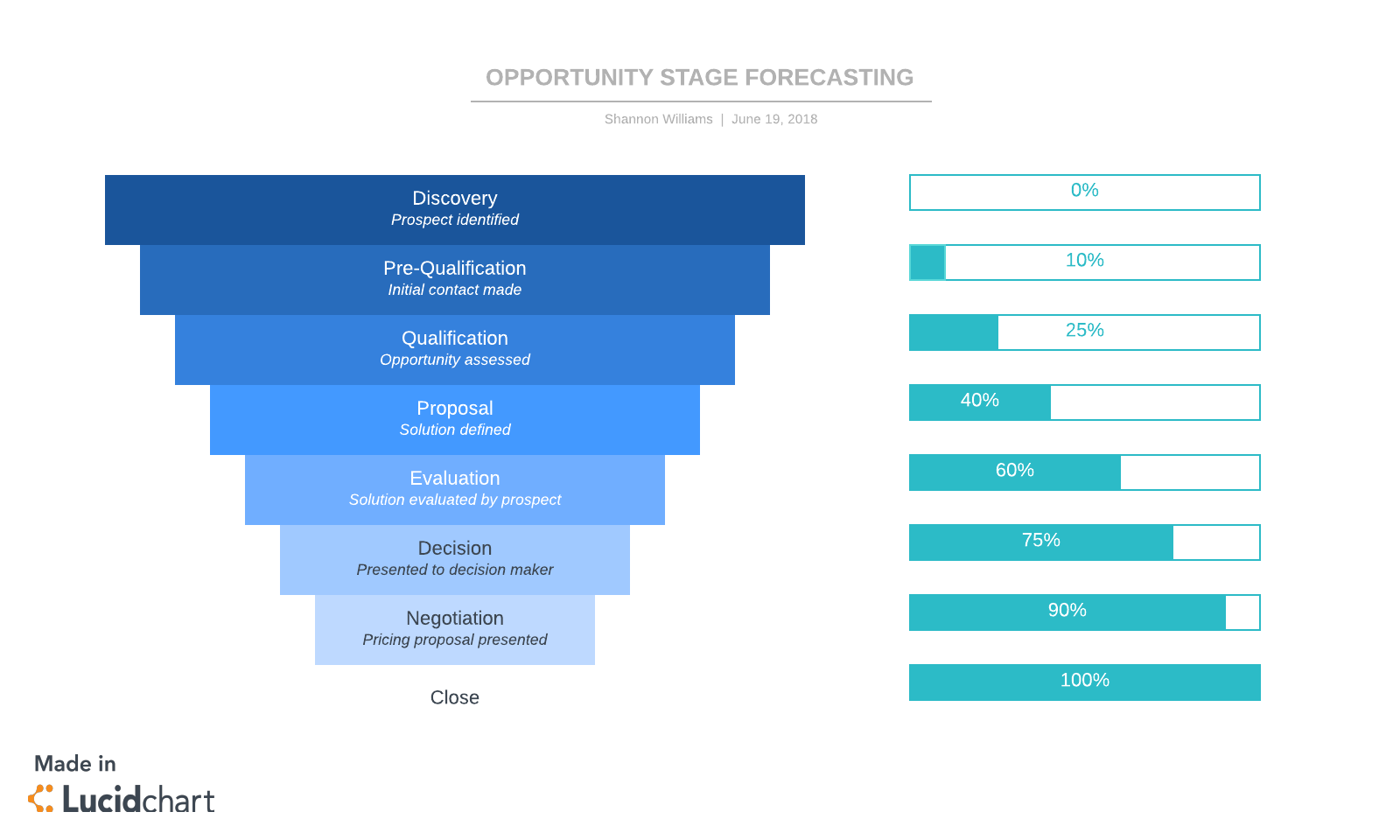
Sales Forecasting Methods:
FAQs
You'll want to include your current pipeline value and your historical win rates. You can also use your average deal size, the length of your sales cycle, and the performance of each individual rep. The accuracy of the forecast, of course, will depend on how reliable and up-to-date your data is.
A sales goal is a target your team aims to hit. This is usually set based on growth objectives or leadership expectations. A sales forecast, in contrast, is an informed prediction of what your team is actually expected to close within a specific time frame. This is based on data, your pipeline, and your historical performance.
Yes. Many companies are now using AI-driven forecasting tools to analyze patterns, reduce human bias, and surface trends. This is because you may miss this information with manual efforts alone. Especially in complex or high-volume sales environments, these tools can help you improve your forecast accuracy.
Most companies will update their forecasts on a monthly or quarterly basis. This helps them align with their reporting cycles. Some organizations may want to refresh their forecasts on a weekly basis in order to respond more quickly to shifting market conditions.