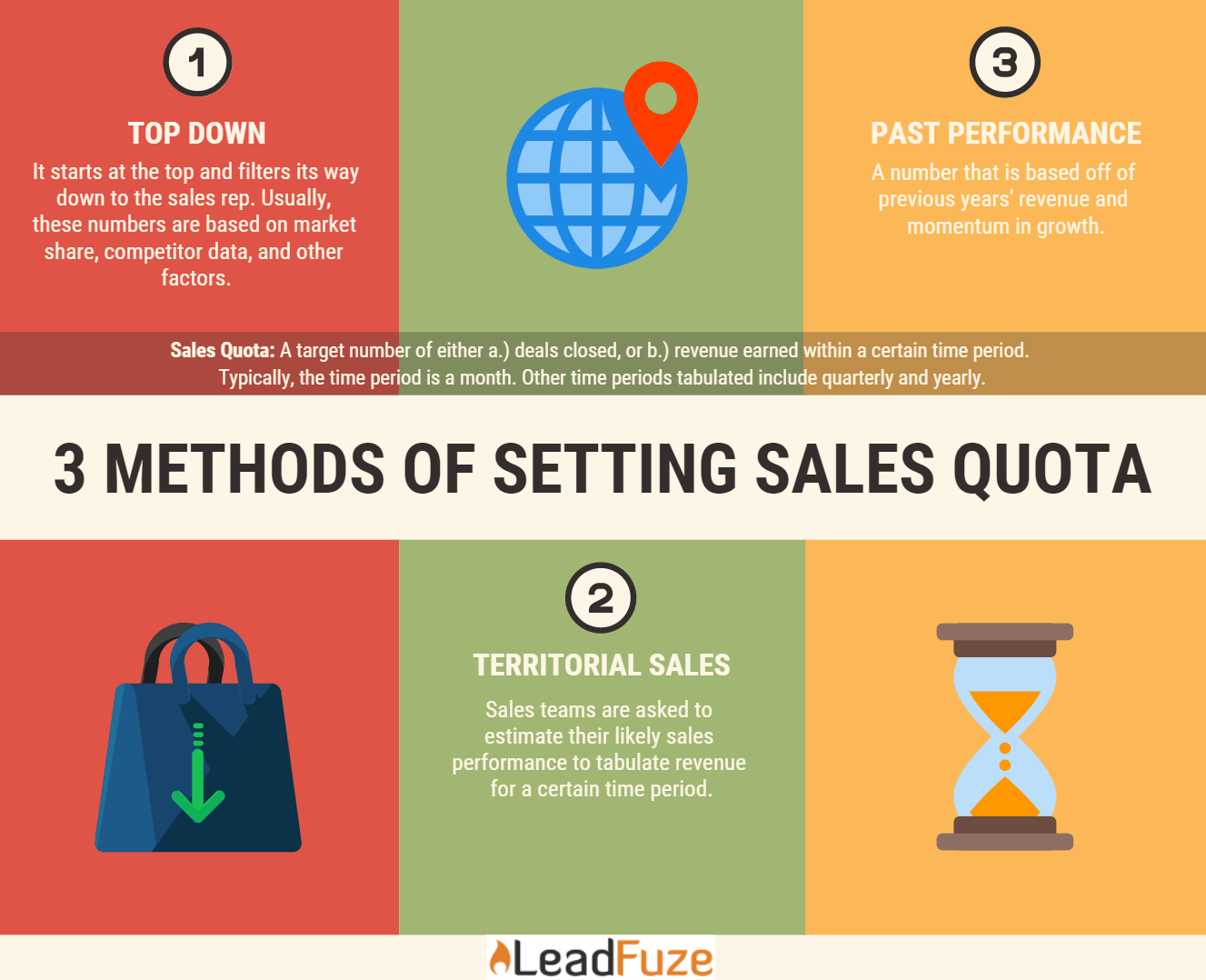
A sales quota is a target that a sales rep or team plans to achieve. It is typically a measure of revenue, though it can include the volume of products sold as well.
Sales quota is often tied to a time period such as a month, quarter, or year. Measuring performance alongside quota is used to inform sales forecasts and assess team performance.
A thoughtful sales quota can be determined through collaboration with individual reps and contributors. Leadership teams will often define an ideal revenue target and work backwards from there to assess the quota necessary for sales to achieve this goal.
Sales quotas are criticized when they are created in a vacuum, without participation from contributors such as the marketing department. It can be challenging to achieve a quota when marketing and sales teams are misaligned or when leadership has inflated expectations. Meeting or exceeding the target can lead to rewards and recognition for the rep, and is often defined in the on-target earnings (OTE) package. Missing a quota repeatedly is generally viewed as negative performance and can lead to changes in a team structure, process, or leadership.
Why use a Sales Quota?
FAQs
It depends. If a sales rep misses their quota on occasion, it's not a big deal. It can prompt a review of the rep's territory, tools, or support. At the same time, a sales rep who consistently misses their quota could lead to performance improvement plans and a restructuring of the sales rep's responsibilities. It could even lead to changes in personnel or leadership. This is especially true if the shortfall impacts the targets of the entire company.
Sales quotas are usually set by sales leadership on overall revenue targets for the company. Effective quota-setting involves collaboration with individual reps, analysis of past performance, market conditions, and input from supporting teams, like marketing. If you try to create quotas without this input, you risk setting unrealistic and demotivating goals.
Sure! Many compensation plans allow reps to earn partial commissions even if they don't hit their quota at the 100% mark. Typically, however, bonuses and higher-tier incentives are usually part of On-Target Earnings (OTE). These require meeting or exceeding the full quota.
A sales quota is a specific, measurable target set for a salesperson or team. It's typically tied to revenue or units sold within a defined time period. A sales goal, in contrast, is usually broader and more aspirational. This encompasses long-term outcomes and strategic objectives far beyond just quota attainment.