For most of its history, B2B selling was one long exercise in ‘hurry up and wait’. You waited for a rep to email you back. You waited on a pricing quote. You waited two weeks for a demo, then a few more days for a follow-up that answered the one question you actually cared about. Every stage had a queue, and the buyer sat in it. AI answer engines are finally delivering on the hurry up part. A buyer can now get a real answer in seconds from a customer-facing answer engine, see the product on their own time, and move a deal forward without a single back-and-forth.
The shift runs deeper than convenience. It moves control of the deal from the seller to the buyer. When the friction between a question and an answer drops to zero, the whole rhythm of a deal changes. The buyer stops planning their week around your sales team's calendar. They get what they need the moment they need it, and the deal moves at their pace instead of yours.
We’ll examine the three areas where this transformation is most visible: getting information, seeing the product and clearing procurement.
But first, a brief look at how an answer engine operates in practice.
How AI Answer Engines End the Wait for Information
Let’s start with why the waiting was so damaging in the first place. A modern B2B purchase is rarely one person. It is a buying group, and each person in that group has their own questions. The security lead wants to know about data handling. Finance wants pricing and contract terms. The end user wants to know if it does the one thing they need. In the old model, every one of those questions had to be routed through a rep, who routed it to an internal expert, who eventually routed an answer back. Multiply that by a group of six or eight people, and you get weeks of dead time before anyone has the full picture.
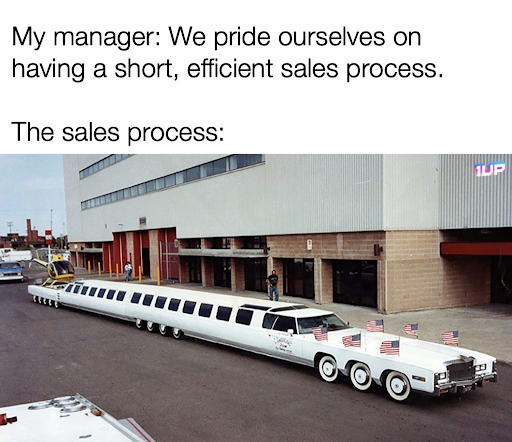
Buyers got tired of it and started doing the work themselves. Gartner found that 67% of B2B buyers now prefer a rep-free experience, and 70% want a fully digital, self-service way to buy. They are not avoiding your company. They are avoiding the wait.
An answer engine is what closes that gap. A buyer types a question about your product, your security posture, or your pricing, and gets a clear answer in seconds. No ticket. No "let me check with the team and circle back." The first wave of AI sales tools tried to do this with raw language models and ran straight into the accuracy problem. A chatbot that confidently makes up a compliance answer or quotes the wrong price does more damage than no chatbot at all. One bad answer in a live deal is hard to walk back.
The fix is simple: keep the AI tied to sources you trust.
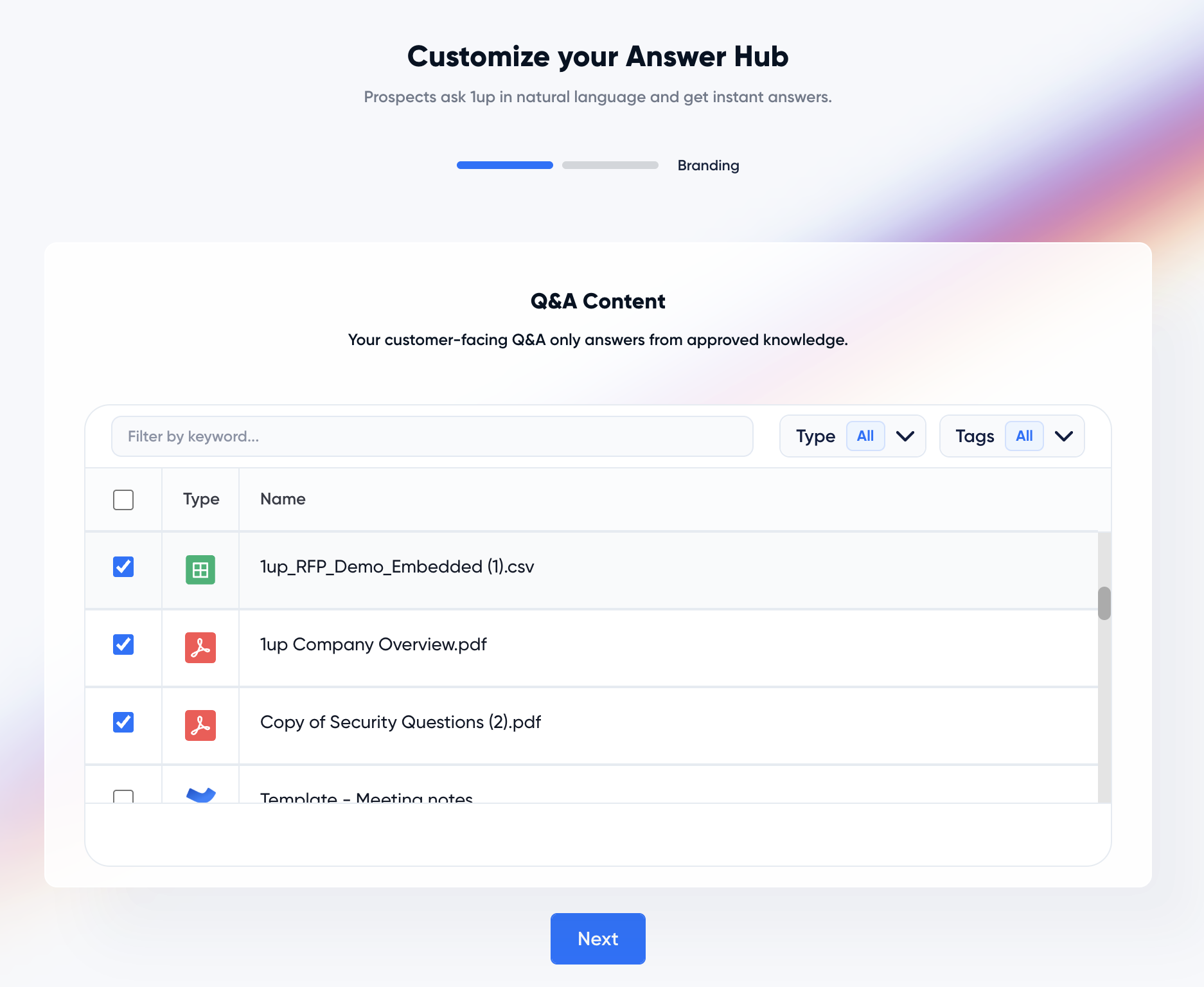
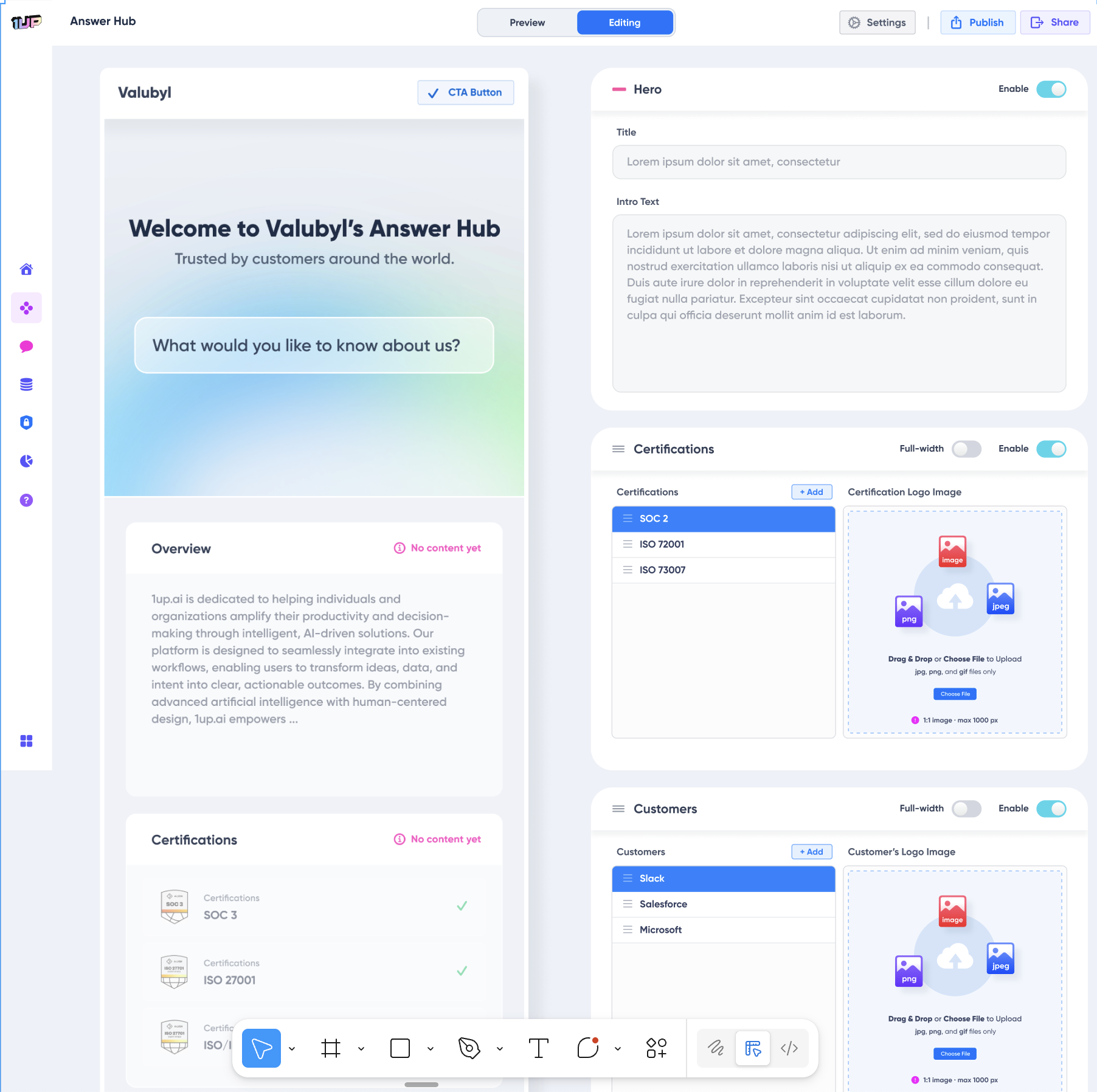
1up handles this by only pulling from material you have approved, so a fast answer is still a correct one. Every answer provided by Answer Hub comes directly from sources you have approved, so the speed never comes at the cost of a wrong answer. You decide which documents, pages, and approved responses the engine is allowed to use. If the answer is not in a trusted source, the engine does not invent one.
Ultimately, the quality of your answer engine depends entirely on the data it’s fed. A high-performing engine integrates directly with your live product documentation, security compliance material, pricing models, and the proven answers your best reps use. Conversely, an inferior engine relies on stale PDFs and marketing collateral. This is a difference buyers notice within just a few questions.
Some tools take this a step further and let the buyer act, not just ask. An agent platform like Sierra can do more than return an answer. It can reschedule a meeting, update an order, pull a real-time status, or kick off a request and complete it inside the same conversation. The answer and the action stop being two separate trips. For a buyer used to filing a request and waiting a day for someone to act on it, that feels like a different category of experience.
The teams getting the most out of this treat the answer engine as a real member of the sales motion, not a gimmick in the corner of the site. They watch what buyers actually ask, find the gaps, and feed the engine better sources. They route the high-intent questions to a human at the right moment. The engine handles the volume, and the reps spend their time where a person genuinely changes the outcome.
Self-Service Demos Replace the Two-Week Wait
The old demo process was its own special kind of slow. A buyer filled out a form, waited for an SDR to qualify them, then waited again for an overworked account executive to find a 30-minute slot two weeks out. By the time the call happened, half the buying group had lost the thread, and the demo itself was a generic tour that spent ten minutes on features nobody in the room cared about.
Self-service demo tools took that whole sequence and flipped it. With an interactive demo platform like Arcade, the product walkthrough lives right on the website and runs whenever the buyer wants.

The reason this works is control. In a live demo, the seller drives. In a self-service demo, the buyer drives. They click through the real interface, linger on the parts that matter to them, and skip the parts that do not. A finance person and a security engineer can each walk the same product and come away with the two completely different answers they were each looking for. It feels less like a sales pitch and more like a test drive, and buyers will take that test drive on day one instead of week three.
Our own demo library works similarly, so anyone can watch exactly how a specific use case runs without booking a thing or talking to a person first.
A good self-service demo has a few things in common. It is short and focused on one job, not a forty-step grand tour. It uses the real product interface so the buyer trusts what they are seeing. It lets the buyer pick their own path instead of forcing one line. And it does not gate everything behind a form, because the entire point is to let people in before they have committed to a conversation. The worst version of this is a "demo" that is really a two-minute marketing video with a giant "book a call" wall in front of it. Buyers see through that instantly.
None of this means demos with a human go away. Complex, multi-stakeholder, heavily customized deals still need a real person who can read the room and tailor the conversation. The self-service demo is what handles the early curiosity and the obvious questions, so that by the time a human gets involved, the buyer already knows the basics and the conversation can be about their specific situation. Gartner reports that 69% of B2B buyers turn to a sales rep to validate AI-generated insights before they commit. Self-service gets them most of the way. People still help them cross the finish line.
How DDQ Automation Speeds Up Procurement
This is the stage that used to grind everything to a halt, and it is the one AI may be changing the most. Once a buyer decides they want your product, their procurement and security teams take over. Out comes the due diligence questionnaire, the security review, the vendor risk form, sometimes all three at once. None of them are short. A serious DDQ can run 200 to 350 questions across legal, security, and finance, and a single one can eat 15 to 40 hours of expert time before the revision rounds even start.
The burden keeps growing. New regulations and tougher security standards mean buyers send more questionnaires than ever, usually the same questions dressed up in a different format. So your experts answer the same access control and incident response questions over and over, copy and pasting from last quarter's responses and hoping nothing has gone stale. The deal just sits there, agreed in principle, stuck behind paperwork.
Now agents sit on both sides of that exchange. On the buyer's side, agents draft and standardize the questionnaire. On the vendor's side, agents fill it out from existing knowledge. And more and more, other agents review the finished responses for gaps, inconsistencies, or red flags before a human ever opens the file. A job that used to take weeks of human effort is starting to run in hours on both ends.
1up automates the vendor side of that. DDQ automation pulls answers straight from your knowledge base and drops them into the buyer's exact format, whether that is Excel, Word, or a web portal, then hands a person the final review. The expert goes from copy-paste operator to reviewer, checking only the handful of answers that actually need judgment. That is a much better use of a senior security engineer than retyping the same SOC 2 answer for the fiftieth time.
The sharpest teams skip the back-and-forth altogether. Rather than wait for a 300-question form, they stand up a public trust center that answers the common questions up front. A lot of procurement scrutiny can be handled with a link instead of a spreadsheet. The demo below shows the full flow end to end.
With both sides automating the paperwork, the slowest stage of the deal turns into one of the fastest. That is a real change to the shape of a B2B sale, not a minor speed bump. Deals that used to die in a procurement queue now clear it in an afternoon.
What AI Answer Engines Mean for Sales Teams
It is easy to read all this as "AI replaces sales people," and that is the wrong takeaway. The pattern across all three shifts is the same. AI absorbs the waiting, the repetitive answers, and the form-filling. People move up to the work that genuinely needs a human.
For an SDR, that means less time gatekeeping basic information and more time on real conversations. For an account executive, it means walking into a call where the buyer already understands the product, so the discussion can be about their actual problem instead of a feature tour. For a sales engineer, it means fewer repeat demos and more time on the hard, custom technical questions. For a security or RevOps team, it means the knowledge gets maintained in one place and feeds every buyer touchpoint at once. If you want a fuller breakdown of where each kind of AI fits in a sales org, we wrote about the three types of AI for sales teams and what each one is actually good at.
A few things stay firmly human. Trust at the moment of signing. Negotiation on price and terms. Reading a room full of nervous stakeholders. Validating that the AI got it right, which buyers clearly still want. The job is not disappearing. It is shedding the parts that never needed a person in the first place.
If you want a single metric to watch as you adopt any of this, watch response time. How long does it take a buyer to get an answer, see the product, or clear a security review? Buyers evaluate several vendors at once, and the first complete, credible response very often advances to the next round. The teams winning right now are simply the ones who stopped making buyers wait.
The easiest way to understand all this is to watch a buyer get a real answer in seconds, with no rep and no wait. Try it on your own content and see what self-service selling feels like from the buyer's side.
See the shift for yourself. Try 1up for Free
FAQs
An AI answer engine is a customer-facing tool that answers a buyer's questions about your product, pricing, or security in seconds. Unlike a basic chatbot, a good one is grounded, meaning it only draws from sources you have approved, so a fast answer is still an accurate one. It handles the high volume of repeat questions that used to sit in a queue behind a busy rep.
No. They take over the waiting, the repeat answers, and the form-filling, which frees reps for the work that needs a person. Buyers still want a human for trust at signing, negotiation, and validating what the AI told them. Gartner found that 69% of B2B buyers turn to a sales rep to validate AI-generated insights before they commit, so the role shifts rather than disappears.
DDQ automation pulls answers straight from your knowledge base and drops them into the buyer's exact format, whether that is Excel, Word, or a web portal, then hands a person the final review. A serious due diligence questionnaire can run 200 to 350 questions and eat 15 to 40 hours of expert time, so automating the first pass takes the slowest stage of the deal from weeks down to hours.