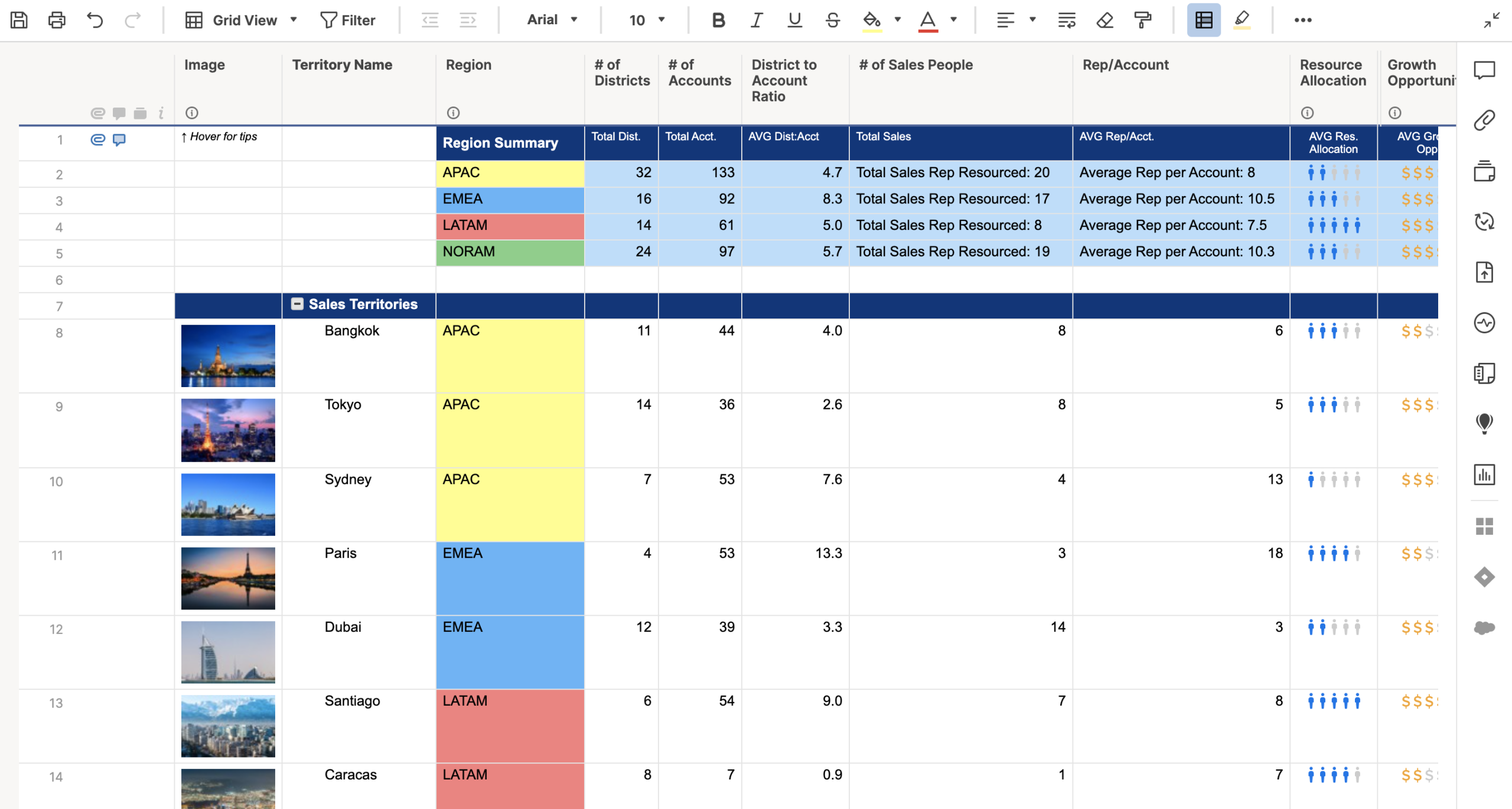
Territory planning is a process that organizes and allocates sales resources across different geographic territories or market segments. This is to maximize efficiency, coverage, and sales performance. It’s a must-do for all sales teams, whether they consist of two people or two dozen.
Dividing territories can help to:
- Improve productivity by narrowing down rep focus areas for better account planning
- Improve lead management flow
- Streamline cross-functional alignment across different revenue teams
- Manage territory and account reassignments as sales teams scale
- Optimize hiring and focus resources on the right areas
The goal isn’t just to assign sales reps to different regions but also to align sales efforts with market opportunities. As such, this involves setting clear objectives for each territory, such as revenue targets, customer acquisition goals, or market penetration rates.
When you do it right, you can identify gaps in your coverage and prioritize high-potential accounts. Planning in this way promotes fairness in workload distribution and reduces internal friction. It can also drive more predictable pipelines. Modern tools like CRM software, AI-driven territory mapping, and predictive analytics will help you automate and refine your process for the long term.

Territory Planning in 5 Minutes:
FAQs
Territory planning involves dividing a market into manageable segments or regions and assigning sales representatives to cover these areas. It aims to optimize sales coverage, balance workloads, and maximize sales opportunities.
Market potential, geographic location, customer density, industry verticals, existing customer base, sales rep skills and experience, and travel requirements.
It ensures that as a company grows, its sales efforts will remain structured and efficient. It helps ensure account distribution is fair and your reps don't burn out. It also helps you make sure that no valuable leads fall through the cracks. Onboarding new reps is easier because they have clear, focused areas for work.
Sales teams can effectively split up territories by using data and analytics to inform decisions, setting clear goals and criteria for territories, regularly reviewing and adjusting plans, and leveraging CRM tools to manage territories efficiently.