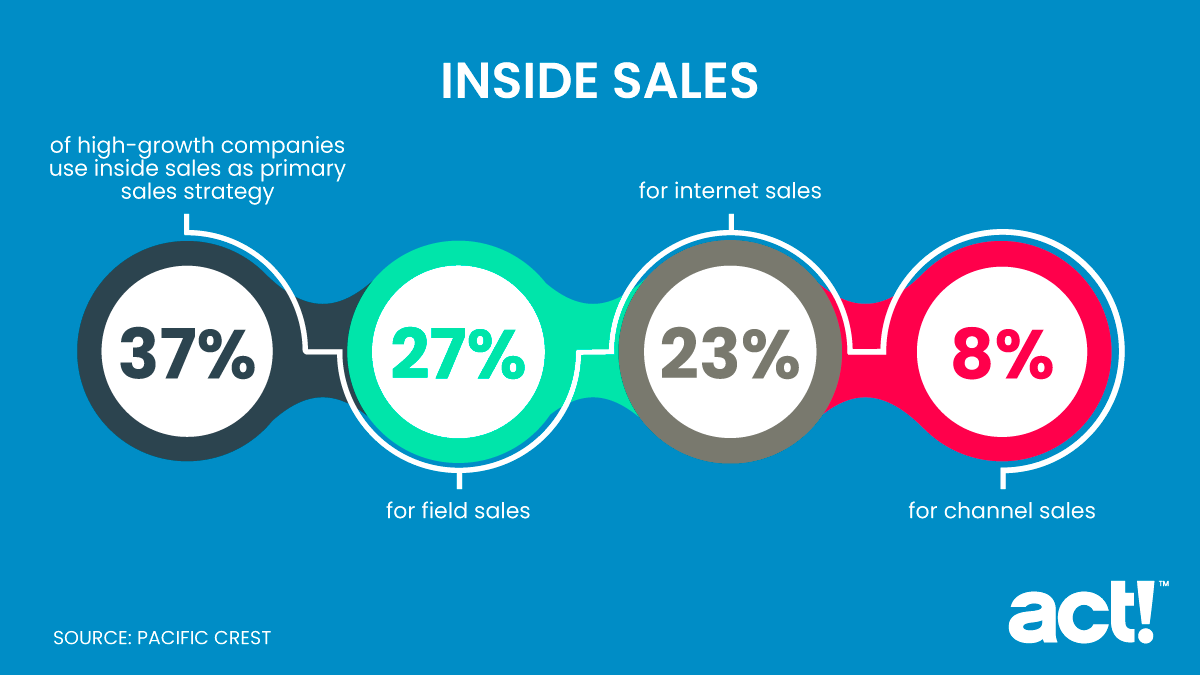
Inside sales is the practice of selling products or services from an office or remote location using the telephone, email, and the internet rather than meeting face-to-face with customers. Research has shown that these roles are growing 15 times faster than outside sales as technology enables sales teams to reach a wider audience more efficiently and at a lower cost than traditional field sales.
These teams naturally rely on various digital tools and platforms to perform their functions. These include customer relationship management (CRM) systems, video conferencing, and social media to engage with prospects and clients. The method is particularly effective for B2B and high-ticket B2C transactions, where the sales process often involves multiple touchpoints and a more extended decision-making period.
Inside sales is also ideal for hybrid working environments. It offers flexibility for both reps and buyers. This role, which is rich in data, enables teams to track performance and refine their messaging. You can also test new strategies. If you integrate AI and automation, your team can prioritize the best leads and personalize outreach. So you can scale your efforts without worrying about sacrificing quality.

A Day in the Life of an Inside Sales Rep:
FAQs
The benefits of this type of sales include cost-effectiveness, scalability, the ability to reach a broader geographic area, faster response times, and the use of advanced sales technologies and analytics to enhance efficiency and productivity.
Inside sales is a model where sales representatives engage with prospects and customers remotely, using phone calls, emails, video conferencing, and other digital communication methods, rather than meeting in person.
Key skills for inside sales reps include strong communication and active listening. Sales reps also need to be proficient with CRM tools and adaptable to digital platforms. They must be able to build rapport quickly over virtual channels. Finally, time management and data literacy are critical skills to help reps navigate high-volume pipelines.
Inside sales focuses on remote selling and digital interactions, while outside sales involves face-to-face meetings and direct engagement with customers. Inside sales typically uses more technology and data-driven processes, whereas outside sales often relies on personal relationships and networking.