Expansion ARR, or Expansion MRR, refers to the combined revenue from all new subscriptions, upgrades, upsells, cross-sells, and bookings from an existing customer. Unlike “New ARR,” the expansion metric is used to determine a business’s ability to grow existing customer accounts.
Expansion ARR can be calculated by subtracting the total increase in ARR at year-end from the total ARR at the beginning of the year. Divide the result by the beginning year ARR and multiply by 100 to output a percentage. This is the metric most commonly measured as part of an Expansion Deal.
For example,
- $30,000 Expansion ARR in Q1
- $50,000 Expansion ARR in Q4
$50k – $30k = $20k
$20k / $30k * 100 = 66%
In the above example, we would see a 66% Expansion ARR rate.
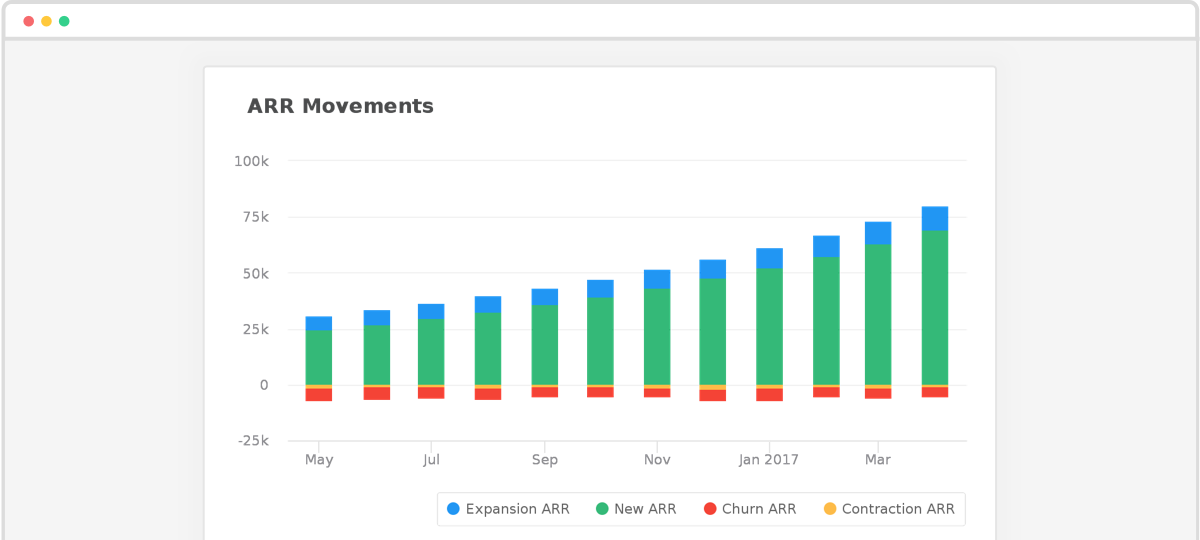
How to Calculate Expansion ARR:
FAQs
Expansion ARR measures revenue growth from existing customers through upgrades, cross-sells, and upsells. In contrast, New ARR tracks revenue from brand-new customer accounts. When used together, you can see both acquisition and retention-driven growth.
Any revenue increases from existing customers count towards Expansion ARR. This can be feature upgrades, additional licenses or seats, cross-product sales, or higher-tier subscriptions.
Not really. However, if your existing customers downgrade their services or reduce their usage, you will see these numbers show up in Contraction ARR or net revenue retention (NRR). A low Expansion ARR, or one that's declining, could be a red flag.
Because it reflects customer satisfaction and the value of your product. A strong expansion means your customers think your product is becoming even more valuable. Those customers are more likely to buy your products in the future. This also means you won't have to push so hard for new customers in order to increase revenues.