Buyers do a ton of research before they ever talk to sales. They read reviews, compare options, and narrow things down on their own. This shift is part of broader sales enablement trends that are changing how teams support reps and buyers.
Because of that, sales enablement content has a different job now.
Reps need answers fast. They need content they can grab and send without stopping to wonder if it is outdated or wrong. When content is scattered across random folders, old decks, and half finished docs, everything slows down. Deals get awkward. Messaging slips. Reps end up sending whatever they can find just to keep the conversation moving.
This guide is for sales leaders and enablement teams who want to fix that. It breaks down how to build a Sales Content Strategy for 2026, what content actually helps close deals today, and how to make sure it shows up right where reps already work.
What makes great enablement content?
Great sales enablement content helps reps move deals forward without slowing them down.
It is not about having more assets. It is about having the right ones and making them easy to use when a real buyer question comes up.
Good sales enablement content usually has a few things in common:
- It answers real buyer questions that show up in live deals
- It has a clear owner who keeps it current
- It is easy for reps to find in the moment
- It is trusted, approved, and safe to send
- It is updated based on what actually works in deals
When content is working, reps can answer questions quickly and confidently. They do not need to interrupt marketing, product, or presales just to keep a deal moving.
When content is not working, everything slows down. Reps search longer than they should. Simple questions turn into distractions. Deals lose momentum.
Good vs bad sales enablement content
Most sales content falls into one of two buckets, content that helps reps or content that gets in the way.
If reps trust the content and can find it fast, it gets used. When they cannot, they work around it. That difference shows up directly in how fast deals move.
The winning framework: build sales content around deal friction
Most enablement teams start by thinking they need more content. That is usually where the conversation goes first.
In reality, deals slow down because of friction, not because there is not enough content.
That friction usually looks like this:
- Reps know the content exists, but cannot find it fast
- Reps find something, but do not trust that it is up to date
- The content does not answer the buyer’s question in that moment
When this happens, reps either stop the deal to ask for help or send something that feels close enough just to keep things moving. Both options create delays and mixed messaging. You see this a lot in teams using knowledge management software that is hard to search or poorly organized.
The better approach is to look at where deals get stuck and fix those moments first. Diagnose friction in real conversations, then build or update content that removes it.
Use this framework to audit, rebuild, and keep your sales enablement content strategy working in 2026. Run it in order. Skipping steps usually creates more mess later.
It is built around one simple idea. Deals slow down because of friction in the moment, not because teams lack content. The steps below focus on finding those problem spots and fixing them first.
1. Actually talk with your sales team
You won't believe how many people skip this part.
Before you audit content, clean folders, or spin up new docs, you need to talk to sales. Not a survey. Not a Slack poll. Real conversations with the people who are actually in deals every day.
Sales reps live inside buyer friction. They hear objections in real time. They know where prospects get confused, where momentum drops, and where content helps or hurts. If you skip this step, you end up guessing what content is needed instead of solving real problems.
When you start with reps, you ground your entire content strategy in reality. You stop building content based on assumptions and start building it based on what actually happens in deals.
Ask reps things like:
- Where deals slow down or get awkward
- What content feels missing or outdated
- What they actually send to buyers today
- What they keep recreating at the last minute
This step helps surface real insights that often get lost in day to day work, especially in teams dealing with uneven knowledge sharing in the AI workplace. It is also where most enablement teams realize they already have useful content, it just is not showing up when reps need it.
Identify gaps vs distribution issues
Once you hear from reps, the next mistake to avoid is jumping straight into content creation. Most enablement teams do this. A rep asks for something and the instinct is to build it.
That is usually the wrong move.
In a lot of cases, the content already exists. It is just buried, misnamed, outdated, or living in the wrong place. Reps assume it does not exist because they cannot find it fast enough during a live deal.
This is why it is so important to separate true content gaps from distribution problems. Both slow deals down, but they need very different fixes.
You see this in how much B2B buying has shifted online, with buyers doing most of their research and moving through the journey without relying on traditional sales handoffs.
Most issues fall into one of these two buckets:
- True gap: the content does not exist anywhere
- Distribution issue: the content exists, but no one knows where it is
If it is a distribution issue, creating new content only makes things worse. You end up with duplicates, conflicting versions, and even more confusion. Before you build anything new, fix how content is organized, named, and accessed inside your company knowledge base.
.jpg)
2. Run a Win/Loss Analysis
Losing deals is frustrating, but it is also one of the fastest ways to figure out what your content is missing. This kind of buyer slowdown is common in B2B, especially when too much information creates confusion, as noted by Harvard Business Review.
Most teams move on from losses too quickly. They chalk it up to pricing, timing, or bad luck. But when you slow down and look closely, lost deals almost always show you where buyers got stuck or lost confidence.
This step is about finding those moments.
Go back and review recent closed lost deals and ask where the conversation broke down. Not at a high level, but at the exact point where momentum dropped.
Look for patterns like:
- Pricing confusion or pushback
- ROI questions that never got fully answered
- Technical or integration gaps
- Security or compliance concerns
- Weak differentiation against competitors
Once you see those patterns, map each one to a content gap. Ask yourself what would have helped the rep in that moment. Was it a clearer pricing explainer? A stronger ROI example? A better competitive comparison?
A lot of these issues show up clearly when teams dig into why you lose RFPs, and the same thinking applies to sales conversations outside of formal RFPs.
The goal here is not to blame reps or fix everything at once. It is to identify repeat friction and prioritize content that removes it. Every pattern you find is a chance to make the next deal easier.
Know your wins just as well as your losses
If lost deals tell you where things break, won deals tell you what to repeat.
This step is about paying attention to what actually helped close the deal, not what you wish helped. Wins leave clues, and most teams do not slow down enough to capture them.
Go back and look at recent closed won deals and ask a few basic questions:
- What content did the rep actually use
- When did they introduce it in the deal
- Did the buyer reuse or share it internally
You will usually notice patterns pretty quickly. Certain case studies come up again and again. A specific slide explains the value better than anything else. A short demo video gets forwarded around inside the buyer’s company.
Those assets are gold.
Once you identify them, do not leave them as one offs. Turn them into systems. Take what worked and make it easier for every rep to use in future deals. This is the same thinking behind strong B2B competitive marketing strategies that scale what already resonates instead of constantly starting from scratch.
The goal is not to create more content. It is to find the content that already works and make sure it shows up for every rep, every time.

3. Clean out old, unused content
LESS.
IS.
MORE.
Most teams think having a lot of content is a good thing. In reality, a bloated library usually makes selling harder.
Old content creates doubt. Reps are not sure what is current, what is approved, or what is safe to send. So they hesitate, search longer, or grab something that feels close enough. All of that slows deals down.
This step is about clearing the noise.
Set a regular cadence, at least once a quarter, to review what is actually being used. Look at assets that have not been touched in 6 to 12 months and ask why. Some things need to be updated. Others just need to go away.
Focus on:
- Archiving old versions so they cannot be sent by accident
- Removing duplicate decks that say the same thing in slightly different ways
- Killing stale messaging that no longer matches the product or market
Old content also makes search worse. The more outdated files you have, the harder it is for reps to find the right answer fast. This is a big reason why enterprise search is so difficult for a lot of teams.
Get rid of low value, high friction content
Some content does more harm than good. It slows reps down, confuses buyers, or creates extra steps that kill momentum.
You can usually spot this content pretty fast. Reps avoid it. Buyers do not read it. Or it keeps getting copied and changed because no one trusts the original.
Common troublemakers look like this:
- Static decks that get copied into a mess of versions
- Long one pagers buyers never finish
- Gated PDFs reps cannot share quickly

Content that creates friction is not worth saving. Either redesign it so it fits how reps actually sell today, or remove it completely. Keeping bad content around just because it exists makes everything harder.
YES, You should repackage older content that works
Not all unused content is bad content. A lot of it is just packaged in a way that buyers and reps do not want to deal with.
Long decks, dense PDFs, and bloated one pagers might look impressive internally, but they are hard to send and even harder for buyers to digest. Reps know this, which is why they often skip them or recreate pieces on the fly.
This step is about taking what already works and reshaping it so it actually gets used.
Look at content that reps like but rarely send. Ask why. Most of the time, the answer is not the message. It is the format.
Common fixes include:
- Combining overlapping fact sheets into one clear asset
- Breaking long decks into smaller pieces for different deal stages
- Cleaning up titles so reps know exactly when to use something
- Turning internal docs into buyer safe versions
When content is easier to consume and easier to share, adoption goes up fast. This matters even more when content gets reused for onboarding and product training for sales teams, where clarity beats completeness every time.
The focus here is making the right content easy to grab when a rep actually needs it.
4. Create content assets that move deals
Not all content helps close deals. A lot of it just sits there.
This step is about focusing your time on the content that actually helps buyers make a decision and helps reps feel confident in the conversation.
Most deals stall when buyers feel unsure. They are not convinced on value. They are comparing you to someone else. They are worried about risk. The right content helps remove that doubt at the right moment.
For most B2B teams, a few content types do the heavy lifting:
- Case studies by industry or use case
- Competitive battle cards and objection guides
- A clear “why us” narrative
- Security and compliance assets
- Demo videos and short walkthroughs
- ROI tools like calculators and pricing explainers
Here are some examples of sales enablement assets your content library should include:
Battle cards: These are amazing for learning, and they’re ideal visual aids. They’re short, sweet, and get to the point. They basically break down for your reps why customers should choose you over a competitor and look something like this:

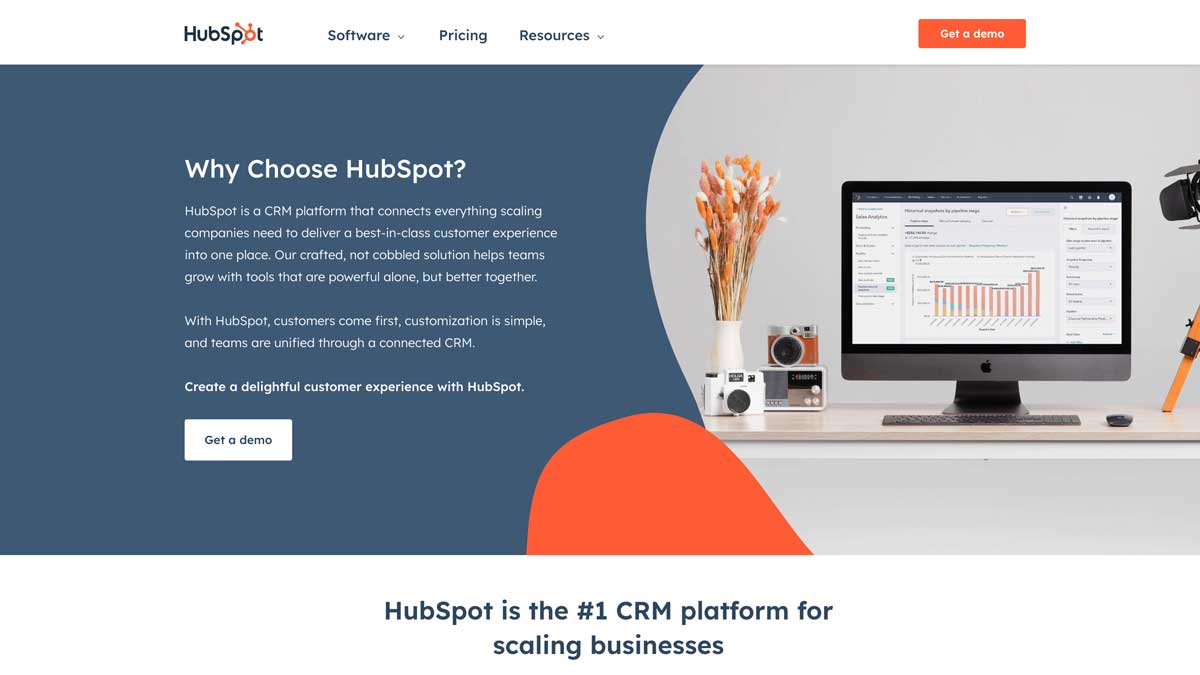
A great “why us” page: You’d be surprised how many companies still don’t have a “why us” page on their website. This page is a go-to for your sales reps to help with RFP responses, sales decks, and investor pages. Make sure your “why us” page spells out your company mission, vision, values, and your value proposition and positioning statements. For example:
Case studies: Yes. You want your sales reps to be able to pull up past successes, complete with testimonials. They can share this information with potential clients to win them over to your side.
Security and privacy content: Your InfoSec team is not the only team that should have access to your security and privacy content. It’s also sales content. Make sure your sales reps have access to blogs, response plans, web pages, and anything else that will help them show clients how much you value security and client privacy.
Demo Videos: Battle cards are one thing. Demo videos are next level. Your sales reps should be able to pull up and send any potential client demo videos. These will give clients a short, sweet, visual with engaging images that tells a compelling story. You can create demo videos for virtually every aspect of your business, and you should.
Client Objection Guides: Last but not least, your sales reps should have immediate access to cards and guides that help them respond to objections. Keep them short, sweet, and to the point. They should be like battle cards: easy to access and easy to read. Or your sales reps won’t use them.
Build content that AI can consume
AI only helps when your content is clean and easy to work with. If your docs are messy, outdated, or scattered everywhere, AI just makes the confusion show up faster.
AI can give reps suggestions and patterns, but people still make the final call, and real differences in how individuals use AI can change deal outcomes in big ways.
This step is about getting your content into a shape that both reps and AI tools can actually use.
A lot of enablement content breaks down here because it was never built to be searched. It lives in image heavy PDFs, over designed decks, or files with vague titles. Reps already struggle with this. AI struggles even more.
To make content AI-ready, stick to the basics:
- Use docs and web pages instead of image heavy PDFs
- Write clear headings and simple bullet points
- Keep terminology consistent across assets
- Avoid having five slightly different versions of the same deck
When content is structured and predictable, AI can surface better answers faster and with fewer mistakes. Teams that invest in AI knowledge management usually see less rep frustration and fewer wrong answers getting sent to buyers.
AI works best when it is pulling from content reps already trust and use every day.
Don't know where to start? Check out our big guide:
5. Centralize, then distribute
Content falls apart fast when no one clearly owns it. Files get copied, tweaked, saved somewhere new, and suddenly no one knows which version is safe to send.
This step is about putting order around your content so reps can trust what they are using.
Start by making it clear where content lives. Reps should not have to guess which folder, tool, or channel has the latest version. Even more important, every asset needs a clear owner. If no one owns it, it will go stale.
Assign ownership by category so updates do not fall through the cracks:
- Product marketing owns positioning and “why us”
- Presales owns technical validation and demo assets
- Security owns trust, compliance, and risk content
- Enablement owns cadence, structure, and distribution
Ownership matters even more as teams start sharing and automating knowledge across the company. This is a common challenge in internal company AI efforts, where outdated or conflicting content can spread fast if no one is accountable.
When content has a clear home and a clear owner, reps stop second guessing. They know what to use, and they know it is safe to send.
Content should be available ON-DEMAND
Even the best content does nothing if reps cannot get to it fast.
Reps do not want to leave a live deal to dig through folders, portals, or old Slack threads. If finding content takes more than a few seconds, they either give up or ask someone for help. Both slow things down.
This step is about meeting reps where they already work. That could include surfacing relevant assets inside CRM opportunity records, or matching content to deal stages so reps are not guessing what to send the buyer.
TLDR: Instead of forcing reps into another tool, push content into the places they already live every day. That usually means chat tools, the CRM, and deal views tied to real opportunities.
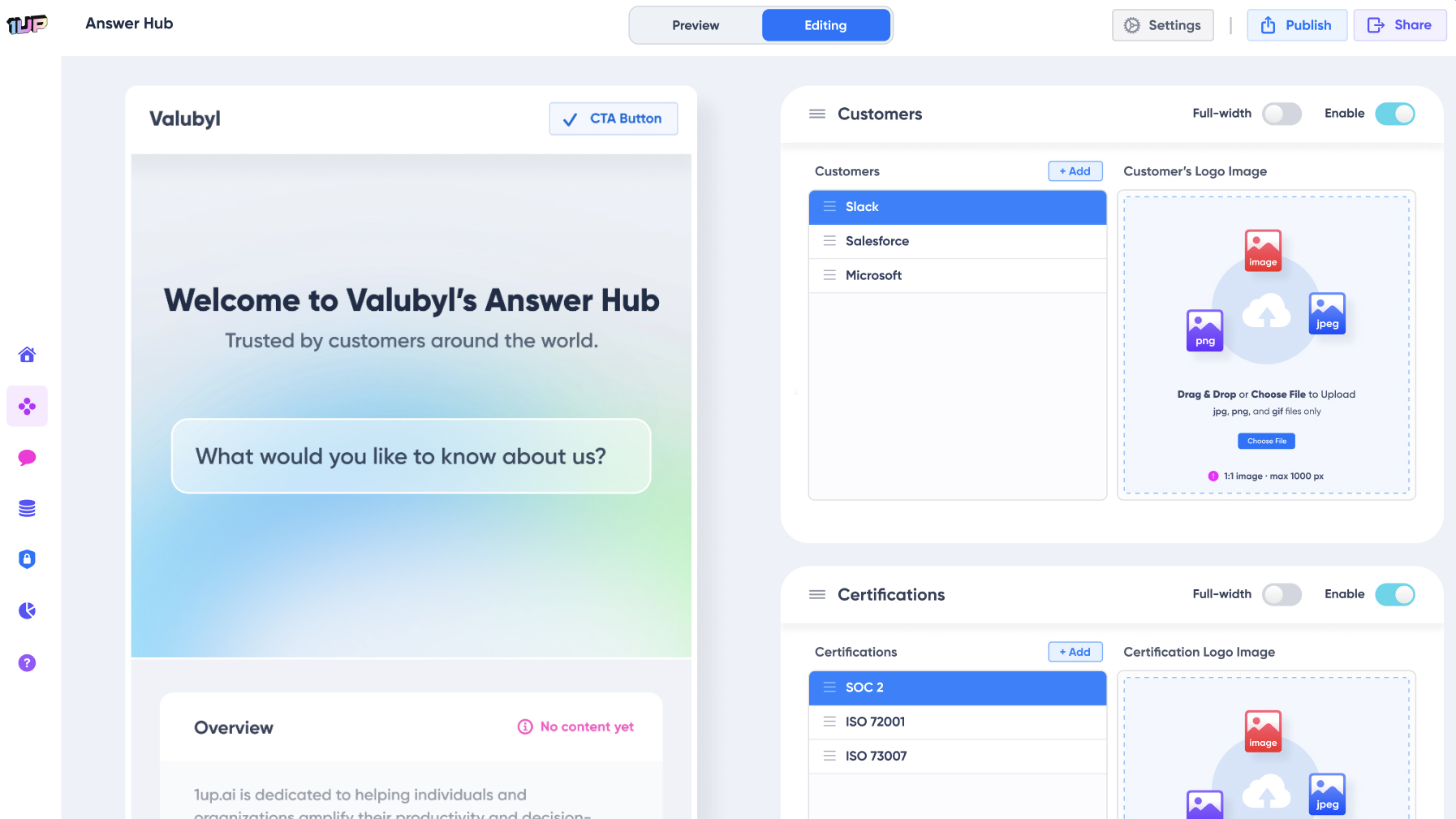
Focus on making content accessible inside Slack, Microsoft Teams, or Google Chat. Here’s how teams do this with 1up's Slack Integration:
When content shows up in context, reps actually use it. This approach also supports teams that prepare sales calls with AI, where quick access to the right answers matters more than having a perfect library.
The goal is simple. Reps should be able to grab what they need without breaking their flow or slowing the conversation down.
6. Gather honest feedback
Enablement content only works if it keeps improving. The second feedback stops, content slowly drifts away from how deals actually happen.
This step is about staying close to what reps are really experiencing.
Do not wait for a quarterly review or a long meeting to hear what is broken. By then, reps have already worked around the problem or stopped using the content altogether. You want feedback right after they use something, while it is still fresh.
Keep it very simple:
- A quick upvote or downvote
- A short comment if something feels off
- A fast way to say “this helped” or “this missed the mark”
Those small signals matter more than you think. When you look at them alongside sales enablement statistics, patterns start to show up. You can see what actually helps deals move and what quietly gets ignored.
You can create a simple feedback mechanism where reps can quickly rate content. This allows you to understand what’s working and shift away from what isn’t. For example, here’s how teams rate answers in 1up:

Review these steps every quarter
If this framework feels overwhelming, that is normal. You are not supposed to do all of this at once.
The teams that struggle with enablement usually try to fix everything in one big push, then never touch it again. That is how content goes stale fast.
What works better is turning this into a simple rhythm. A repeatable loop you run every quarter. Nothing fancy. Just enough structure to keep content useful and reps confident.
The steps below are how you turn everything above into an ongoing habit instead of a one time project.

Interview reps and document top deal friction
Talk to reps and write down where deals actually slow down or get uncomfortable. Focus on real buyer questions and objections, not guesses.
Separate missing content from hard to find content
Figure out what truly does not exist versus what exists but is buried. This step alone usually saves weeks of unnecessary content creation.
Audit closed won and closed lost deals for patterns
Look at recent wins and losses side by side. Patterns will show you which content helps buyers move forward and where confidence breaks down.
Clean and archive outdated and duplicate assets
Remove anything reps do not trust anymore. A smaller, cleaner library makes it easier for reps to move fast and stay consistent.
Repackage what works into stage specific formats
Break long decks into smaller pieces that match different stages of the deal. Buyers want the right info at the right moment, not everything at once.
Make everything structured, searchable, and AI ready
Use clear titles, simple formatting, and one approved version of each asset. This makes content easier for both reps and tools to use.
Distribute in chat and CRM, then tighten the feedback loop
Put content where reps already work and make feedback quick and easy. Small signals over time help you improve without slowing anyone down.
Good enablement comes from doing the basics well
Enablement content does not work because you have a huge library. It works when reps know what to send, trust it, and can find it fast. That usually comes from doing the boring stuff well over and over.
Listen to reps. Pay attention to real deals. Clean up old content. Keep things simple. Then do it again next quarter.
You do not need a perfect system for this. You just need one that gets a little better over time. When that happens, reps spend less time hunting for answers and more time closing deals.
This is what a solid Sales Content Strategy looks like in 2026.
FAQs
A sales enablement content strategy is how you decide what content reps should use, where it lives, and how they find it during real sales conversations.
Teams should focus on assets that helps buyers decide, like case studies, battle cards, "why us" stories, security docs, demos, and ROI explainers.
Most teams do best when they review and update content every quarter. That keeps things current without turning it into a constant project.


Your Buyer Is in the Room and You're Not: 5 AI-Native Sales Rooms

How to NOT Use AI for Sales: 7 Mistakes That Lose Deals

Top 11 RevOps Tools in 2026
How to Build an AI Sales Agent in 5 Minutes

How to Build a Questionnaire Knowledge Base