11 AI Sales Tools Winning Deals in 2026
The AI hype is finally calming down.
A couple years back, every sales software company slapped "AI" on their homepage and hoped for the best. Now sales teams have had time to figure out what actually works, and most of the early AI myths in sales have been quietly dropped. The tools that survived are the ones doing real work inside revenue teams every day. The rest disappeared from renewal conversations.
To make the list useful, we split the tools into three buckets.
Sales Enablement and Content covers the tools that help reps and buyers find the right answer fast, and it's also where customer-facing AI like Answer Hub is starting to take over. Deal Intelligence and Forecasting is where you'll find the tools that tell you where your deals actually stand and what's really going to close this quarter. Prospecting and Lead Generation covers the tools for finding buyers and getting a meeting in a world where outbound got way harder. Pick one strong tool from each bucket and you'll cover most of what a modern revenue team actually needs.
Here are the 11 AI sales tools revenue teams are using to close deals in 2026.
Sales Enablement and Content
Most sales teams lose more deals than they realize because of bad answers. A rep gets a tough product question on a call, stumbles through it, and two weeks later the deal goes cold "for reasons." These AI sales enablement tools exist so that stops happening. Gartner predicts AI-driven sales enablement will deliver 40% faster sales stage velocity by 2029, which is why revenue teams are finally getting picky about what they buy.
1. Highspot
Best used for: Enterprise sales content management
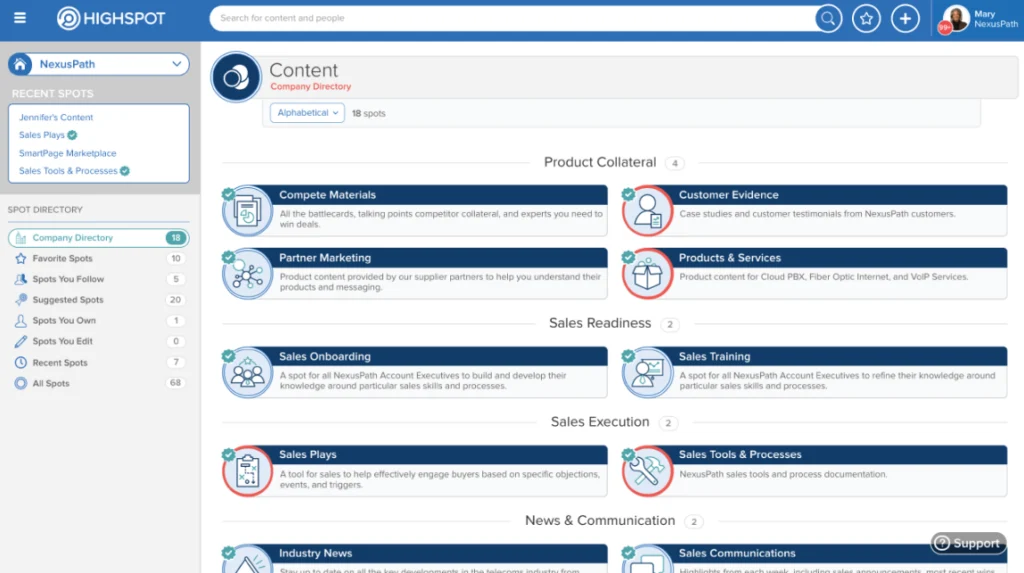
Highspot is still the pick for big enablement teams with huge content libraries. Reps get suggestions on what to send next. Enablement leaders get data on what content is actually moving the pipeline and what's just sitting there collecting dust.
The AI features have gotten much better. Highspot Copilot drafts plays, builds call briefings, and pulls up the right content based on what's happening in each deal. For teams with hundreds of reps and thousands of assets, this kind of tool is hard to replace with something lighter.
2. Seismic
Best used for: Content personalization at scale
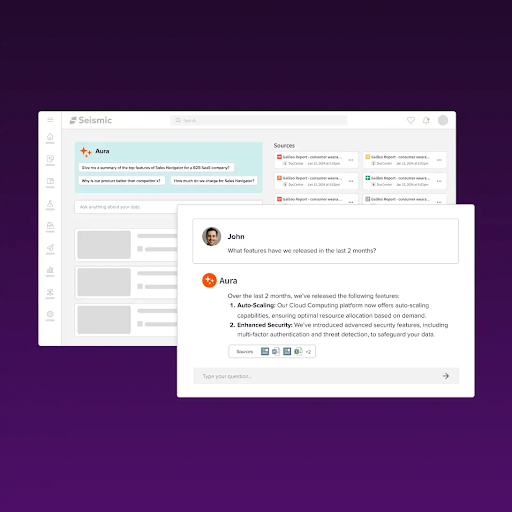
Seismic shows up most in regulated industries like finance, insurance, and healthcare, where every piece of content has to be approved and compliant. It's really good at building custom versions of decks, one-pagers, and pitches without anyone rebuilding them by hand every time.
Over the past year, Seismic leaned harder into AI content generation and buyer engagement scoring. If your reps are customizing decks for specific accounts over and over, the automation pays off fast.
Note on Highspot and Seismic: In February 2026, Highspot and Seismic announced a definitive agreement to merge. The deal is still pending regulatory approval, but once it closes, the combined company will operate under the Seismic brand. Both platforms are still being supported and sold as separate products in the meantime, which is why we've kept them as distinct entries below. Worth knowing if you're evaluating either one this year.
3. Guru
Best used for: Quick answers for reps in the flow of work
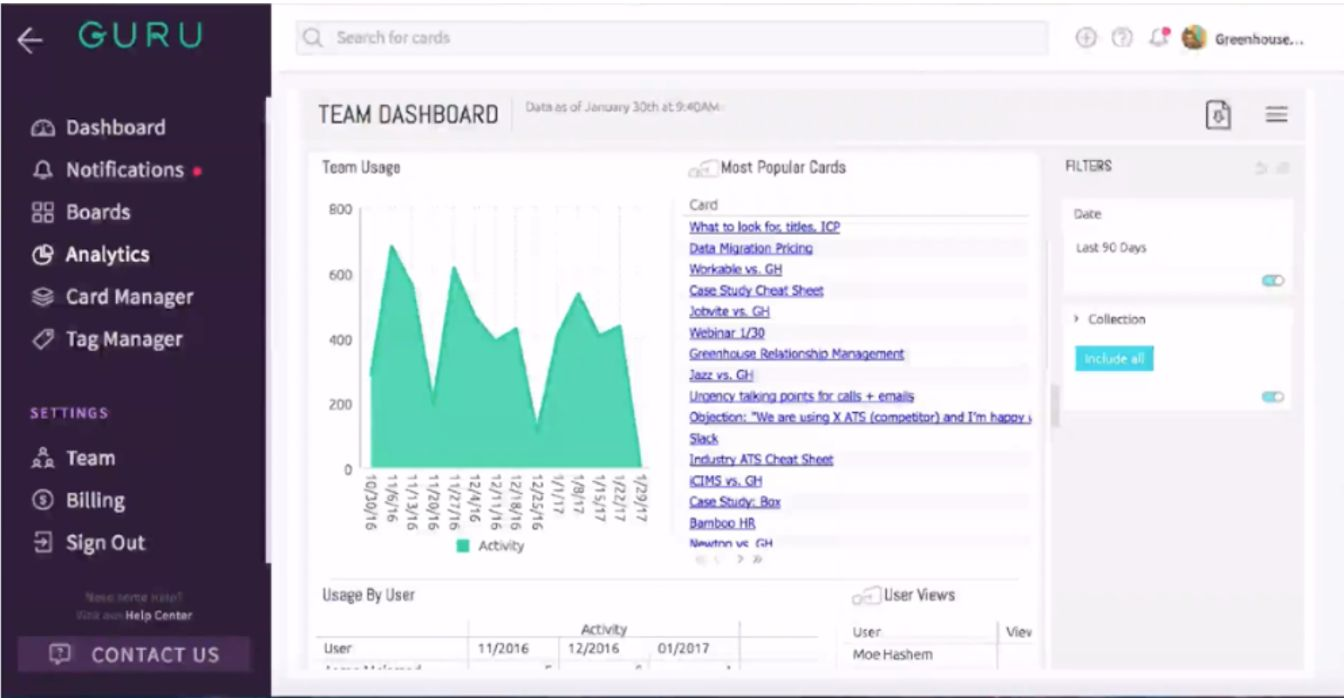
Guru has been around for a while, and it's still one of the best ways to give your reps answers without making them ping someone on Slack. It lives inside Slack, Chrome, and Salesforce, and pops up verified knowledge cards right when reps need them.
The AI assistant has gotten sharper over the past year. It pulls from your cards and docs to answer questions in plain English. Guru works best for teams that already have a culture of writing things down.
4. Gong
Best used for: Call intelligence and deal insights
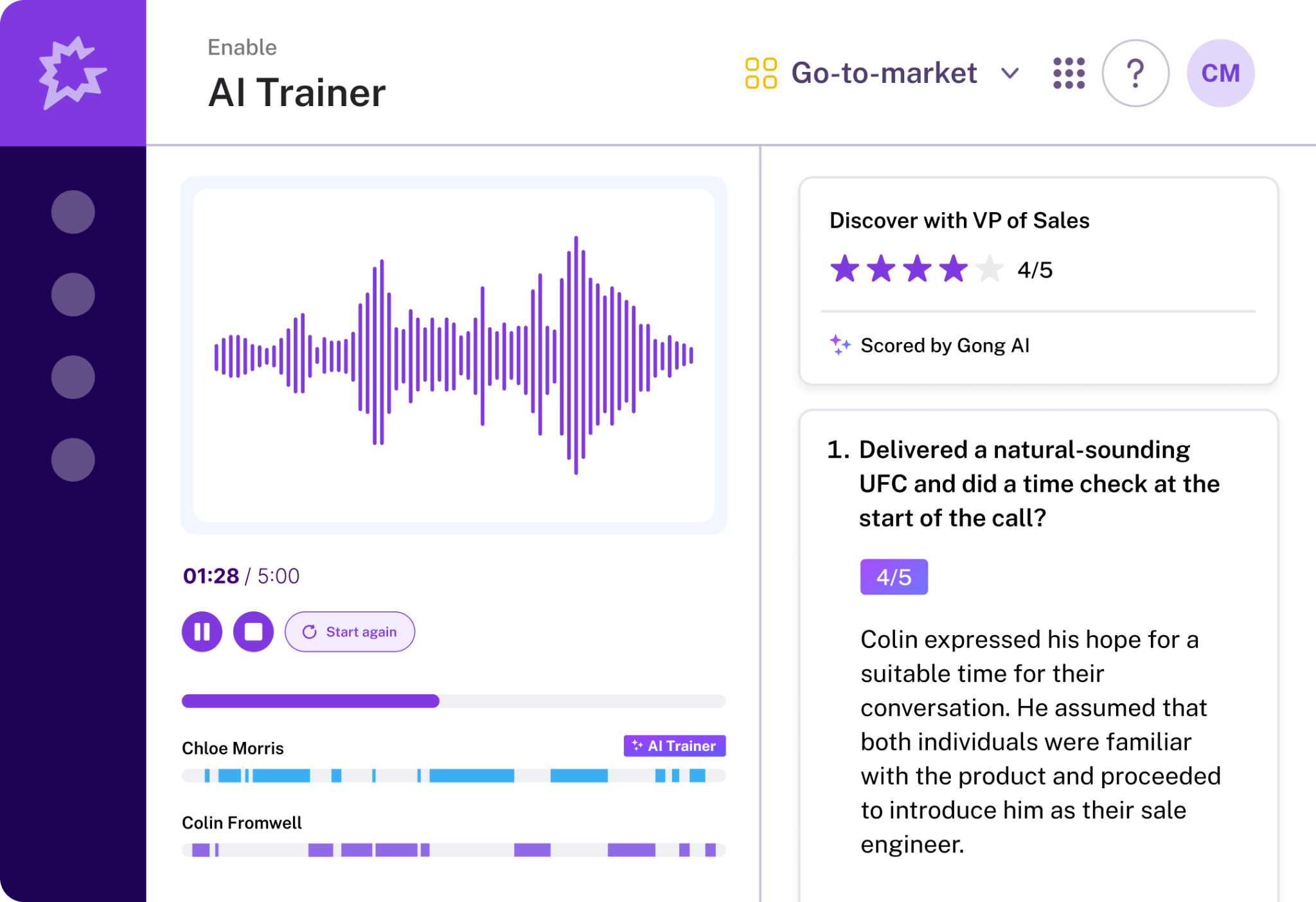
Gong still needs no introduction. The call transcripts are clean. The insights are sharp. The product experience is still a standout even in a crowded category. What keeps Gong on this list in 2026 is how much it's become part of the forecasting process. A lot of RevOps teams use Gong signals to sanity check their forecast every week. It does way more than record calls at this point, and reps who prepare for sales calls with AI often pull Gong transcripts as part of their prep.
The pricing still gets complaints, and there's more competition than ever. But teams keep renewing. That usually tells you most of what you need to know.
5. Clari
Best used for: Revenue forecasting and pipeline management
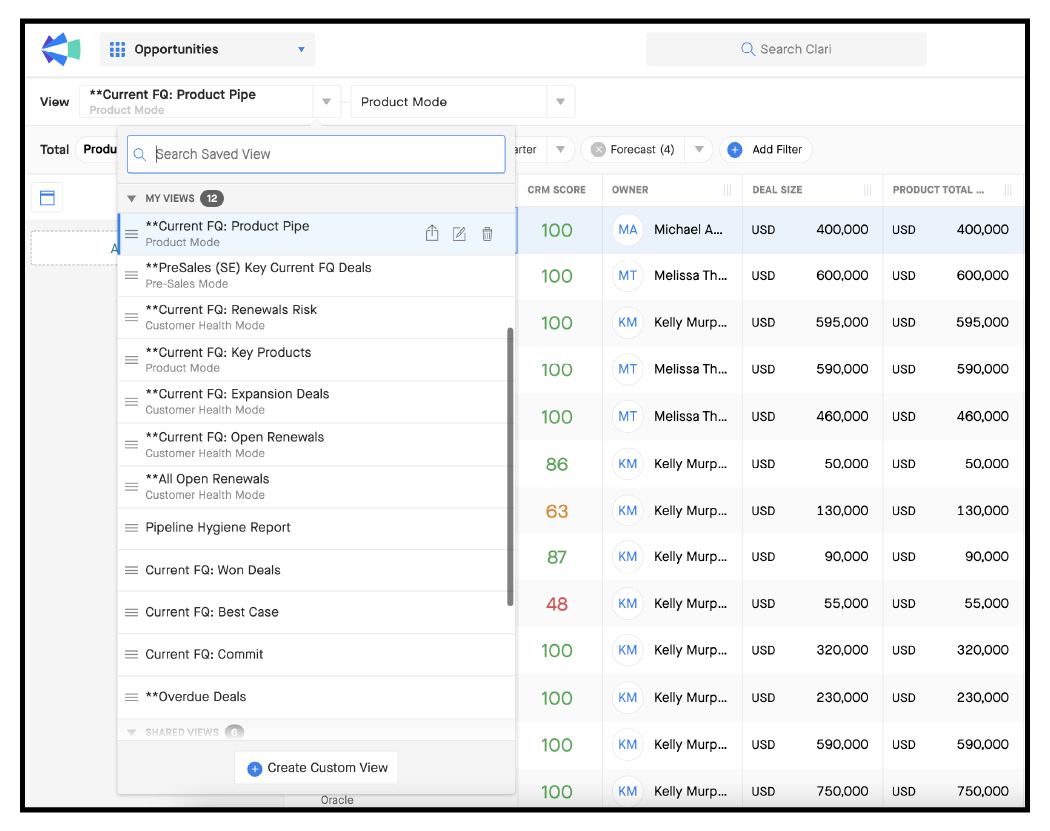
Clari is where most RevOps teams run their forecast calls. The AI insights flag deals that are slipping, accounts that are at risk, and reps who are sandbagging (or doing the opposite). It's become the default tool for sales forecasting at mid-market and enterprise companies.
Clari Copilot also handles live call coaching and deal summaries. Between the forecasting core and Copilot, Clari has built one of the most complete revenue platforms on the market. If your quarterly forecast is still a spreadsheet held together by VLOOKUPs and prayer, this is a clear upgrade.
6. 1up
Best used for: RFP and security questionnaire automation
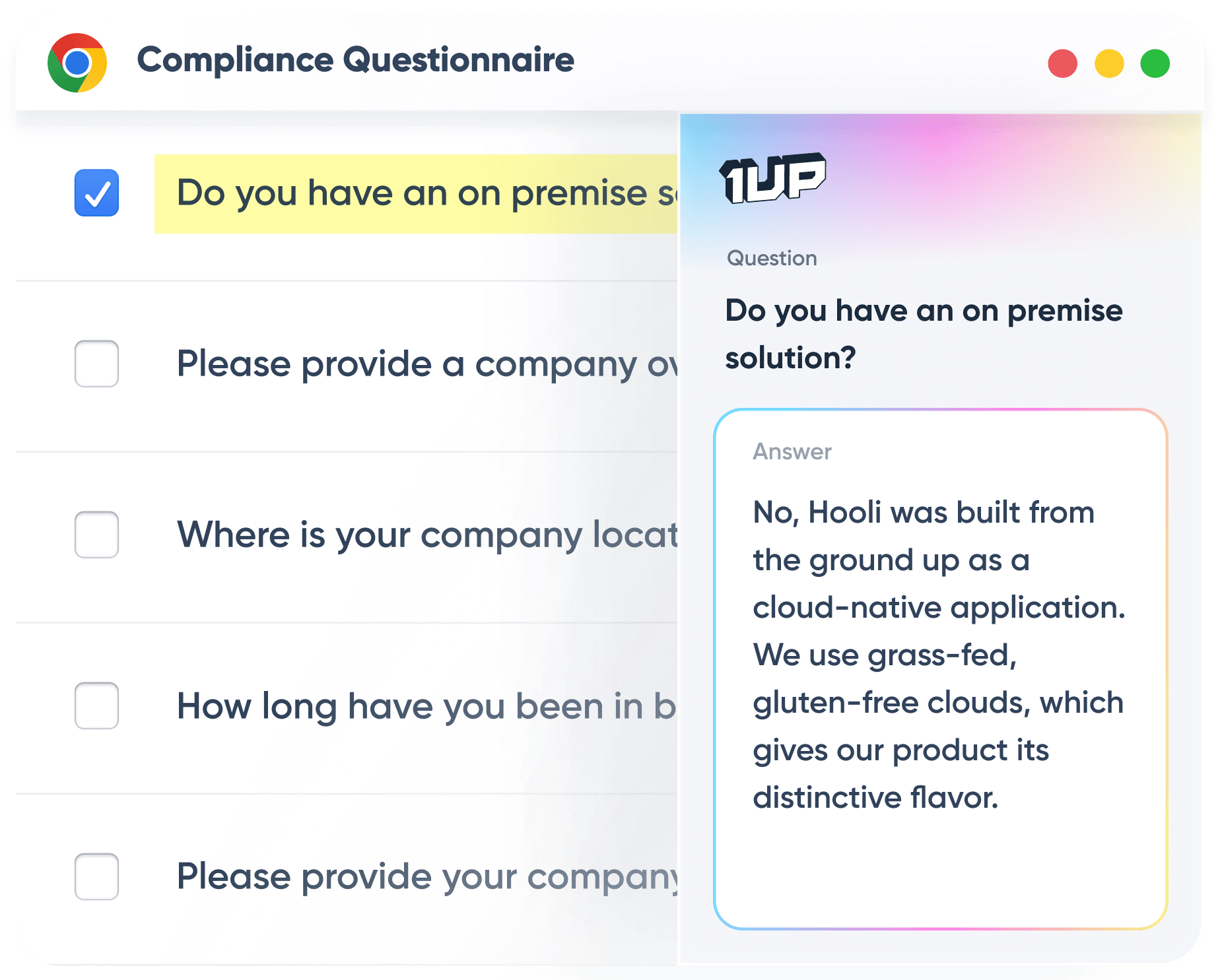
RFPs, DDQs, and security reviews are still the worst part of most sales cycles. They slow deals down, pull Sales Engineers off real work, and need input from Security, Legal, Product, and RevOps. Usually the same question is asked twelve different ways.
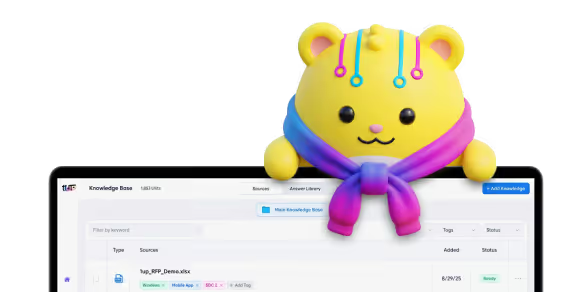
1up handles 80 to 90 percent of that grunt work through RFP automation. Reps upload a questionnaire, 1up writes the first draft using your approved company knowledge, and the team just reviews and cleans it up. No more blank pages at 11pm the night before a deadline.
What's new in 2026 is how many teams outside of Sales Engineering now live inside 1up. RevOps, Security Assurance, and Product teams all use it because the same knowledge base works for any customer-facing question.
1up’s Answer Hub: For answering customer questions directly
Best used for: Letting buyers get answers without pinging your reps
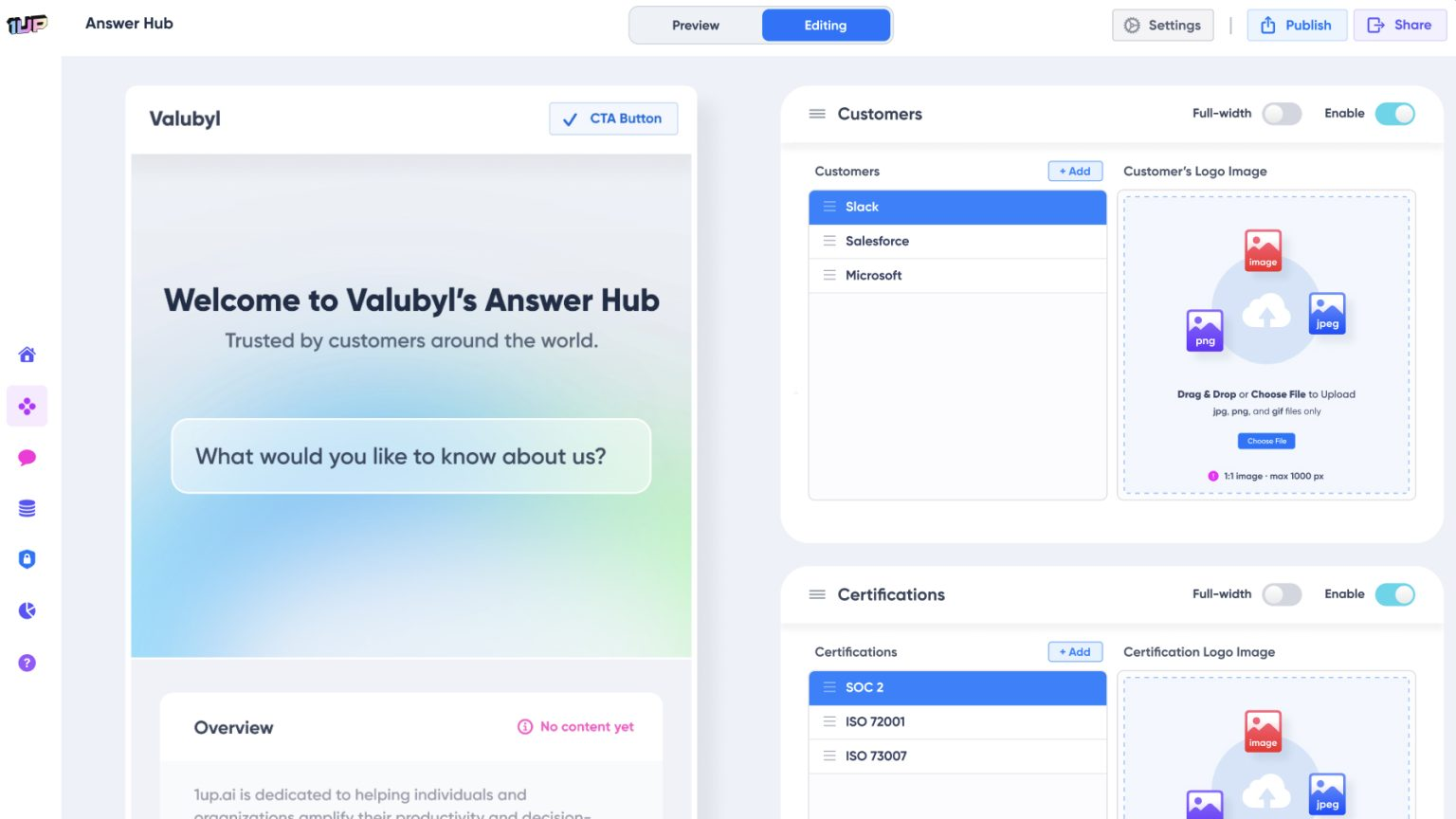
Most enablement stacks are missing this piece. Answer Hub flips the usual model. Instead of helping your reps answer buyer questions, it lets your buyers answer them on their own. Most B2B buyers do a huge chunk of research themselves before they ever talk to a rep, so giving them a real way to get answers matters more than it used to.
Answer Hub is a branded chat that uses your approved company knowledge to respond to sales, product, and security questions in real time. Prospects, partners, and current customers can ask questions in plain English and get verified answers in seconds. No more waiting on a rep for every small detail. When 1up can't confidently answer a question, it says "I don't know" and loops in the right person with one click.
Teams like Deliveroo, Docebo, and Cleeng use Answer Hub for compliance reviews, post-RFP follow-up questions, and channel partner enablement. The result is pretty simple. Reps stop being a human search engine. Buyers stop waiting 48 hours to get the answer they need to move forward with the purchase.
If you've ever said "our prospects keep asking the same five questions," this is the tool for you.
Deal Intelligence and Forecasting
This category answers the question every CRO asks every Monday morning. What's actually going to close this quarter, and how do you know?
7. Salesloft
Best used for: Sales engagement and AI-powered deal coaching
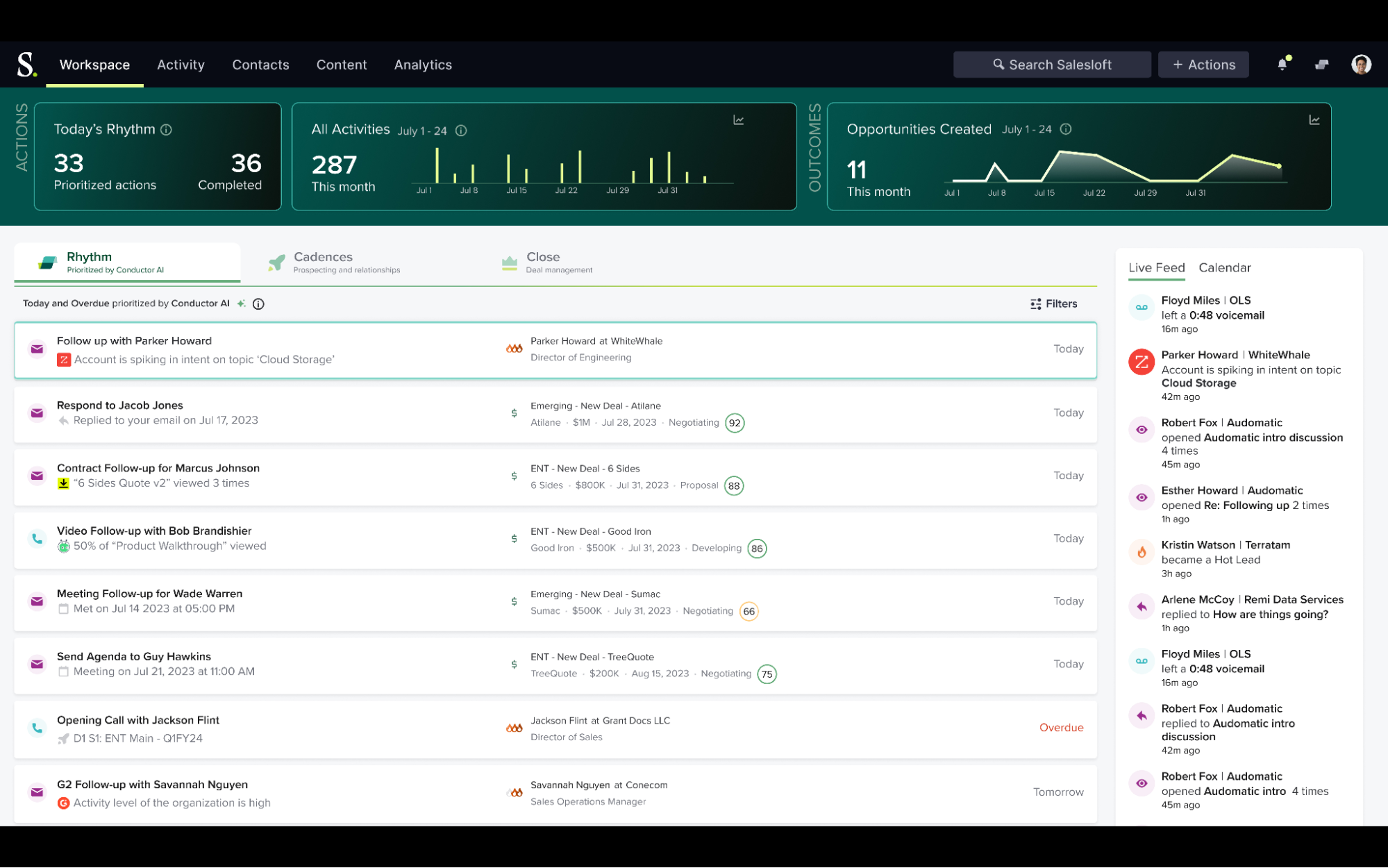
Salesloft has spent the last couple years rebuilding around AI. The Rhythm engine scores buyer signals across calls, emails, and meetings, and tells reps exactly what to do next on every account. It's the kind of "next best action" feature that used to feel gimmicky and now actually works.
What makes Salesloft a good fit for the Deal Intelligence bucket is how tightly the engagement data ties into forecasting. You get a real picture of which deals are actually moving and which ones are just collecting calendar invites. For mid-market and enterprise teams that already run on Salesloft for cadences, the AI features are a big upgrade with very little change management.
8. Aviso
Best used for: AI-driven forecasting and deal guidance
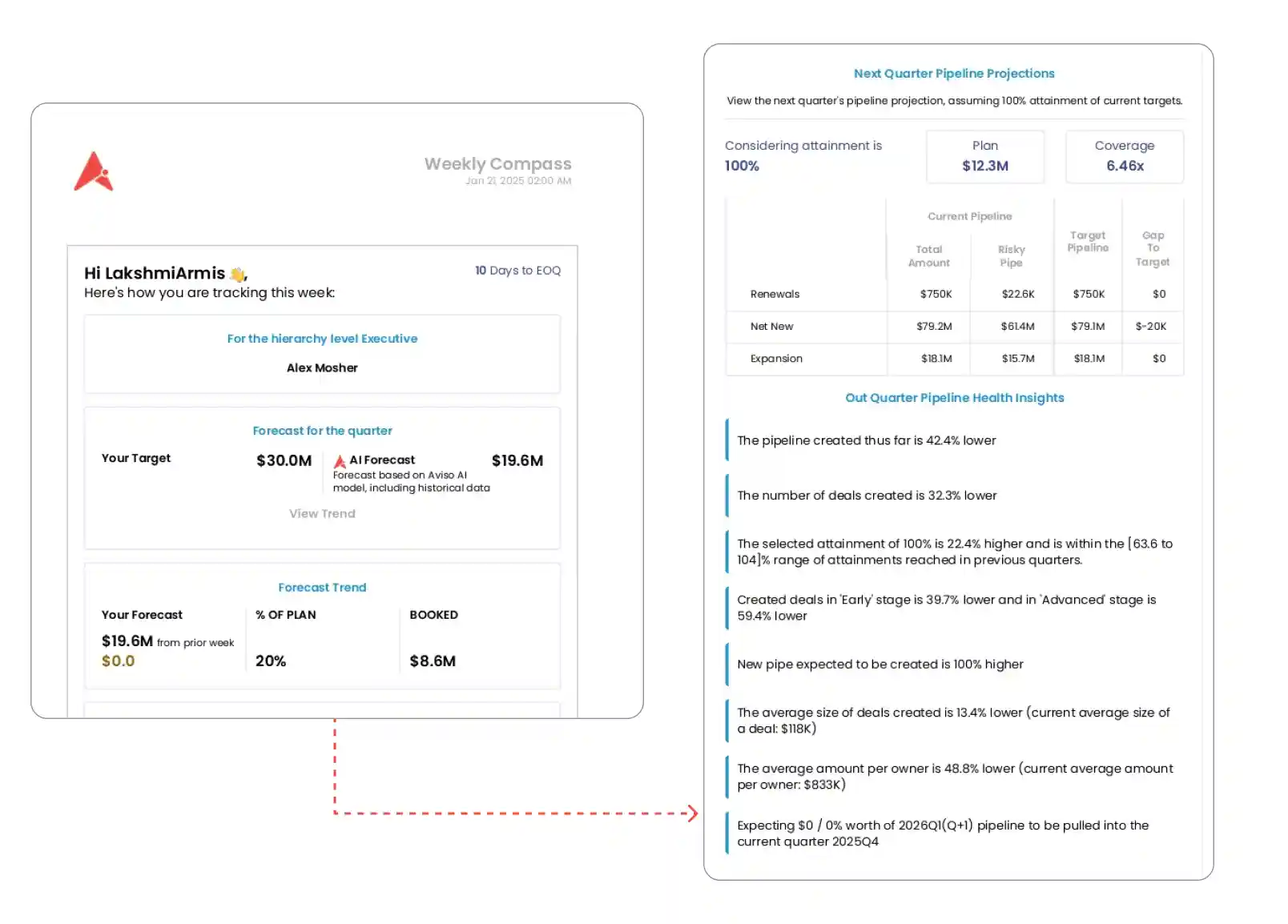
Aviso is the analytics-heavy pick in this group. Their AI models predict deal outcomes and forecast accuracy with some serious math behind them. RevOps leaders tend to like Aviso because the predictions are accurate, even if the interface feels less flashy than some competitors.
Teams that choose Aviso usually care a lot about forecast precision. If your board gives you a hard time about forecast misses, Aviso has a strong case to make.
Prospecting and Lead Generation
Outbound got way harder in the last couple years. Email deliverability tightened up. Buyers got smarter about spam. The old spray and pray playbook stopped working. The tools below help you get specific about who you target and how you reach out.
9. Apollo
Best used for: All-in-one prospecting
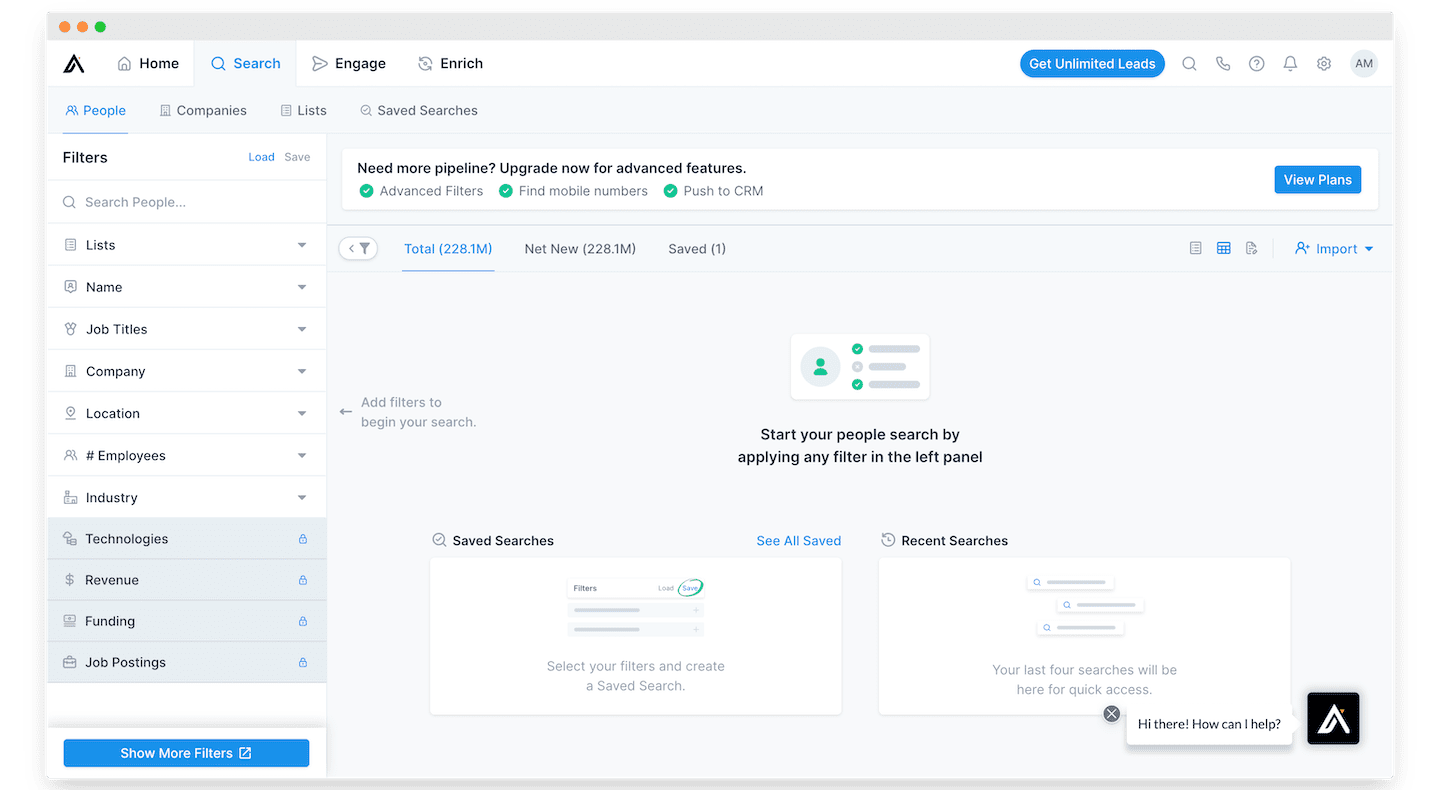
Apollo is still the best deal in sales software. You get a huge B2B contact database, email sequencing, a dialer, and basic CRM features all in one place. The AI features have actually gotten useful too. AI-drafted emails, intent signals, and research you can run right inside the platform.
For SMB and mid-market sales teams that don't want to glue together ZoomInfo, Outreach, Sales Navigator, and ten other tools, Apollo still offers the best price-to-value in the category.
10. Clay
Best used for: Data enrichment and agent-based outbound
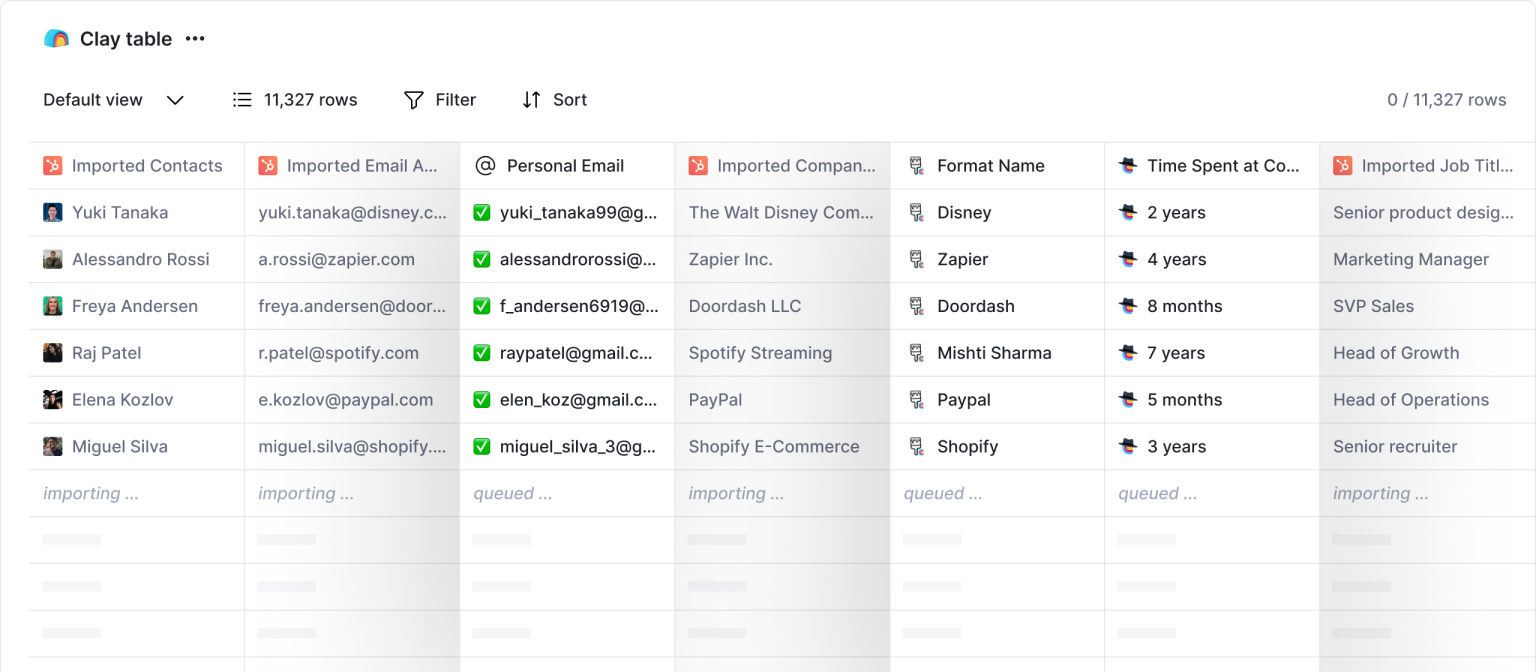
Clay has pretty much taken over the outbound automation conversation. The templates model makes it easy to build enrichment workflows. Check if a contact changed jobs. Find the right decision maker. Generate a personalized opening line. All chained together in one table.
What's new in 2026 is how much Clay has moved toward agents. Instead of static workflows, teams set up AI sales agents that watch for trigger events and run entire outbound motions on their own. It's as close to "autonomous outbound" as anything actually gets right now. The serious outbound teams all have Clay open.
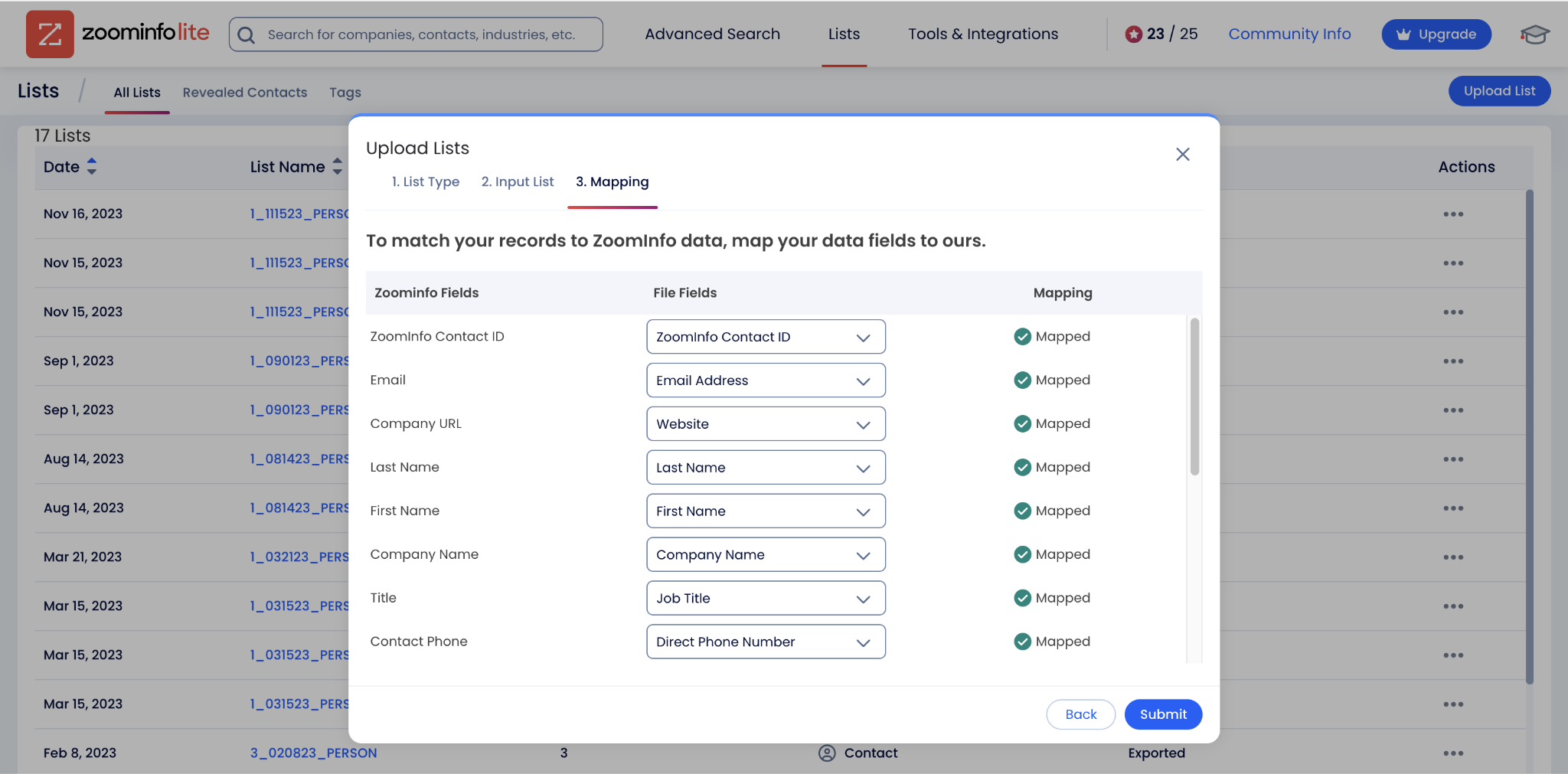
11. ZoomInfo
Best used for: Enterprise B2B data and intent
ZoomInfo is still the enterprise data foundation. The contact database is deeper than most competitors. The intent data is trusted by big GTM teams. And the platform has grown well beyond a place to buy email addresses. It's a full go-to-market tool now, with engagement, intent, and workflow automation built in.
ZoomInfo's AI Copilot surfaces the right accounts and contacts at the right time. For enterprise teams with complex ICPs and six-figure deal sizes, the data depth still beats the cheaper options.
What's the latest in 2026
Two trends stand out in the current state of AI in sales and presales.
The sales stack is getting smaller. For a while, every team was buying every AI tool that demoed well. Now budgets are tight and CROs are cutting. The tools above earned their spot because they do one thing really well. None of them try to do everything.
Customer-facing AI is the next big shift. The first wave of AI sales tools helped reps. The current wave, led by products like Answer Hub, helps buyers directly. Self-serve answers, instant compliance responses, and automated DDQs help deals close faster. Reps get to focus on the 10 percent of work that actually needs a human.
If you're rebuilding your sales tech stack this year, pick one tool from each of the three categories above. Add Answer Hub for the buyer-facing layer. That covers most of what your reps actually need.
The rest is just sales.
Want to see how Answer Hub can cut your team's follow-up questions in half?

FAQs
The best AI sales tools fall into three categories. For sales enablement and content, look at Highspot, Seismic, Guru, and 1up. For deal intelligence and forecasting, Gong, Clari, Salesloft, and Aviso lead the space. For prospecting and lead generation, Apollo, Clay, and ZoomInfo are the ones revenue teams are actually using. Most teams pick one tool from each bucket instead of trying to buy everything.
AI is doing two big things to B2B sales right now. First, it's cutting the grunt work reps used to do manually, like drafting RFP responses, logging CRM activity, and building call briefings. Second, it's pushing some of the answering work to the buyer side through tools like Answer Hub, so prospects can get verified answers to sales, product, and security questions without waiting on a rep. The result is shorter sales cycles and reps spending more time on the parts of a deal that actually need a human.
Yes, when they're picked carefully. Gartner predicts AI-driven sales enablement will deliver 40 percent faster sales stage velocity by 2029. The tools that move the needle are the ones tied to a specific problem like RFP automation, forecasting accuracy, or outbound enrichment. Tools that promise to "do everything with AI" tend to end up in the next round of budget cuts.