Churn rate is essentially how businesses figure out the pace at which they're losing customers over a specific time. Think of it as a health check for customer happiness and loyalty. If a company notices that many customers are cutting ties, it's a red flag that something's wrong. It could be that the product doesn't hit the mark, customer service is lacking, or there's a new competitor offering something better. In contrast, if not many customers leave, it's a good sign that they are satisfied and sticking around.
Getting a handle on churn rate is super important, especially for businesses that rely on customers sticking around and becoming repeat buyers, like those with subscription models. By keeping an eye on their churn rate, companies can keep tabs on what's working and what's not from their customers' perspective.
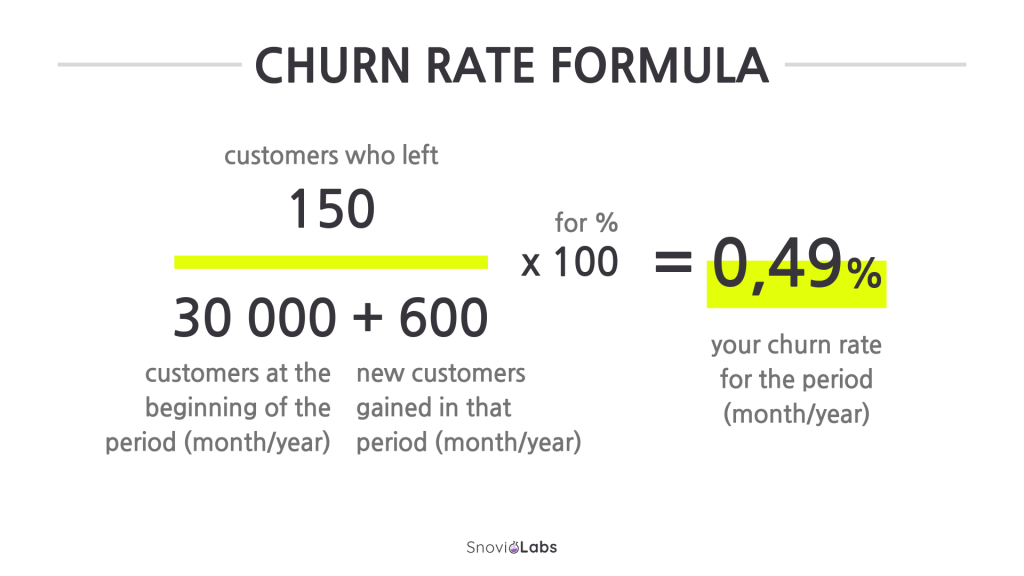
Your churn rate can be measured by dividing the number of customers lost over a period of time by the number of customers that the business had at the beginning.
For example, if a business had 200 customers at the beginning of March and ended the month rate 140, its churn rate for June would be 30% — this is the sum of the total number of customers lost (60) / total number of customers at the beginning of June (200) X by 100 for the percentage figure.