Getting an RFP (Request for Proposal) always feels like a big chance.
A new customer. A huge project. A real win for the team!
Problem is… when teams jump in without knowing if it’s a good fit, how much work it’ll take, or IF they can win, these RFPs quietly chew up everyone’s time, energy, and good mood.
One single Proposal submission can drag in people from sales, pre-sales, product, security, lawyers, and even the bosses. It means digging up old answers, checking on security papers, and trying to schedule meetings with people who are already super busy. Even with great tools to help, the wrong RFP can still feel like a huge chore.

Most teams still treat every RFP like they have to answer it fully. Not because it’s a perfect match, but because saying no feels scary. Sales people worry they’ll lose money. Bid managers are usually brought in after everyone already expects a "yes." And product and security folks end up filling out checklists for deals that were never going to close anyway.
The real problem isn't the writing part. It's deciding if this deal should even be in your to-do list.
Before anyone starts typing or assigning work, you need answers to a few simple questions:
- Is this deal worth all the work we’ll put into the answer?
- Can we meet their security and rule requirements easily?
- Are we early enough in their buying process to make a difference, or are we just there to make it look like they got multiple bids?
Teams that skip this step often find out too late that the buyer already has a favorite company. Or that the rules were written for someone else’s product. Or that the deadline makes it impossible to submit a good response. At that point, all your effort is just wasted.
That’s why good RFP analysis is just as important as doing the work.
Having an RFP Framework gives your sales teams a quick, easy way to check if an opportunity is real before anyone starts the heavy lifting. It helps everyone agree, protect their time, and focus on proposals that match what you sell, what you have, and how likely you are to beat the competition.
The result is simple: fewer wasted answers, better win rates, and a sales team that spends more time on deals they can actually close.
What is an RFP Go/No-Go Framework?
An RFP Go/No-Go framework is a set of steps to decide if a proposal is worth your team’s time before anyone starts writing.
It exists because responding is not just a sales job. It pulls in pre-sales, product, security, legal, and leaders. Once that machine starts moving, it’s really hard to stop, even if the deal looks shaky.
Instead of getting emotional or just saying yes because that’s what you always do, a Go/No-Go framework forces you to stop and think early on. You check the RFP against a few things, like customer fit, cost to respond, if your product can do it, security readiness, and real chances of winning. Each one gives you a real hint, not just a guess.
This matters because many RFPs look promising on the surface but fall apart under light scrutiny. Some are from companies you don't usually work with. Some show up late in the buying process when the buyer already picked someone. Others ask for features or security stuff you just don’t have right now.
A Go/No-Go framework helps teams see those problems fast, before they waste weeks of effort. It also helps sales and the proposal teams get on the same page by turning personal feelings into a simple score.
The main idea is easy:
- Say yes to opps you can easily win.
- Say no to submissions that will waste your time with no real chance of success.
The best teams answer fewer RFPs. Great teams protect their time and focus on the ones that are truly a match.
Why Do RFP Decisions Go Wrong So Often?
Most mediocre responses follow the same pattern, and it’s never about the quality of the writing.
Sales people feel pressure to answer because the company name looks important or the logo is famous. They just assume a big brand means a real opportunity, even if it’s a bad fit.
RFP managers often get involved too late. By the time they see the document, everyone is already set on doing it. Pushing back then feels like fighting instead of just being smart.
Teams also think speed is the whole strategy. They think better tools or automation will make a bad lead worth chasing. Making it cheaper to answer helps, but it doesn't change the fact that some requirements are already set against you, sent too late, or written for another company.
Then there’s the hardest part: no one wants to be the person who says no.
Saying no means fighting with sales. It means questioning what the buyer really wants. It means admitting that a shiny-looking deal might go nowhere. So teams just move forward without thinking and hope it works out.
The result is almost always the same: long work cycles, low win rates, and product and security teams answering questions for deals that never had a chance. Lots of time spent reacting instead of choosing.
This is super common now as RFP processes speed up, making teams feel pressure to answer faster without thinking about the fit.
A Go/No-Go framework fixes this by forcing an early decision. It replaces a gut feeling with a shared score and gives teams a clear reason to go forward or walk away before the work even starts.
The RFP Scoring Framework
The Go/No-Go scoring framework is there to answer one quick question:
Is this deal worth the huge effort it’s about to ask for?
The framework uses ten checks. Each one gets a score of plus or minus five points, so the highest score you can get is fifty. The scoring is made simple on purpose so teams can move fast and stay agreed on the plan.
Some checks are just hints. Others are Hard Stops that should kill the opportunity right away.
Here’s how the scoring works in short:
You score each item quickly based on what you know from the RFP and early talks. Don’t try to be perfect. You’re just trying to decide if this lead is worth a serious investment.
Smart teams use this table to find deal breakers first. If a Hard Stop fails, the score doesn’t matter, it's a No-Go. If the Hard Stops pass, the total score helps you decide which proposals to put the most effort into.
The most important part is when you do this. This scoring check helps you make your RFP process betterbefore you assign writers, pull in experts, or start the full proposal machine. Once that work starts, it’s much harder to walk away, even when things look bad.
A clear scoring framework makes you pause. It turns a gut feeling into a team decision and helps people save time for deals that actually make sense.The 10 Checks Explained
1. Ideal Customer Profile Fit
Start with the most basic thing. Before looking at features or prices, ask a simple question: Is this company actually someone you want as a customer?
RFPs often come from companies that are just outside who you normally sell to (ideal customer profile). Maybe the business type is a little off. Maybe the company is bigger or smaller than usual. Maybe they expect a level of complicated setup that doesn’t fit how your product works.
How to score it
- Strong ICP fit: +5
- Clear mismatch: −5
2. Cost to Respond vs. Deal Size
Proposal submissions cost a lot, even if they look simple at first.
You have to think about how long it will take, how many people need to be involved, and how the potential deal size compares to what you usually win without a big RFP. Automation helps, but it can’t make a bad deal worthwhile. Time spent on a bad submission is time you can't spend finding better ones.
How to score it
- Great money back for the effort: +5
- Huge effort with little money upside: −5
3. Win Probability and Buyer Intent
You need to know if the buyer is really shopping around or just going through the motions. Not every RFP is a real buying process. Some are just to confirm a decision that's already been made. Red flags include being invited late, unclear scoring rules, or signs they already picked a vendor.
How to score it
- Clear intent and a real chance to win: +5
- Low odds or it looks like a done deal for someone else: −5
4. Product and Feature Alignment
It’s easy to be too hopeful and think missing features aren't a big deal. You need to compare the buyer’s must-have needs to your product today. Don't count on future plans or custom work. Winning by overpromising can lead to long-term problems.
How to score it
- Strong fit with current product: +5
- Missing core needs or requires huge custom work: −5
5. Security and Compliance Readiness
This is a simple one, but often ignored. If a proposal requires security rules (like SOC 2 Type II or documented plans) you don’t meet, stop. Don’t try to find a loophole. Security gaps don't just disappear after you win; they cause pain later. This is a Hard Stop.
How to score it
- Meets all required security rules: +5
- Does not meet basic rules: −5 and automatic NO-GO
6. Resource Availability
RFPs often come with expectations for dedicated staff (account managers, engineers, on-site support). Do you actually have the people to support this account without hurting your current customers? If you win but can’t staff it right, the pressure hits immediately.
How to score it
- People are clearly available and sustainable: +5
- Not enough staff or unrealistic expectations: −5
7. Timeline and Vendor Timing
When you are invited tells you a lot about your chances. Early or mid-stage invites mean the buyer is still open to ideas. Last-minute invites mean the decision is likely already leaning a certain way, and your job is just to fill a spot.
How to score it
- Invited early or in the middle of the process: +5
- Last-minute invite with no context: −5
8. Competitive Positioning
Be honest about how you stack up against the rivals. Do they have a clear advantage? Are you already known at that company? Do you have a clear, unique reason the buyer should pick you? If you can’t easily explain your angle, it'll be hard to win.
How to score it
- Clear differentiation and strong position: +5
- Obvious disadvantages or stacked competition: −5
9. Referenceability and Proof Points
When an RFP asks for customer references, they are looking for proof that companies like them trust you. If you can’t name even one strong, relevant reference, your chances are lower. References often become the tiebreaker when features and prices are similar.
How to score it
- Many relevant and willing references: +5
- Weak, wrong, or no references: −5
10. Expansion and Lifetime Value Potential
Look past the first sale. Is this a one-time deal that stops after the first contract? Or is there a real chance to grow the business with them (more teams, more regions)? A deal that starts small but grows is worth more effort than a big deal that requires special work and then just stops.
How to score it
- Clear chance for expansion and long-term value: +5
- Pure one-off deal with limited future money: −5
What Your Score Means
Once you score the RFP, add up the points. The number is important, but what’s more important is what it tells you about the risk and the reality. The framework only works if you actually follow the result.
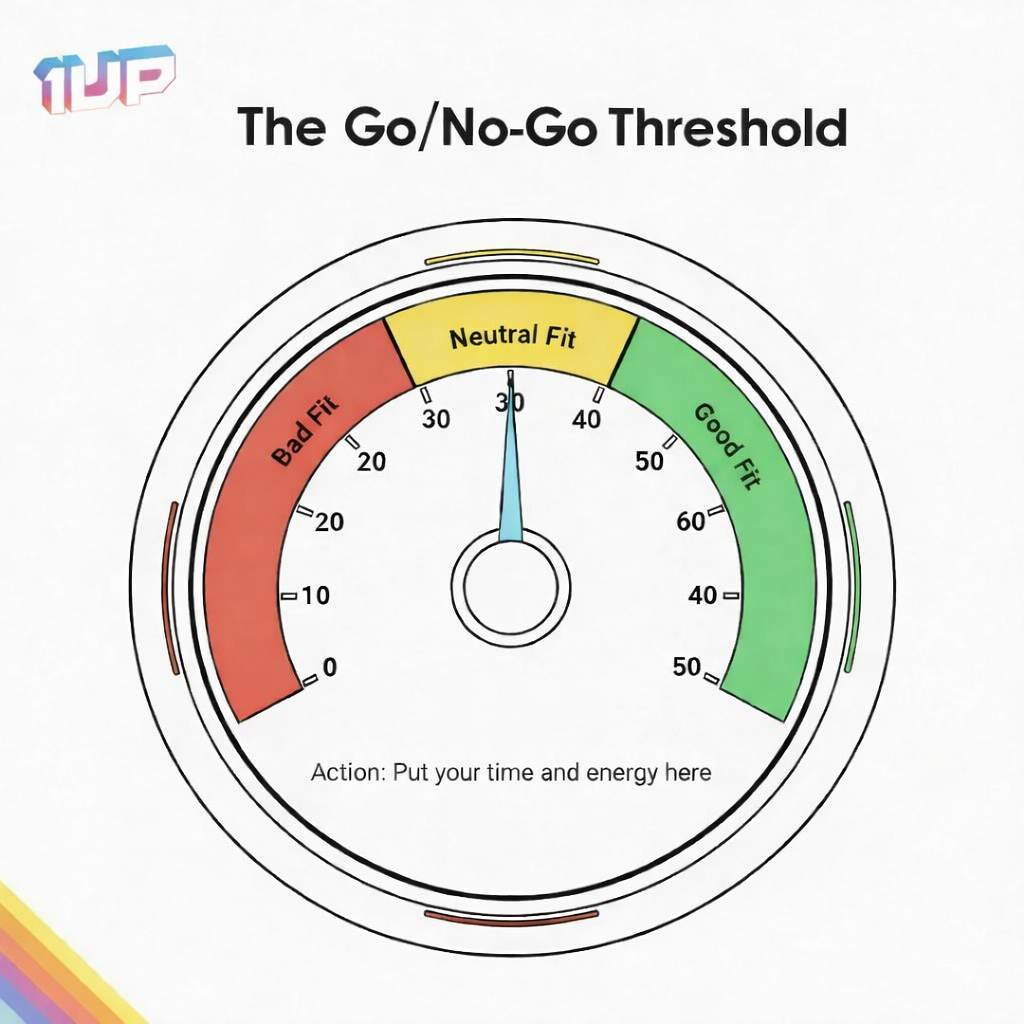
Here's how to read your score:
Score 0 to 19: This is a Bad Fit. You won't win.
- Your odds of winning are low, the work is high, or both. The deal is wrong for your product or your people. Answering this one is usually weeks of work for nothing.
- Action: Politely say no and move on.
Score 20 to 30: This is a Medium Fit. Don't bet your quota on it.
- There's some good stuff, but also real risk. These RFPs might make sense in special cases (like if your sales pipeline is empty, or the account is super important).
- Action: If you go for it, do it with clear eyes and low expectations. These aren’t easy wins.
Score 30 to 50: This is a Good Fit. Solid chance of success.
- This deal is right for your customer type, your product, and your ability to deliver. The buyer seems serious, and the effort matches the potential money. This is where focusing and moving fast will pay off.
- Action: Put your time and energy here.
One important reminder: Hard requirements are blockers. If you fail the security or product fit check, a high total score doesn't save the deal.
Hard Stop Rules You MUST NOT Ignore
Some things are more important than the score. These Hard Stop rules exist because not all risks are the same. Some are just a warning; others are deal breakers. When these pop up, you have to stop, even if the rest of your score is high.
Your RFP respone should be an automatic NO-GO if any of these are true:
- You fail required security or compliance standards. If the buyer clearly states basic requirements and you don't meet them, answering won't change anything.
- You can’t meet a deadline or a non-negotiable rule. Missing the submission date, the required format, or a mandatory certification is usually an automatic fail.
- You can’t meet the core product requirements. If the buyer’s must-have features are things your product can’t really do, that gap won’t close later. Winning under those conditions means big problems and unhappy customers later.

Teams are good at making excuses for these things.
"It’s a big name," "We know the guy," "The score is high." But none of those things fix a basic, fundamental mismatch.
No framework can save a proposal that fails the basics. Hard Stops are there to stop your team from wasting time on deals that were never going to work in the first place.
How Automation Helps with Go/No-Go
Automation doesn’t replace smart thinking. It just makes smart thinking easier.
The hardest part of this work is deciding which deals to focus on before everyone gets too involved. Automation helps by making it easier to check things at the very beginning, not by saying "yes" to every RFP.
When teams can quickly find old answers, security documents, and product details, they can check a deal faster. Instead of guessing how much work it’ll take, they can see the real effort and make a smarter choice.
Here’s how 1up automates RFP responses:
Automation also makes it cheaper to respond when the answer is yes. Less manual work, fewer repeat questions, faster reviews. That gives teams more freedom. They can go for more qualified deals without burning out their people.
What automation can't do is fix a bad fit. It can’t change a buyer who isn’t serious. It can’t add missing product features or fill security gaps. Those decisions still belong in your Go/No-Go framework.
Framework and automation should be used together. The framework decides where to focus. Automation makes the work easy and fast once that decision is made. The result is less wasted time and more energy spent on RFPs that have a real chance of closing.
Teams that get this right stop reacting to every opportunity. They move faster, say no earlier, and win more of the deals they actually choose to chase.
Winning More Begins with Saying NO
Answering every request for a proposal is just reacting, not having a plan.
The teams that win consistently aren’t the ones that answer the most RFPs. They pick carefully, save their time, and focus on the deals that truly fit.
A clear Go/No-Go framework gives your Bid managers and sales leaders permission to walk away from bad deals early and put all their effort into the good ones. It gets everyone on the same page, reduces burnout, and keeps the work focused on the right goals.
Saying no early helps teams answer faster, and with more confidence, when the right opportunity finally shows up.
FAQs
An RFP Go No Go framework is a simple decision system used to determine whether an RFP is worth responding to before a team commits time and resources. It helps sales and RFP teams evaluate fit, effort, win probability, and risk so they can focus on opportunities they can realistically win.
You should say no to an RFP when the buyer is not a good fit, the effort outweighs the deal size, required security or product requirements cannot be met, or there are strong signs the vendor has already been chosen. Saying no early prevents wasted work and protects your team's time.
No. RFP automation does not replace Go No Go decisions. Automation reduces the cost and effort of responding, but it does not change buyer intent, fix product gaps, or improve win probability. A Go No Go framework decides which RFPs to pursue, while automation helps execute once that decision is made.


How to Write an RFP Response That Survives AI Scoring
SIG vs CAIQ vs VSA: A Simple Guide to the Big Three
How to Win Government RFPs With AI (Without Getting Disqualified)
ChatGPT vs. Copilot vs. Claude for RFPs: A Side-by-Side Comparison
.png)
Using Claude for RFPs? Add This One Piece